Anti-Fog PET/PE Lidding Film: Clear, Easy-Peel Seals for Senior Meal Trays
**Summary:** Condensation on a sealed meal tray hides the food exactly when presentation matters most. Anti-fog PET/PE lidding film keeps the view clear while an easy-peel sealant layer opens without tools — but the standard grade has limits that buyers must check before committing a program.
What anti-fog actually does on a lidding film
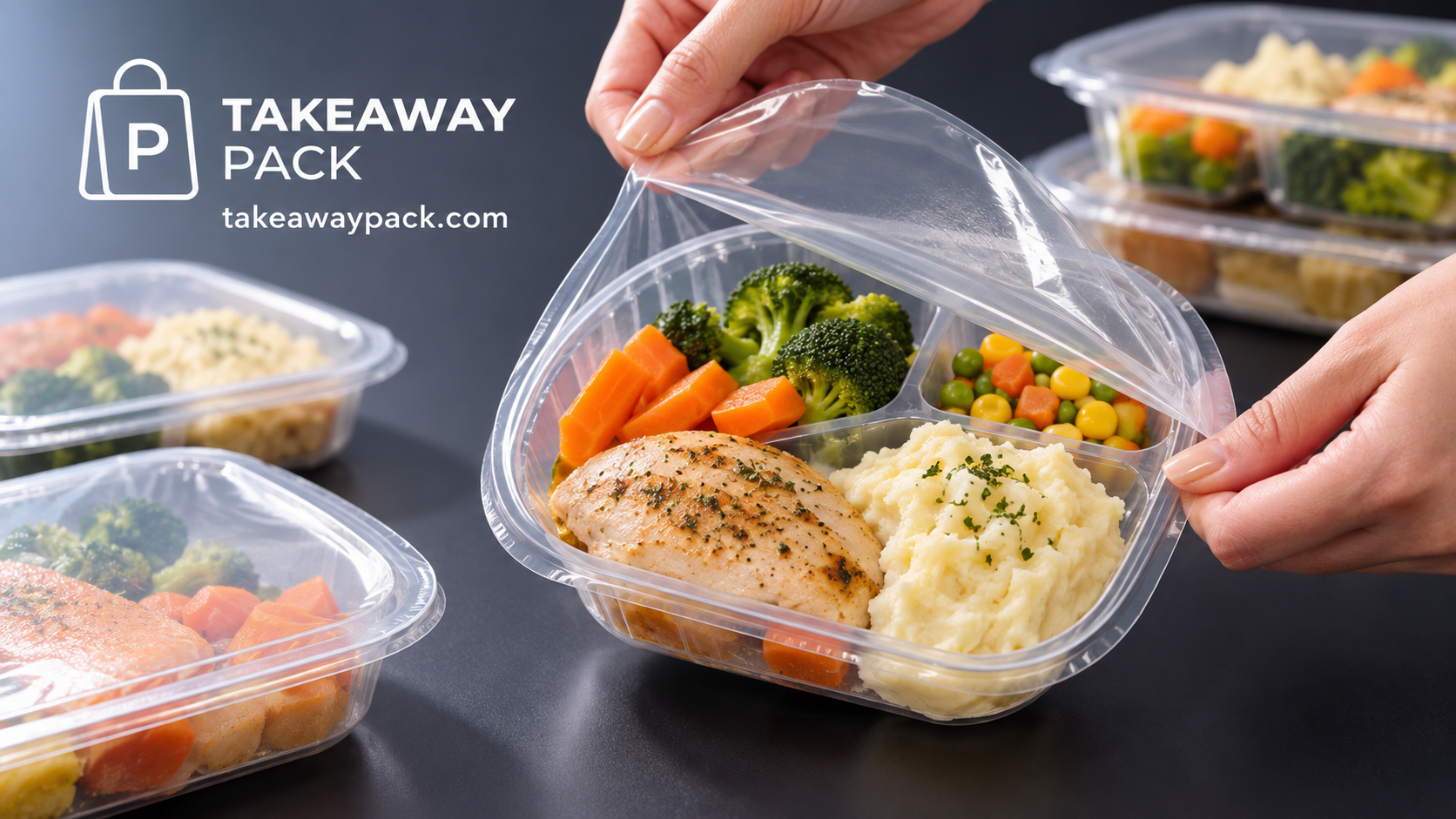
Anti-fog is a treatment on the film surface that changes how condensation behaves. Instead of forming separate droplets that scatter light and obscure the product, condensed moisture spreads into a thin, transparent water layer. The food stays visible through temperature swings between cold storage, transport, and display or reheating.
For senior meal trays the benefit is twofold. Presentation stays intact from the kitchen to the resident — important where appetite stimulation is part of nutrition care — and staff can visually verify each meal without opening the seal.
How the PET/PE easy-peel structure is built
The film is a laminate. The PET or BOPET outer layer provides clarity, stiffness, puncture resistance, dimensional stability, and a printable surface. The modified PE sealing layer creates the peelable bond to a compatible PE sealing surface, controlling both peel initiation and propagation so the lid opens progressively without tearing, shredding, tray deformation, or residue. An optional barrier layer controls oxygen and moisture for longer shelf life, and the antifog function sits on the film surface facing the headspace.
Commercial constructions in this family typically run thicknesses from about 0.05 to 0.09 mm, roll widths from roughly 150 to 900 mm, and standard 500-metre rolls with custom slitting for specific tray sealers.
The specification trap: not every grade survives every duty cycle
This is where careful buyers separate themselves. A standard easy-peel antifog PET/PE grade is engineered for chilled filling, refrigerated storage, and clear display — and the same standard grade may be explicitly non-freezer, non-microwave, and non-oven. The antifog and easy-peel functions do not imply thermal capability.
Senior meal programs almost always need freezing and microwave reheating, so the specification must call out the full duty cycle — minimum storage temperature, reheating method and duration — and require a separately qualified grade where the standard one does not qualify. Suppliers can develop low-temperature and thermal grades, but they are distinct products with their own test data, not options toggled on the same roll.