Bagasse Under Heat, Oil and Sauce: Matching the Container to the Dish
Bagasse Under Heat, Oil and Sauce: Matching the Container to the Dish
"Bagasse" names a material, not a performance guarantee, and the same container can ace a burger and fail a curry. What decides the outcome is the match between dish and design: fill temperature, oil load, free liquid, contact time, and the container's depth, rim strength and lid fit. Vented clamshells protect fried crunch, deep bowls with matched lids carry saucy and liquid dishes, and a menu-level test with the real food remains the only proof that survives contact with a delivery route.
Estimated reading time: 4 minutes
Why the Same Material Delivers Different Results
Molded fiber performance is a chain of production variables: fiber preparation, product weight, density, wall thickness, forming pressure, rim geometry and barrier treatment. Change one and the result changes, which is why similar-looking samples from different factories behave differently on the same dish.
Food attacks packaging differently too. A burger mostly produces steam, grease and stacking pressure; a curry adds free liquid, pigment, suspended solids and long contact time. The burger forgives a vented clamshell. The curry demands depth, headspace and a lid that stays engaged when a courier brakes hard.
Fried Lines: Manage Grease and Steam Together
Fried chicken, fries and crispy snacks impose two jobs at once: control surface grease and let vapour out. Trapped steam condenses under the lid and drips back, and the meal arrives soft even though the box held its shape, which customers register as a packaging failure anyway.
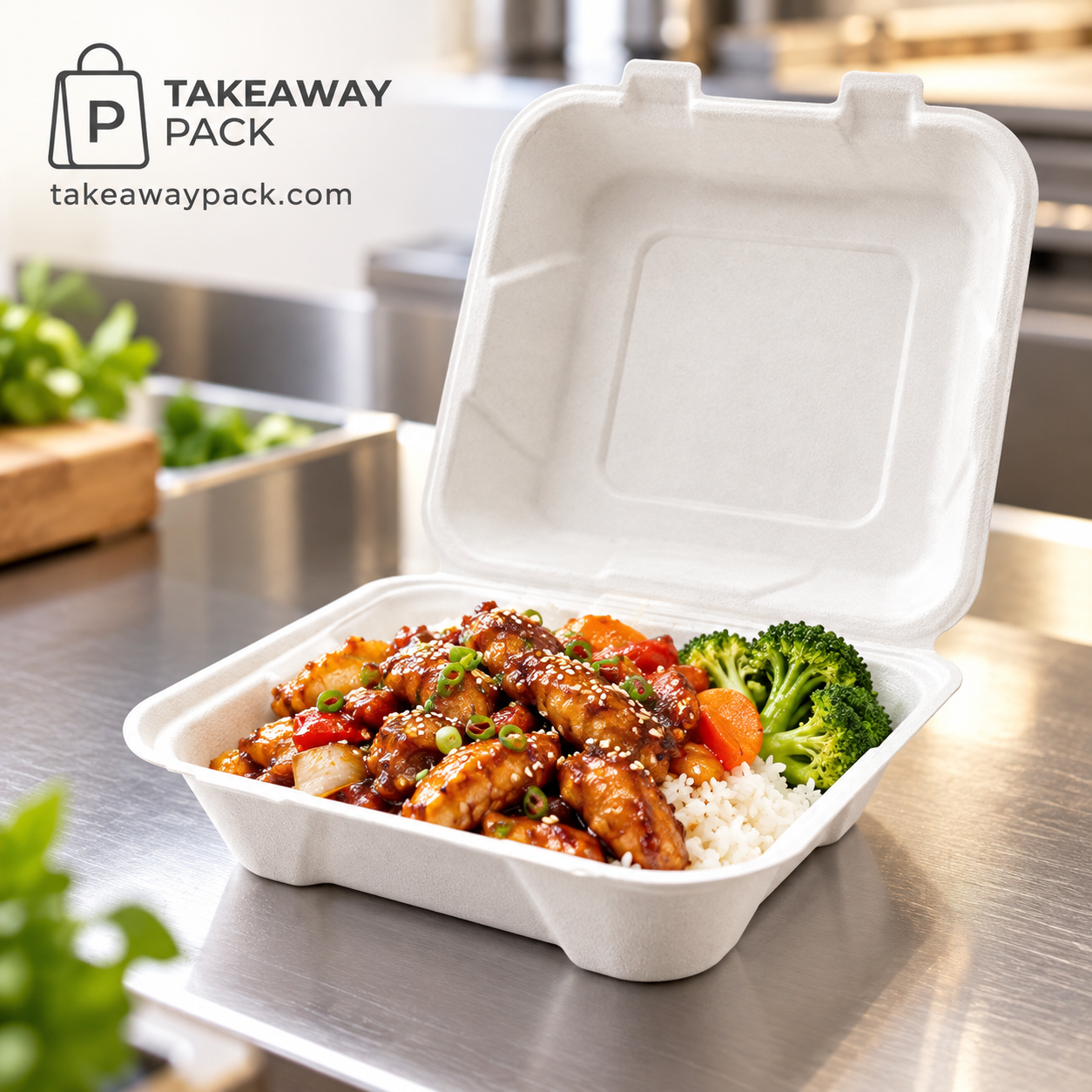
A vented clamshell or an open-breathing fiber format handles this well, provided the vent never becomes a spill route and portions leave headspace. The limit of a clamshell is free liquid: it is built for greasy solids, and thin sauce will find the hinge line that thick food never reaches.
For fried rice, oily noodles and roasted meats, weight concentrates at the base together with the oil, so rigidity joins the specification: the box should lift one-handed when full without flexing, and food should sit clear of the lid. During testing, place the filled container on absorbent paper and inspect it at realistic intervals through a normal hold, watching for oil marks on the outer base and wetting at the corners.
Saucy Mains: Depth, Rim and Lid Decide the Outcome
Curry, saucy pasta and braised dishes stay hot and in contact with the fiber for the whole journey. For these, buy on geometry: enough depth that the meal moves without touching the lid, a reinforced rim that keeps the lid seated, and a rigid base that survives a one-handed lift by a courier.
Sauce behaviour deserves separate scoring. A thick curry may never visibly spill while its oil separates and penetrates the base; tomato-based sauce may stain long before it seeps. Note staining and seepage as different findings, because the first damages presentation and the second damages the delivery bag.
Lid fit and headspace decide delivery more than wall thickness. A lid should engage evenly around the rim without force; an overfilled container contaminates the sealing zone, and too much empty space lets the meal shift with every brake. Set a standard portion weight and a fill line before testing, then keep them.
Liquid Dishes Need a Bowl System, Not a Clamshell
Standard clamshells should never be treated as soup containers by default. Free-flowing broth escapes through gaps that thick curry never reaches, so liquid dishes belong in a deep bowl with a lid designed for that exact rim.
Distinguish the claims you will hear. Moisture resistance means the material tolerates wet food for a stated period; seep resistance addresses liquid passing through the container body; leak performance covers the whole system of base, rim, lid and closure under movement. Ask what condition each word describes: which food, at what temperature, held for how long, in what orientation.
Seven Variables to Log in Every Trial
Before approving a SKU, test the real dish at real fill temperature and log the variables that change results: fill temperature, oil and fat load, free liquid and sauce viscosity, acidity and salt, contact and delivery time, container depth and rim strength, and lid material with fit and venting.
Simulate the last mile, not the kitchen bench. Close the box, put it in the actual delivery bag, stack it as a courier would and include braking, turns and short tilts. Then inspect lid, rim, corners, base and neighbouring packages, because clean bench tests routinely miss vibration failures.
One honest caveat belongs in every buying decision: PFAS-free and leak-proof are different claims. Removing persistent grease-proofing chemistry answers a safety and compliance question, while holdout on your dish answers a performance one. A container can be genuinely fluorine-free and still need a better-matched format for a specific saucy line, which is why the two conversations stay separate.
Quick answers
Can bagasse containers handle hot oil?
Yes, molded fiber is formed under heat and copes with fryer-fresh temperatures. What varies between products is grease holdout over time, which is set by density and barrier treatment, so test the exact SKU with your dish.
Are bagasse containers soup-safe?
Some deep bowls are designed for soups; standard clamshells are not. Free liquid needs a bowl-and-lid system with a rim made for the lid, not a hinged box.
Why did a container that passed testing still leak in delivery?
Bench tests miss vibration, stacking and tilt. Failures that appear only on the road usually sit at rim, vent or corner, which is why the last mile has to be part of the test.
What does "leak-resistant" actually commit a supplier to?
Nothing unless it is written as a tested condition. Ask which food, fill temperature, hold time and orientation were tested, and confirm the compostable or recyclable certification direction for that specific SKU in the same conversation.
TakeawayPack supplies molded-fibre boxes, bowls and containers to international foodservice buyers, with in-house printing and small batch customization for fleets testing more than one format. For a packaging request built around your menu and destination, visit TakeawayPack.