Can You Split One Packaging Order Across Multiple Bakery Store Locations?
Chain bakery buyers often standardize on one window cake box or gift box SKU across every store, then face a logistics question: can a single purchase order be delivered to several stores or regional distribution centers instead of one address? This article explains how split delivery works in…
Summary
Chain bakery buyers often standardize on one window cake box or gift box SKU across every store, then face a logistics question: can a single purchase order be delivered to several stores or regional distribution centers instead of one address? This article explains how split delivery works in packaging procurement, the five points to confirm before committing — minimum order quantities, batch consistency, delivery scheduling, per-store carton marking, and freight terms — and how to check that later shipments still match what you approved. The practical answer: splitting is a common request, and it works best when every detail of the split is agreed in writing before production starts.
Estimated reading time: 3 minutes
Why Chain Buyers Ask About Split Deliveries
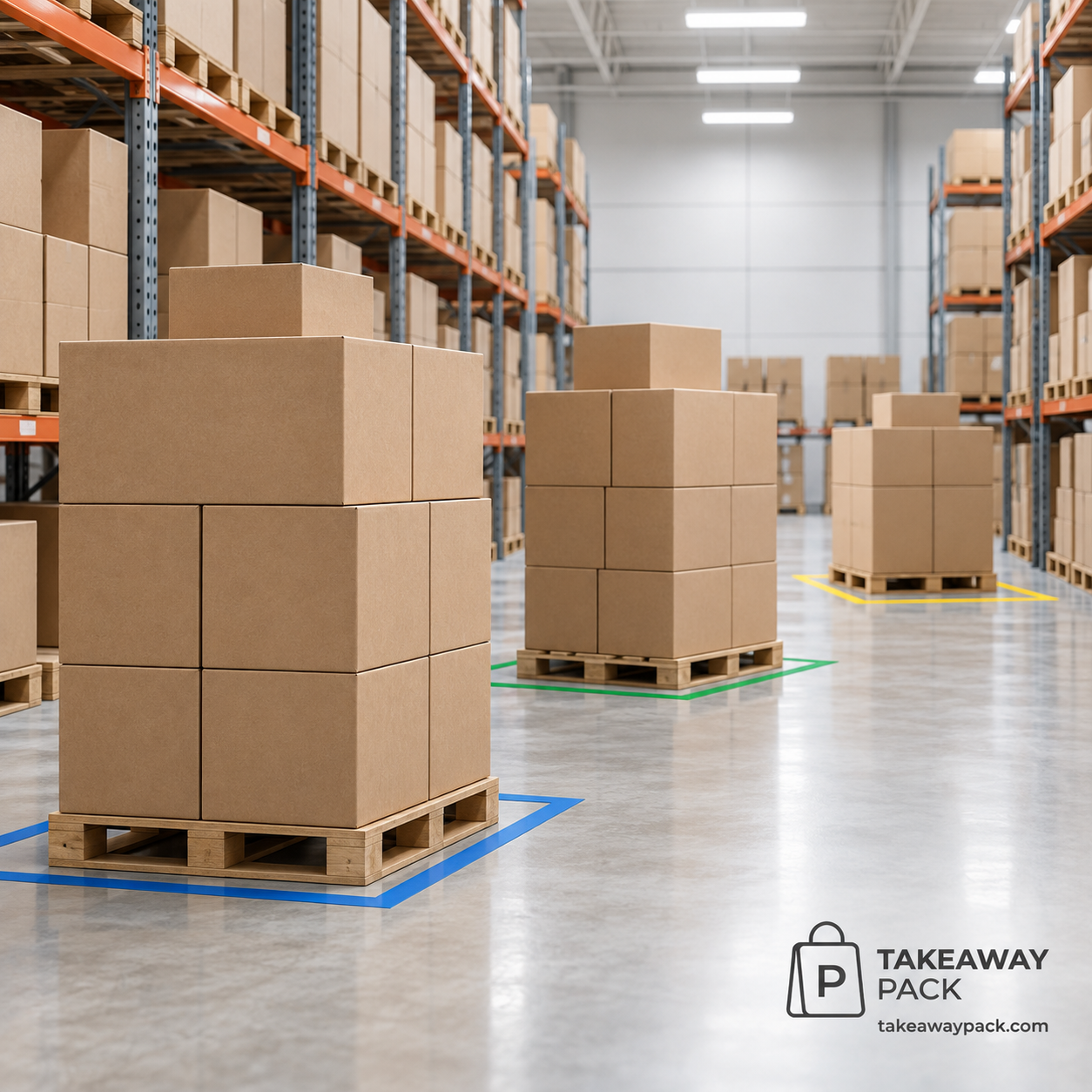
When a bakery chain adopts one box design chain-wide, headquarters rarely wants the full quantity landing at a single door. Holiday and wedding-season stock is distributed: each store receives a share, or a regional distribution center takes a bulk delivery and breaks it down locally.
That raises two questions for the procurement team. First, can one purchase order cover several delivery addresses? Second, if the order ships in batches, were all batches produced in the same run — and will they match in print, color, and finish?
Five Things to Confirm Before You Split an Order
1. Minimum Order Quantities vs. Per-Location Volumes
MOQs are set per product and production method, not per delivery address. Splitting an order changes how the total quantity ships; it does not lower the quantity commitment itself.
If per-store quantities look small, ask whether the item can come from stock or needs custom production. Stock items generally allow more flexible MOQs and sometimes trial orders, while custom-printed MOQs depend on the product and how it is manufactured.
2. Whether Batch Shipments Come From One Production Run
Consistency across deliveries is a production-planning outcome, not a default. If color match matters across all stores — and for a chain-wide SKU it usually does — ask directly whether every batch can be produced in one run, and what the fallback is if a second run becomes necessary. Get the answer written into the order confirmation.
3. Delivery Scheduling by Store or Distribution Center
Suppliers need the full split before they can quote: how many delivery points, how much volume per point, and when each one needs stock. A quotation built on a single-address assumption will not survive a multi-store rollout, so put the complete delivery plan on the table at the inquiry stage.
4. Per-Store Carton Marking and Labeling
When cartons arrive at a store's back door or a shared distribution center, staff should be able to identify contents without opening anything. Agree during the inquiry stage how outer cartons will be marked for each location — store or DC code, quantity breakdown — while carton packing is still an open discussion point.
5. Freight Method and Destination Details
Freight cost moves with the number of delivery points. Consolidating to one port or distribution center and distributing locally is usually cheaper than shipping direct to every store; the trade-off is extra handling on your side. State the destination port or country for each delivery point in your RFQ so quotations reflect the real split.
How to Verify Consistency Across Batches
Three practical checks keep later shipments aligned with what you approved:
Approve a digital proof in writing before production starts. The proof becomes the print reference for every batch.
Request a sample of the finished box — structure, window, board, and print — before mass production.
On multi-batch orders, ask whether samples from each production run can be supplied, so any drift is caught between shipments rather than on the shelf.
Getting a Concrete Answer for Your Chain
Split delivery is routine in packaging procurement. What separates a smooth rollout from a messy one is how much of the split — locations, quantities, dates, marking, and freight terms — is documented before production begins.
Procurement coordinators such as Takeawaypack, which works with multiple packaging manufacturers across boxes, containers, trays, and other foodservice categories, typically collect exactly these details at the inquiry stage: product and material, estimated quantities, customization, and destination ports.
If you are planning a chain-wide rollout of window cake boxes, gift boxes, or other bakery packaging, send your SKU list, quantity per location, and destination details via https://takeawaypack.com. An inquiry built on your actual delivery split gets you quotations and production answers that match how your stores actually receive stock.