Choosing a Fiberboard Insulated Box in 2026: A Buyer's Checklist for
Choosing a Fiberboard Insulated Box in 2026: A Buyer's Checklist for Food Delivery
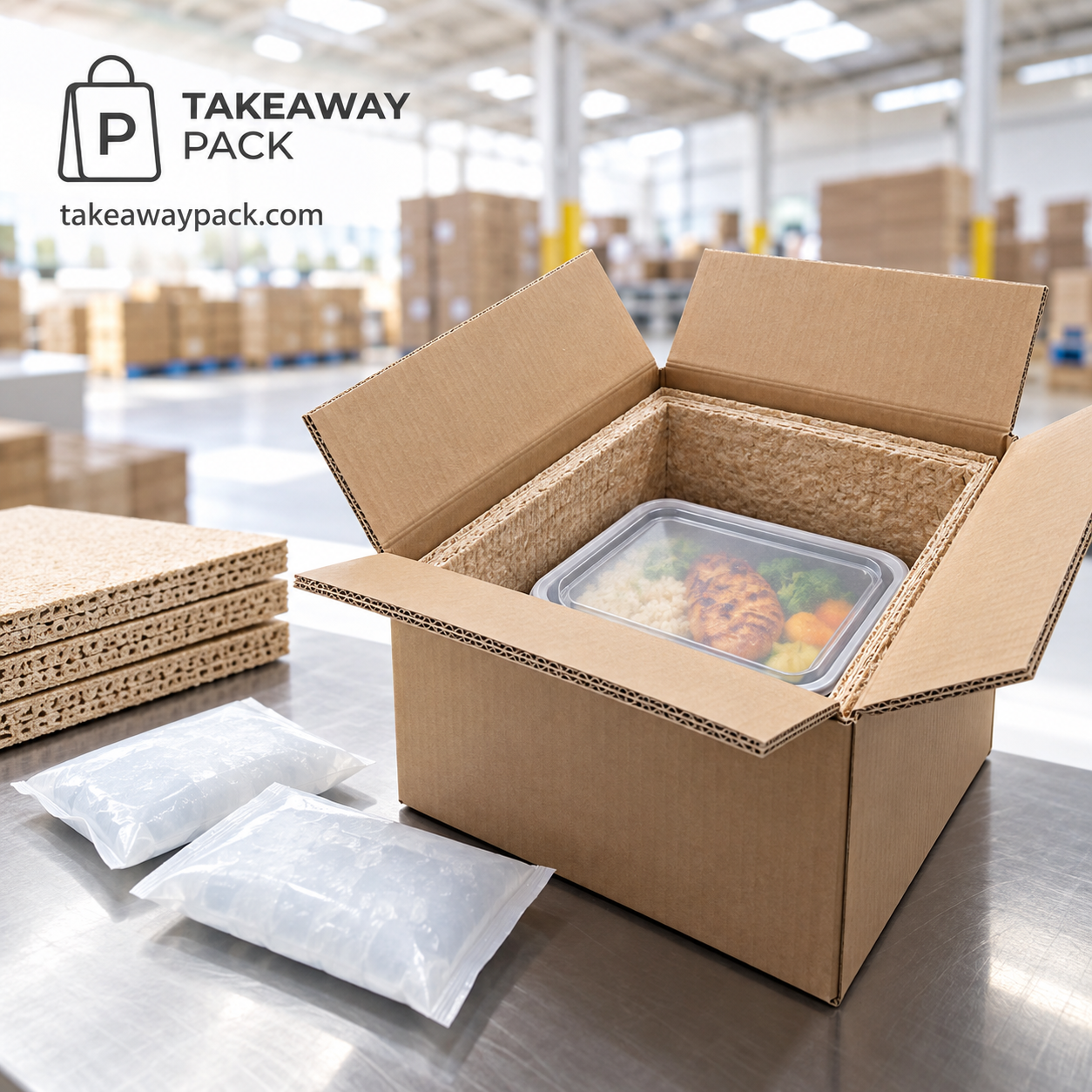
A fiberboard insulated box behaves like standard corrugate on the outside and carries the whole thermal job on its liner, coolant, and fit. For 2026 food-delivery programs it is the pragmatic choice on 24–72 hour chilled lanes where storage space, dimensional weight, and disposal simplicity matter — and the wrong choice for multi-day routes, tight regulatory margins, or washdown reuse. The checklist that follows walks through lane fit, liner choice, moisture control, and a tested packout before
Estimated reading time: 4 minutes
Why fibre boxes fit DTC food economics
Fiberboard shippers ride the same pallets and fold the same way as the cartons your warehouse already handles, and most liner systems store flat until packing day. For a subscription food brand paying for storage and parcel cube, that is the core appeal: thermal performance without the bulky footprint of moulded shippers.
Think of it as a paper thermos. The outside looks ordinary; the inside is where you slow heat flow — and the system parts matter more than the material name.
The checklist: what to verify before you commit
Lane fit. Duration including delays, seasonal ambient peaks, doorstep dwell. Paper-forward systems cover most 24–72 hour chilled parcel work; upgrade beyond fibre for multi-day international legs, ultra-low temperatures, or high-humidity routes that soften corrugate.
Liner specification. Thickness and continuity against your worst season. Thicker walls buy hold time at the cost of internal volume; ask what each option does to payload space.
Coolant plan. Gel packs or PCM matched to the menu, conditioned correctly, placed against the payload — chilled packs typically ride above the food, never in direct contact with items that must not freeze.
Food-contact layer. Containers, bowls, and lids inside the shipper that seal, survive chilled handling, and suit the menu. Get material documentation per SKU.
Moisture management. Absorbent pads, inner bags, and full closure coverage, because condensation softens corrugate and quietly cuts stacking strength.
Right-sizing. A box sized to the payload kills two costs at once: less void to chill, less paid cube on the parcel label.
Evidence. A packout test on your own lane in your worst season — not a catalogue figure — with photos and a written recipe your team can repeat.
Getting the packout right
Fit beats coolant. Before adding another gel pack, close the gaps: crushed corners, loose void, payload floating in air all spend the cold budget fast, and heat finds every path a loose packout leaves open — through the walls, in the air gaps, and off hot surfaces.
Condition everything before packing: product, coolant, and shipper all start on the temperature curve you want them to follow. A pack built from room-temperature components spends its first hour fighting itself. Then pack at service speed and test the closed, stacked, labeled box on the real route, because a packout that works on the bench can fail in a delivery bag.
2026 trends worth folding into the spec
Paper-forward insulation keeps improving, giving brands disposal messaging their customers accept without a sustainability lecture. Hybrid systems pair fibre panels with targeted high-performance layers where a lane runs hotter or longer than average. Modular inserts stretch one outer shipper across several payload sizes, which simplifies buying; low-cost indicators make "we monitor" a credible line in B2B sales conversations.
For a DTC brand, the direction of travel is clear: thermal performance is now table stakes, and material accountability plus operational simplicity are where programs differentiate. Buyers increasingly want a shipper they can explain in one sentence at the doorstep.
What to ask your packaging partners
Bring the checklist to the conversation: lane sheet, target temperature band, payload dimensions, coolant plan, quantity bands, print needs, and destination market. Suppliers who see the whole packout can propose fibre specifications, containers, and closures that fit together instead of quoting in silos.
Takeawaypack runs its own printing plant alongside a partner network of foodservice packaging factories, supplying international food brands across North America, Europe, Australia, the Middle East, and East Asia with small-batch and custom-printed packaging. An RFQ that covers product category, material, size or capacity, quantity, logo or color printing, and destination port lets the food-contact side of your fiberboard program be specified alongside the insulated shipper — and select kraft and molded-pulp lines carry compostable or recyclable certification directions you can document per SKU. Start from the square-container range.
Quick answers
How long can a fiberboard insulated box hold temperature?
Well-built packouts commonly hold a chilled range for 24–72 hours depending on fit, coolant, and ambient conditions. Only a lane test with your payload gives you a defensible number.
Is fiberboard insulation actually recyclable?
Often the simplest part of the packout to explain — many paper-fiber designs sort with ordinary cardboard streams, while foam or mixed-material liners may not. Confirm the specific construction before you claim it.
Fiberboard or foam: which should a meal kit brand pick?
Fiberboard for cost-sensitive 24–72 hour chilled lanes with controlled packouts; foam when insulation per inch must win on longer or harsher routes.
What is the most common mistake?
Oversizing. A box too large for its payload wastes coolant on air, invites temperature swings, and pays dimensional weight on empty space.
For a packaging request built around your menu and destination, visit Takeawaypack.