
Choosing Tray Materials for Ready-to-Heat Frozen Meals: When C-PET Beats PP (and When It Doesn't)
**Summary:** Frozen ready-to-heat meals put three demands on a tray: survive the freezer, survive reheating, and survive the supply chain's cost math. This guide compares C-PET and PP on temperature range, rigidity, and economics, and gives procurement teams a simple rule for choosing between them per meal category.
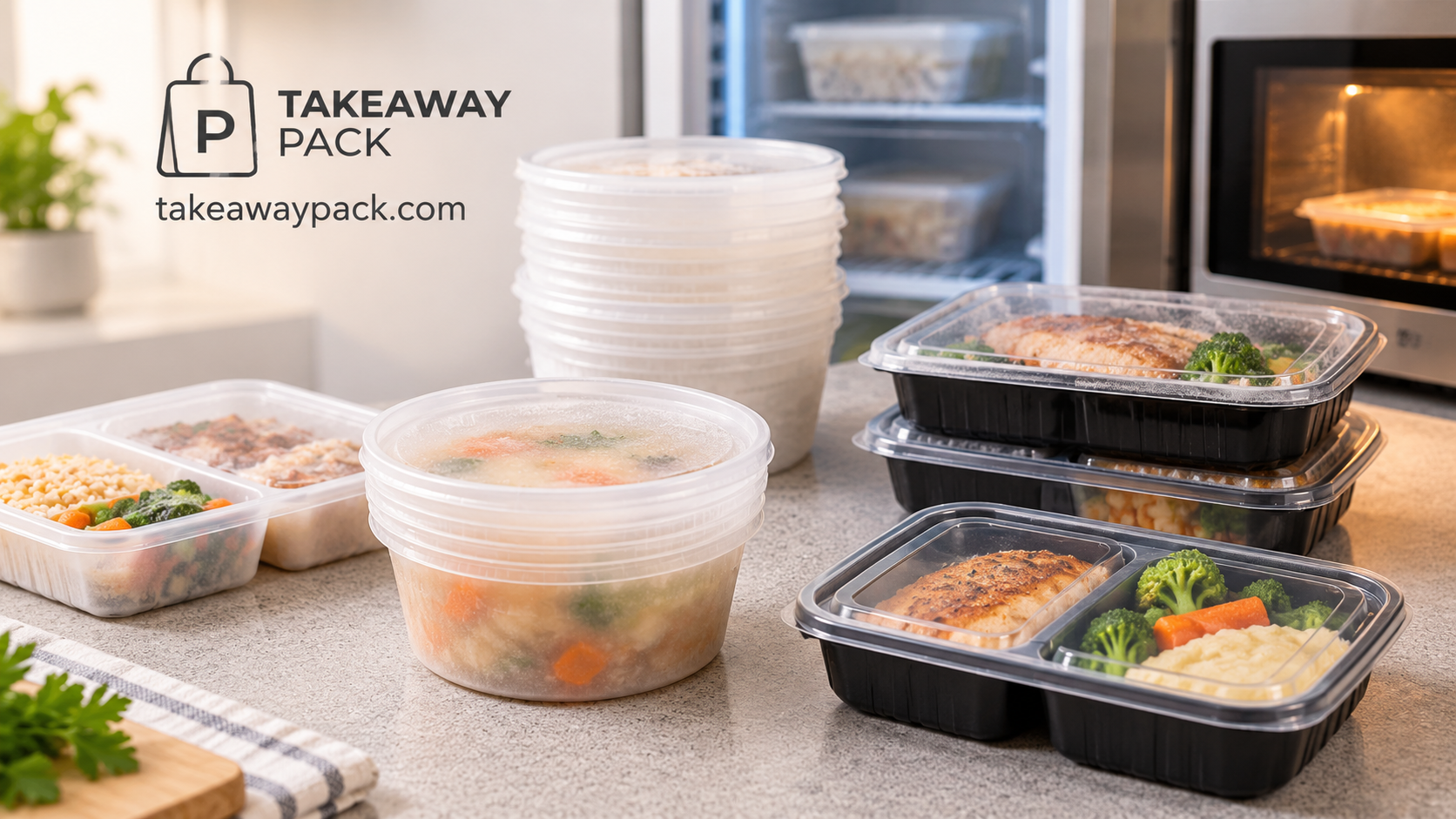
The three demands a frozen-meal tray must meet
A ready-to-heat frozen meal asks its tray to do three jobs at once. First, thermal: hold properties from roughly -18°C freezer storage through reheating, which can range from a 3-minute microwave cycle to a 40-minute conventional-oven bake. Second, structural: stay rigid when frozen and loaded with a dense, saucy meal, so trays do not crack in transit or buckle when gripped. Third, economic: land at a cost the meal program or retail price point can absorb at scale.
No single polymer is best at all three. The choice is a match between the meal's reheating path and each material's strengths.
Where C-PET clearly wins
Crystallized PET carries the widest published thermal window of common tray materials — roughly -40°C to +220°C for the resin, with commercial trays typically specified freezer-friendly, microwaveable, and ovenable to about 400°F. That makes C-PET the default choice in three situations:
- Oven-capable meals. Any SKU whose cooking instructions include a conventional oven needs C-PET or a comparable oven-rated material. PP cannot follow.
- Heavier, rigid meals. Lasagna, roasted entrées, and multi-component meals benefit from C-PET's stiffness, which keeps portions presentable through freezing, stacking, and reheating.
- Reheating ambiguity. If end consumers might use either appliance, C-PET removes the failure mode of a PP tray meeting an oven.
Where PP beats C-PET
PP is the pragmatic winner for microwave-only frozen meals. Engineered high-impact PP trays are sold specifically for frozen distribution and microwave reheating, they tolerate drop impacts at freezer temperatures well, and their material and processing costs run below C-PET. For soups, stews, rice bowls, and pasta dishes reheated exclusively in the microwave, paying C-PET prices buys capability the meal will never use.
Two qualification checks keep PP honest: confirm the specific tray is freezer-rated at your storage temperature, because -18°C sits near the lower limit of some published PP ranges; and test the finished tray-film system with your actual menu, because seal performance and food chemistry — not resin type — decide real-world leaks.