Insulated Liner or EPS Box? How Meal Kit and DTC Food Brands Decide
Insulated Liner or EPS Box? How Meal Kit and DTC Food Brands Decide What to Ship In
For chilled subscription meal lanes that finish within 24–48 hours, a fibre-based insulated liner inside your existing carton usually works out cheapest per hour of temperature hold, because it stores flat and you are not paying parcel freight on foam volume. Moulded EPS boxes still win for frozen payloads, wet proteins, and lanes that punish soft packaging. Reusable insulated coolers only beat both when you actually control a return loop. The way to know instead of guess is to price the
Estimated reading time: 4 minutes
Start from the lane, not the material
Route duration, season, and the temperature band your food needs decide more than any material comparison. A liner that sails through a 12-hour local chilled drop can fail a 48-hour frozen parcel in summer, and no insulation format fixes an undersized coolant plan.
Map three things before shortlisting formats: how long the parcel actually takes including delays, what ambient peaks it meets in its worst season, and what happens after the doorstep drop. Doorstep dwell time is part of the lane, and subscription boxes often sit outside longer than restaurant deliveries.
Where fibre-based liners earn their place
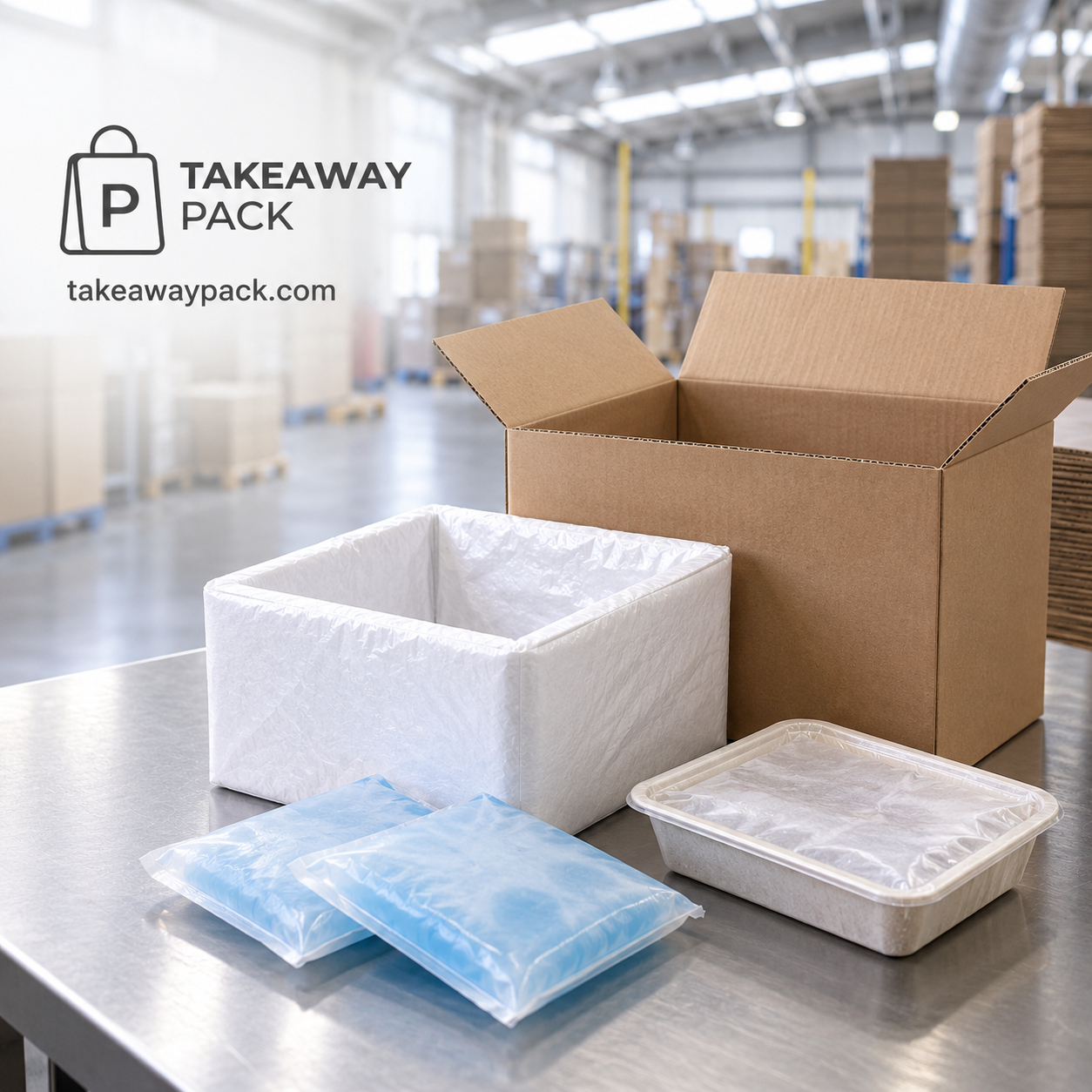
Insulated liners let a DTC brand keep the corrugated cartons it already buys. They store flat, pack fast, and can be sized to the carton rather than forcing the menu into a moulded box. For subscription businesses running a warehouse, that difference in storage volume is a monthly cost, not a nicety.
Liner constructions range from reflective bubble and foam laminates to paper-based and fibre panels, so the same category covers a 12-hour chilled dinner and, in thicker builds, longer chilled lanes. The trade-off is structure: a liner is only as rigid as its construction and closure, and its hold time depends heavily on how tightly the packout fills the carton.
There is a branding benefit too. Because the outer carton stays standard corrugate, your print partner can carry the brand story on the box while the liner stays functional and unbranded.
Where a moulded EPS box still wins
EPS remains the default economy insulation for short and medium food parcel lanes because it is light, rigid, and insulating at a low unit cost. Carrier guidance for perishables commonly points to insulated foam containers with walls of at least 1.5 inches (4 cm), and common industry tiers run from thin walls for same-day work, through standard walls for 24–48 hours, to thick walls beyond 48 hours.
For frozen menus, wet seafood, or anything that needs the box to take a knock without transferring force to the food, a moulded box protects in ways a liner cannot. The costs show up elsewhere: foam boxes eat warehouse space, and most kerbside programs will not take them back.
Reusable coolers are a program, not a purchase
Durable insulated coolers make sense when containers come back: local grocery loops, courier-operated delivery, closed subscription models where the driver collects the previous box. The higher unit price is justified by reuse count, but only if someone runs the return loop — collection, cleaning, inspection, storage, and loss control.
If your customers put the packaging in the bin after every order, a reusable program is the wrong tool no matter how good its per-use math looks on a supplier's spreadsheet.
Price the packout per hour of hold
The comparison your finance team should ask for is cost per validated hold hour. Add the unit price of the shipper, the gel packs (including any reuse credits), packing labor, and the freight difference from size and dimensional weight. Divide by the hold time you have tested, not the one printed on a data sheet.
Run that math per lane and per season. On a short, dense, well-fitted chilled packout, a liner system often closes the gap or wins outright once freight and storage are counted. On a frozen summer lane, the moulded box frequently justifies its cube. Any change to carton size, liner thickness, or coolant count resets the answer, so retest when a component changes.
Brief your packaging partners with the lane in hand
A useful RFQ states the product and temperature band, lane duration including worst-case delays, the carton dimensions you already use, your coolant plan, quantities, printing needs, and destination country. Insulation itself is specified with cold-chain suppliers, but your food-contact packaging belongs in the same conversation early, because container dimensions, lids, and leak control determine how well any liner fits the payload.
Takeawaypack works with a network of foodservice packaging manufacturers and runs its own printing plant, supplying containers, boxes, bowls, and trays to international buyers in small batches with custom print. An RFQ that covers product category, material, size or capacity, quantity, logo or color printing, and destination port gives both the food-contact packaging and the shipper discussion a practical starting point. You can see the container range at takeawaypack.com/categories/food-container.
Quick answers
Are insulated liners as good as EPS boxes?
For short chilled lanes with a tight packout, often yes. For frozen food, wet payloads, or rough handling, moulded EPS still protects better. Test on your lane before switching.
Which is cheaper per hour of temperature hold?
For 24–48 hour chilled DTC lanes, the liner system usually wins once freight cube and storage are counted, even where the EPS box has the lower sticker price. Only your own lane math settles it.
Can I swap EPS for a paper liner without retesting?
No. Changing the insulation format changes the thermal system and can cut hold time, even if the liner looks substantial. Retest the full packout.
Do gel packs decide the comparison?
They cost roughly the same in either system, so count them in both. Fit and coolant placement often matter more than adding another pack.
For a packaging request built around your menu and destination, visit Takeawaypack.