
Sealed Compartment Trays That Keep IDDSI Pureed Meals Shaped, Separated and Microwave-Safe
**Summary:** Molded puree meals lose their shape between the kitchen and the resident unless the tray system is engineered for it. This guide explains why shallow rigid multi-compartment trays with individual seals protect IDDSI Level 4 presentation, and how to specify film, compartments, and validation for a dysphagia program.
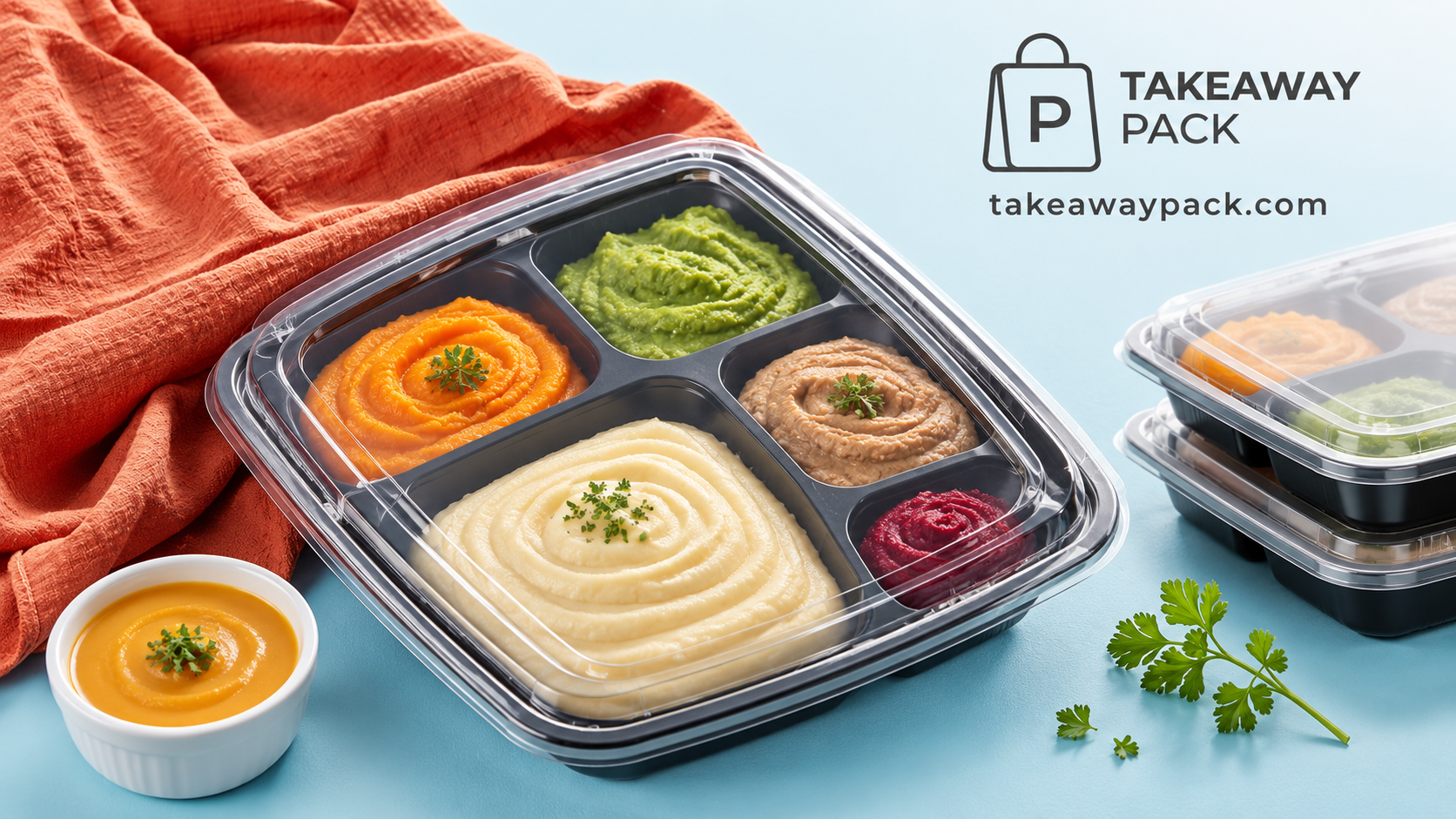
The packaging does not mold the puree — it protects the mold
With IDDSI Level 4 pureed meals, the shape is created in the kitchen: purees are piped or molded into portions that look like the food they represent. Presentation is part of nutrition care, because a plate of indistinct scoops reduces appetite and intake. The tray's job is to preserve that molded definition through sealing, transport, storage, and reheating — not to create it.
Three packaging properties decide whether a molded puree survives the journey: compartment depth, wall rigidity, and headspace.
Why shallow, rigid, individually sealed compartments win
A shallow three-compartment tray with rigid walls outperforms a deep hinged container for molded dysphagia meals. Shallow compartments limit the height a molded portion can slump; rigid walls — C-PET's particular strength across a -40°F to 400°F window — keep the tray from flexing and pressing portions together; and individually sealed compartments stop colored purees from migrating between sections, so the orange carrot mold never bleeds into the green bean mold.
A typical configuration that works: three compartments, shallow profile around 1.5 inches deep, C-PET construction, sealed with easy-peel film. The seal locks each compartment separately, which also means a leak in one section cannot flood the others.
Easy-peel is a dysphagia requirement, not a luxury
Film choice matters as much as tray choice. Residents with dysphagia often have limited hand strength, so the film must open without tools, without tearing, and without flinging sauce. Suppliers of senior-meal tray systems list easy, strong, and extra-strong peel options — a dysphagia program specifies easy peel explicitly, and validates that the seal still holds through transport and reheating at that peel level.
Microwave safety is the third leg: the tray-film system must survive reheating to 165°F/74°C food temperature with the film intact until the resident or caregiver removes it.