Which Bakery Packaging Materials Keep Cream Cakes and Pies Safe From O
Which Bakery Packaging Materials Keep Cream Cakes and Pies Safe From Oil and Moisture?
Cream, buttercream, and sugar glazes keep releasing fat and moisture long after a cake or pie leaves the oven. Uncoated board absorbs that grease, softens, and stains — and a box that fails on any one of oil, moisture, visibility, or strength fails the product inside it. This article explains where…
Summary
Cream, buttercream, and sugar glazes keep releasing fat and moisture long after a cake or pie leaves the oven. Uncoated board absorbs that grease, softens, and stains — and a box that fails on any one of oil, moisture, visibility, or strength fails the product inside it. This article explains where protection breaks down in the formats bakeries use most, compares the three barrier approaches buyers should evaluate — food-grade barrier coatings, laminated paperboard, and grease-resistant liner papers — and lists the questions to settle before ordering: which coating applies to the exact SKU, what food-contact documentation the destination market requires, and which structures (windows, inserts, board grades) match fragile, moist baked goods.
Estimated reading time: 4 minutes
Why Cream Cakes and Pies Punish the Wrong Box
A frosted cake or a filled pie keeps changing after it is packed. Butterfat migrates into any absorbent surface it touches, and steam from the crumb condenses on the coolest surface available — usually the box wall. Four demands collide at once:
Grease barrier. Fat soaking into paperboard leaves stains and quietly removes stiffness.
Moisture control. A tightly sealed box traps humidity; frosting sweats and board softens.
Visibility. Decoration sells the product, but the window and its seal are common failure points.
Crush strength. Boxes ride in delivery bags, stack on shelves, and carry the weight placed above them.
No single format delivers all four. The combination of material, barrier treatment, and structure does — and each of those is a separate question to put to a supplier.
Where Each Bakery Format Needs Protection
Cake boxes and window cake boxes. The default for whole cakes. Ask where the window film sits and how it is sealed into the lid, because that joint faces the moistest air inside the box. For gift boxes, rigid walls and a fitted lid protect taller decorations.
Donut and pastry boxes. Glaze marks everything it touches. A slightly taller lid and a liner under each row keep icing off both the board and the lid.
Cupcake carriers. Inserts hold each cake so frosting never touches a wall. Confirm insert fit against the actual cup diameter you bake, not a generic size.
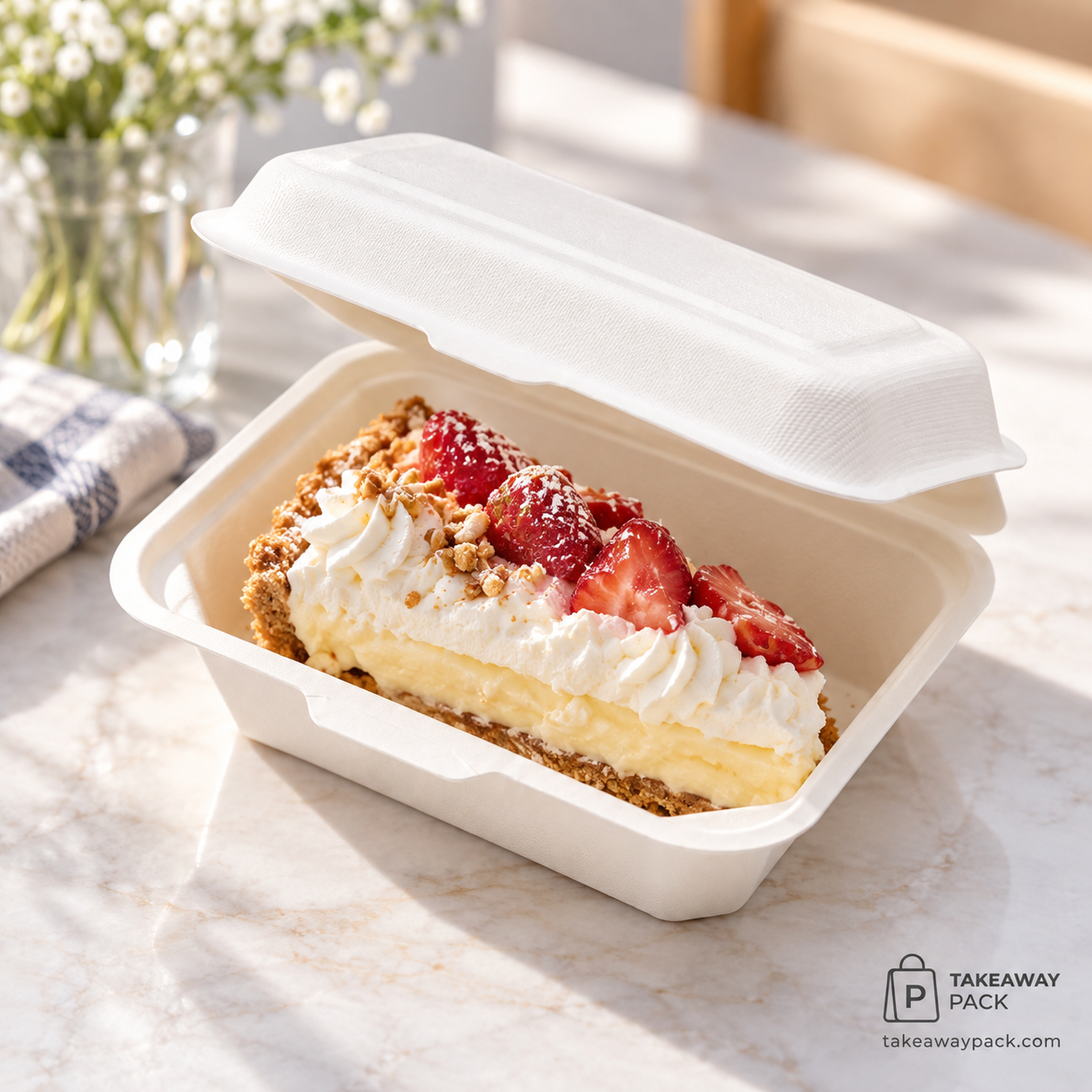
Pie boxes. Fat attacks the base first, so the floor panel matters more than the lid. Shallow, rigid construction resists flex when a box is carried flat.
Cake boards and inserts. The first contact surface under the product. Grease resistance here protects everything above it.
Paper carry bags. The last-mile layer. Match bag strength to the boxed weight it will carry — a torn handle at the counter undoes the box's work.
Three Barrier Approaches to Compare
Food-grade barrier coatings. A coating applied to the food-contact side repels oil and slows moisture uptake. Coating options differ by product and production method, so ask which coating is offered on the specific SKU — "coated" alone is not a specification.
Laminated paperboard. A barrier layer bonded to the board gives stronger protection for wetter, fattier products, at a higher unit cost. If sustainability positioning matters to your brand, ask how the laminate affects recyclability in your destination market, because end-of-life rules differ by region.
Grease-resistant liner papers. Liners and interleaving sheets catch grease where it appears and keep the outer box presentable. They are the most targeted fix and the easiest to upgrade without changing the box itself.
Compostable and recycled-content options. For buyers who need an environmental claim that survives procurement review, select kraft and molded-pulp lines can be supplied with related certification documentation, confirmed for the specific SKU together with order quantity and destination market. Certification is held at factory level, not by the brand: for example, one of Takeawaypack's supplying mills holds FSC Chain-of-Custody certification (GFA-COC-006105, valid through February 2027) and GRS 4.0 certification (TE-00121899, valid through November 2026). A certificate belongs to the specific product, never to a whole catalog.
Custom Printing and MOQs, Settled Early
Printing. Logos usually go on the outside; ask which inks and processes are used anywhere the packaging touches food directly. Approve a digital proof in writing before production starts — that proof is the reference both sides fall back on for every reorder.
MOQs. Stock items generally allow flexible minimums and sometimes trial orders; custom MOQs depend on the product and the production method behind it. Raise coating, structure, and printing together at the inquiry stage, while changes are still inexpensive.
A Pre-Order Checklist for Oil- and Moisture-Sensitive Products
Decide which risk fails first for your product: grease, moisture, or crush.
Ask which coating, laminate, or liner applies to the exact SKU, not the product family.
Request food-contact documentation for the destination market; requirements differ by region.
Confirm the structure — window film and seal, insert fit, board grade, lid height — against your product's weight and shape.
Approve the digital proof in writing.
Order a sample and test it with a real product, in real storage and delivery conditions.
State quantity and destination port or country in the RFQ so quotations reflect your actual volume.
Getting SKUs That Match Your Products
Takeawaypack is a foodservice packaging brand and procurement coordinator that works with multiple packaging manufacturers across boxes, trays, lids, bags, and other categories. That breadth matters here: matching a frosted cake, a custard pie, and a glazed donut to the right barrier usually means drawing on more than one construction, not forcing one box to do everything.
If you are choosing bakery packaging for oil- or moisture-sensitive products, send your SKU list, quantities, and destination market through https://takeawaypack.com. An inquiry built on your real products and volumes returns answers you can defend in front of your own customers.