Compostable Takeaway Containers in Australia: Matching the Material to
Compostable Takeaway Containers in Australia: Matching the Material to a Hot, Oily Menu
Australian plastic bans have turned compostable packaging into a compliance decision, not just a values one. For hot, oily food, molded sugarcane bagasse is the strongest performer because it handles heat, moisture and grease in one structure, while PLA-lined paper suits moderate heat and clear PLA belongs on cold lines only. Check certification claims against AS 4736 for commercial composting or AS 5810 for home composting, and remember that composting access still varies by council. Expect a
Estimated reading time: 5 minutes
What the Words Mean, and What Regulators Watch
"Biodegradable" sets no timeframe and no end condition, which makes it almost useless as a purchasing claim. "Compostable" has a precise meaning: the material breaks down into carbon dioxide, water, inorganic compounds and biomass at a rate consistent with organic material, leaving no toxic residue. Australian consumer regulators have flagged vague environmental marketing as an enforcement priority, so the word on your packaging should map to a standard.
Recyclability has its own food-contact reality. Packaging soiled with grease or food residue is generally rejected from kerbside recycling regardless of material, which is why end-of-life claims for takeaway containers should lean on compostability where it genuinely applies.
Choosing the Material for Hot and Oily Food
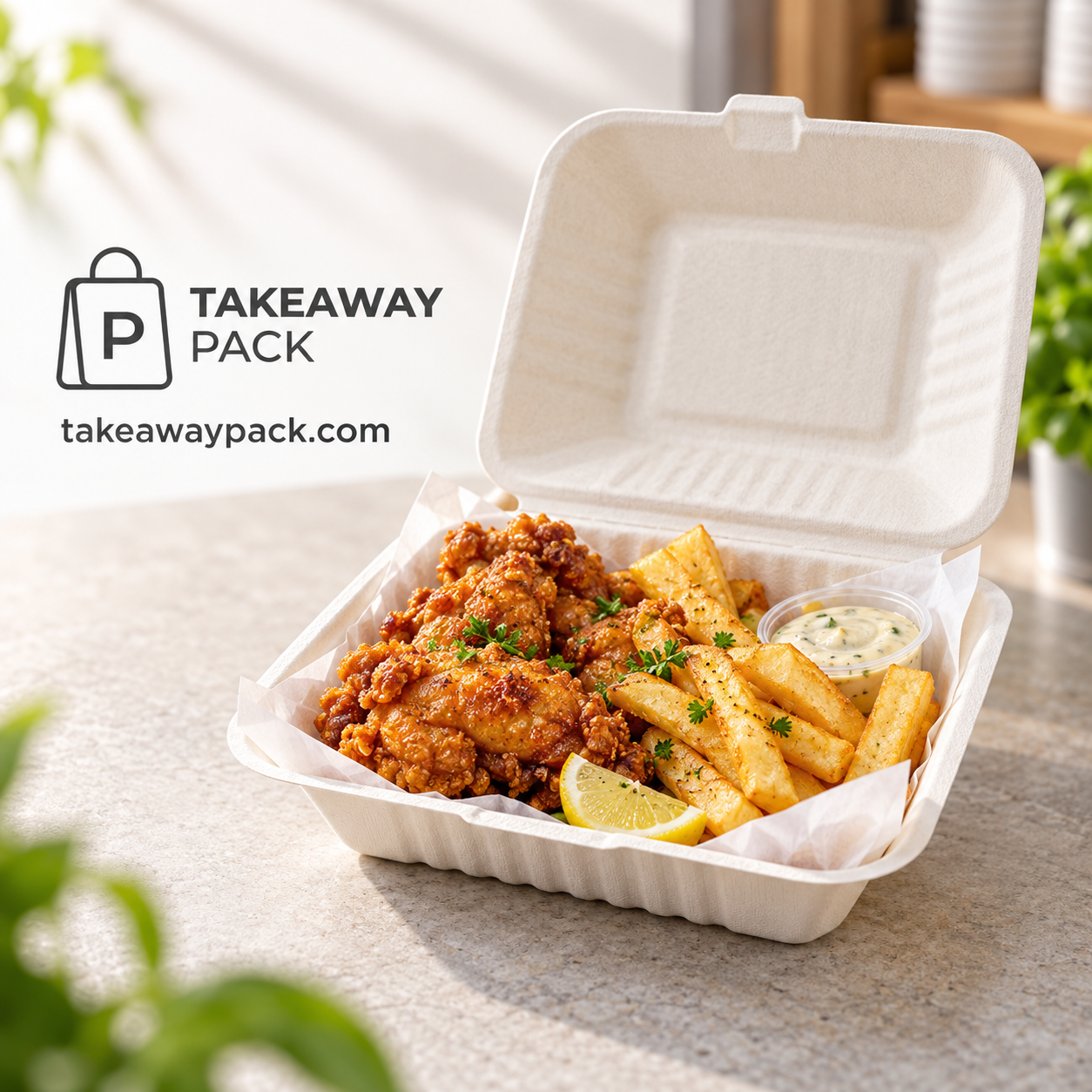
Sugarcane bagasse is the fibrous pulp left after juice extraction, an agricultural by-product molded into sturdy containers. It tolerates high filling temperatures, commonly cited to around 120 degrees Celsius, copes with short microwave reheat bursts, and is generally freezer safe. For fried food, curries and rice dishes straight off a truck line, it is the default compostable choice.
Bagasse also manages vapour better than the alternatives on a hot line. The molded wall breathes slightly, which releases the steam that would otherwise condense back onto fried coatings, and its insulating density keeps the outside of a full container comfortable to carry.
PLA-lined paper containers serve moderate-heat applications, with heat tolerance generally quoted in the 85 to 90 degree range, and they are not suited to very hot soups. Aqueous-lined variants trade a little grease resistance for better home-compost prospects, which can suit bakery lines and lightly oily items. Clear PLA looks like PET and displays beautifully, but deforms at low temperatures, so it belongs on cold deli and salad lines only.
Certifications Worth Checking
AS 4736 covers commercial composting, which needs the temperature and moisture control of a processing facility. AS 5810 covers home composting at lower temperatures over longer periods. A product certified only to the commercial standard will not meaningfully break down in a backyard bin or in landfill, so the certification level should shape what you tell customers.
Verify the claim at product level. Ask each supplier which SKUs are certified and request the certificates for the exact items you plan to order, because a certification belongs to a product, not to a catalogue or a brand. Food-contact compliance for the destination market belongs in the same file.
Cost, Bans and the Compliance Reality
Compostable containers generally price above conventional plastic, with industry discussion citing premiums in the range of ten to forty percent per unit. Bulk purchasing, consolidating to fewer SKUs and the avoided cost of non-compliance narrow that gap across a financial year.
State bans now cover most single-use plastic food containers, so the question for a food truck or mobile caterer is rarely whether to switch but which material to switch to. Event permits and council contracts increasingly ask for packaging details at application time, which puts material choice in writing before the first service. Building the switch around hot-menu performance first avoids the expensive mistake of ordering one material for the whole menu. Operators who consolidate to a small set of proven sizes also cut storage pressure on the truck, which matters more on a mobile route than in a sit-down kitchen.
Disposal Honesty With Customers
Certified compostable packaging dropped into a general waste bin still ends up in landfill, where conditions prevent meaningful composting. Access to commercial organics collection varies by state, council and even suburb, and the honest operators say so.
Practical steps cost little: a bin sign that names the correct route, a line on the menu board, or a word from staff at handoff. Customers forgive infrastructure gaps; they do not forgive greenwashing.
Quick answers
Are compostable containers suitable for fried food from a food truck?
Yes. Molded sugarcane bagasse is the standard answer for hot, oily food because its dense fibre resists grease while breathing out steam, keeping fried coatings crisper than sealed plastic.
Is "biodegradable" a safe claim to print in Australia?
No. It is vague, it is under regulatory scrutiny, and it sets no standard. Use compostable claims tied to AS 4736 or AS 5810 certification at the specific product level.
Can PLA-lined containers handle very hot food?
Not reliably. Their heat tolerance sits below boiling, so keep them on warm and moderate applications and leave soups and fryer-fresh items to bagasse.
What documentation should a buyer collect?
Certificates for the exact SKU, food-contact compliance for the destination market, and written confirmation of any compostable or recyclable certification direction attached to that product line.
TakeawayPack supplies international foodservice buyers across North America, Europe, Australia, the Middle East and East Asia. Compliance and certification documents are confirmed per SKU and per destination market rather than assumed at catalogue level. For a packaging request built around your menu and destination, visit TakeawayPack.