A Practical Way to Align Artwork, Materials, and Print Decisions for Food-Service Packaging
Build a controlled custom-packaging workflow that keeps RFQ inputs, SKU details, artwork, material questions, digital proof review, and written approval aligned.
2026-08-07 - 6 min read
The direct answer: control the inputs before production
For a multi-location restaurant brand, a change to a cup, box, or bag affects customer-facing identity, store replenishment, delivery operations, and supplier comparison. The practical response is a controlled workflow that connects the packaging SKU, material questions, artwork file, print request, digital proof, and written approval.
Begin with a clear RFQ rather than assuming that one printing method, material, or colour treatment will fit every SKU. Keep each decision attached to the item and intended project context, then use the proof as the documented checkpoint before production.
Start with the packaging system, not an isolated item
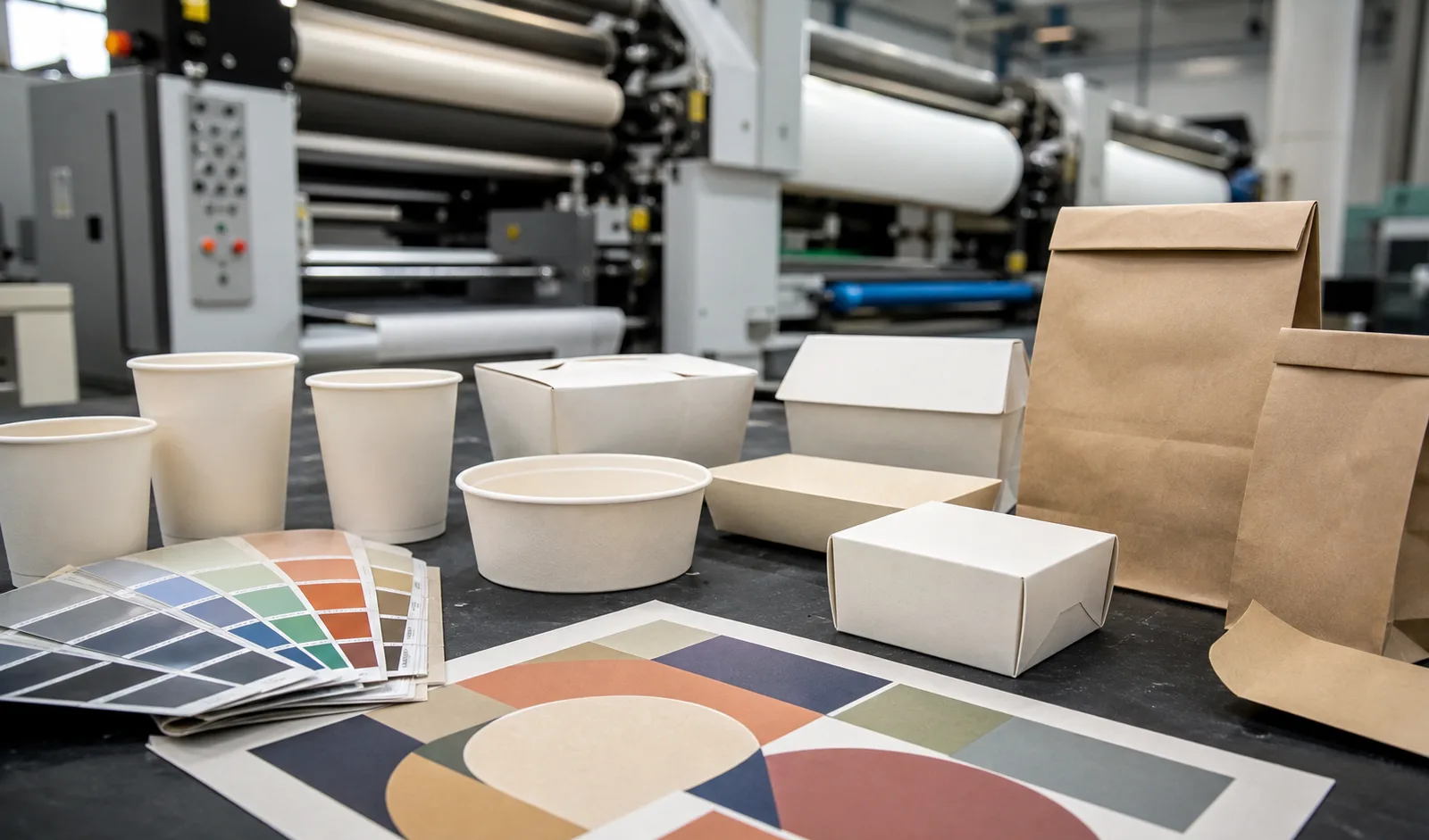
A useful brief identifies every format in scope: cups, bowls, boxes, containers, trays, lids, bags, or cutlery. For each requested item, record the intended material, size or capacity, expected quantity, printing or logo requirements, and destination port or country. These are the inputs TakeawayPack can collect through its RFQ process.
For chain operators, this system view keeps decisions connected across regions and replenishment planning. It also avoids treating food, temperature, transport, structure, coating, capacity, or delivery context as generic assumptions. A supplier comparison becomes more useful when the requested details are attached to individual SKUs.
Treat the design file as a controlled production input
Artwork and substrate decisions work best when they are considered together. In a procurement workflow, that means aligning the file, product requirements, and approval process before production starts.
TakeawayPack can discuss structure, coating, capacity, printing, lid matching, and carton packing during project coordination. For custom printing, it prepares a digital proof from the customer’s file and proceeds to production only after written confirmation from the customer. This gives the brand team a defined point to verify the artwork and the procurement team a documented approval point.
Review the proof against the actual request, not only the logo. Confirm the requested product category, material, capacity or dimensions, artwork version, colour and logo request, and destination information. Where the project needs more clarity, the discussion can also cover samples, drawings, printing-file alignment, packaging, and export handoff communication.
Ask material questions in the RFQ, then keep them attached to the SKU
There is no verified basis for treating a material characteristic as universal across a restaurant packaging range. Capture the material and relevant project details for each SKU instead. TakeawayPack’s RFQ can collect material, size or capacity, expected quantity, print, colour or logo customisation, and destination information; the inquiry discussion can also cover structure and coating.
This creates a more useful shortlist. Buyers can compare whether suppliers can turn a defined request into a testable and quotable scope, while internal stakeholders retain a clearer record for assessing a proposed packaging change across stores and markets.
Make quantity and the production route explicit
Custom minimum order quantities are not one-size-fits-all. TakeawayPack’s published information states that some stocked items may support trial orders, while custom MOQ depends on the product and production method. Put the estimated quantity into the RFQ and ask for the custom MOQ to be evaluated against the particular product and proposed production route.
This prevents a trial-order expectation from being mistaken for a custom-production commitment. It also creates a clear approval sequence: define the SKU and customisation request, align the digital proof, and provide written confirmation before production.
A supplier-ready checklist for a coordinated launch
Before requesting a quotation, prepare a concise package of controlled inputs:
- The product categories and individual SKUs in scope.
- The material, structure, or coating questions for each SKU.
- Dimensions or capacity, expected quantity, and destination country or port.
- The current artwork file and the required printing, colour, and logo customisation.
- Any requested samples, drawings, lid matching, carton packing, or export handoff details.
- The internal owner who will provide written proof approval.
This checklist does not predetermine a printing method or claim a colour outcome that has not been evaluated for the relevant SKU. It creates the controlled inputs needed for a supplier discussion and a documented approval.
Work with TakeawayPack on a documented custom-packaging request
TakeawayPack is a food-service packaging brand and procurement coordinator that works with multiple packaging manufacturers. Its online catalogue includes cups, bowls, boxes, containers, trays, lids, bags, and cutlery.
To begin, submit an RFQ with the product category, material, size or capacity, estimated quantity, printing or logo requirement, and destination information. The team can discuss the relevant structure, coating, printing, lid matching, and carton-packing details, prepare a digital proof for custom printing, and begin production only after the customer provides written confirmation.