How Cloud Kitchens Approve Custom Printed Packaging Remotely: Digital Proofs and Physical Samples
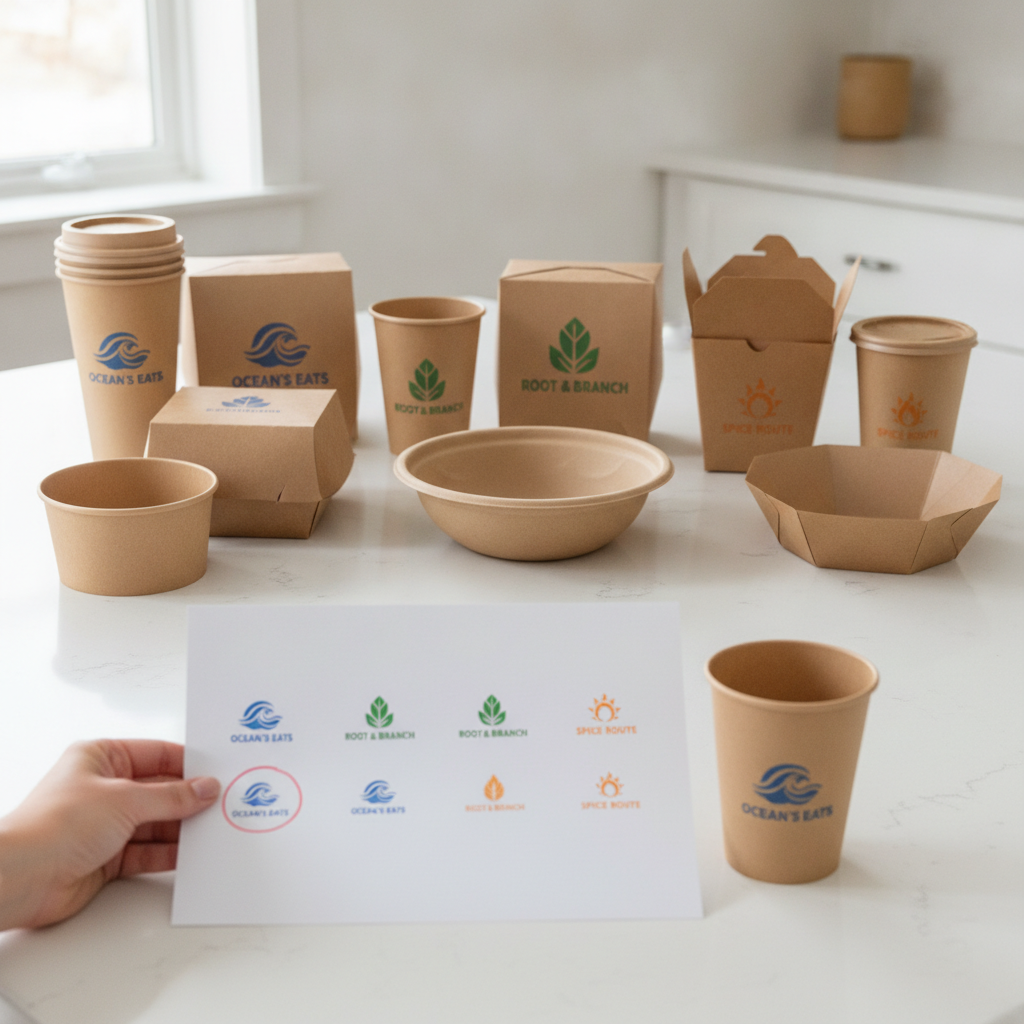
Running several virtual brands from one kitchen means every brand needs its own clearly separated packaging — and the artwork on that packaging has to be right before it goes to print. This guide explains how cloud kitchens and ghost operators approve custom printed packaging from a distance, using digital proofs and physical samples before committing to a full production run. You will learn what each proof type shows, what to check on a proof, and the step-by-step remote approval workflow that keeps brand segregation error-free and avoids costly reprints.
2026-08-11 - 6 min read
**Summary:** Running several virtual brands from one kitchen means every brand needs its own clearly separated packaging — and the artwork on that packaging has to be right before it goes to print. This guide explains how cloud kitchens and ghost operators approve custom printed packaging from a distance, using digital proofs and physical samples before committing to a full production run. You will learn what each proof type shows, what to check on a proof, and the step-by-step remote approval workflow that keeps brand segregation error-free and avoids costly reprints.
Why Remote Approval Matters for Multi-Brand Kitchens
A cloud kitchen often runs several virtual brands under one roof. Each brand may need different cups, bowls, boxes, and lids, each carrying its own logo, colors, and menu copy. When those details are wrong, the wrong packaging reaches the wrong customer — a mix-up that hurts the brand and the kitchen at the same time.
The risk is highest at the artwork stage. A design that looks correct as a flat file can fail once it crosses a fold, sits on the wrong panel, or prints in a color that no longer matches the brand standard. Reviewing proofs before production is the control point that keeps every brand distinct and every order correct.
What a Digital Proof Tells You
A digital proof is a screen-based preview of your packaging artwork. In most custom print workflows, the supplier sends it as a review file so you can check text, image placement, logo alignment, dimensions, margins, and the order of panels on the box or cup.
For a cloud kitchen, a digital proof is the fastest way to confirm that each brand's artwork is on the correct piece. It is well suited to catching spelling mistakes, missing print details, and obvious layout problems. It is not, however, a reliable way to judge final color, because screen settings and brightness change how artwork appears.
What a Physical Sample Tells You
A physical sample is a printed piece you can hold and inspect. It shows how the artwork works on the actual material, which makes it easier to judge visual balance, readability, and overall presentation. For branded packaging, a sample is the closest practical reference before the full run.
Physical samples matter for cloud kitchens because the same cup or bowl can be produced in different materials and coatings. A sample lets you confirm not only the print, but also the fit of the lid, the feel of the material, and whether the finished piece matches the brand experience you want each virtual brand to deliver.
Approving Multiple Brands in One Remote Workflow
When the brand owner and the kitchen operate in different locations, the approval process must be structured and written down. The goal is a single, agreed version for every brand before any print run begins.
**Step 1 — Review the artwork version.** Confirm you are looking at the latest revision and the correct file for the correct brand. Check the logo, text flow, image placement, and which panels carry which content.
**Step 2 — Check the technical details.** Look at dimensions, fold lines, bleed and safe areas, barcode placement, and the placement of print around the lid rim or the box edge. These are the details that often fail in production even when the concept is fine.
**Step 3 — Collect feedback on one version.** Brand teams, menu teams, and the supplier should all comment on the same proof. This avoids version confusion and keeps each brand's comments separate, which is exactly what a multi-brand kitchen needs.
**Step 4 — Request clear revisions.** Point to the exact panel or element that needs changing. Specific feedback shortens the revision cycle and prevents new mistakes in the next version.
**Step 5 — Approve only when confirmed.** Final sign-off happens after all comments are resolved and the updated proof is re-checked. Written confirmation at this stage protects both sides from rework and wasted material.
What to Check on Every Brand's Proof
Run the same checklist for every brand so the standard stays consistent across the kitchen.
- **Color:** Compare the proof against the approved brand reference, not just by eye. Check that the logo and solid areas look stable across panels.
- **Text and copy:** Verify product names, ingredients, instructions, and any legal or country-specific copy. Check that text stays readable at the final size.
- **Image quality:** Confirm photos and graphics stay sharp and well-cropped at the real package size.
- **Dielines and alignment:** Confirm logos and text sit correctly around folds, edges, and cut lines.
- **Finishes and effects:** If the packaging uses foil, embossing, spot UV, or a coating, check that these are clean, aligned, and within their intended areas.
- **Structure and size:** Confirm the artwork fits the actual dimensions and that the front panel reads clearly after assembly.
- **Barcode readability:** Make sure barcodes and QR codes are clear, correctly placed, and free from distortion near folds or graphics.
Why This Prevents Mix-Ups and Mis-Ships
When each virtual brand has an approved proof and a confirmed sample, the kitchen can print and segregate its stock by brand with confidence. The artwork matches the brand, the packaging fits the menu, and the correct items are packed into the correct order.
This is the difference between brands that discover problems at the packing counter and brands that catch them on a proof. A little extra review time before production costs far less than a reprint, a delayed shipment, or a customer receiving the wrong brand's packaging.
Custom Printed Foodservice Packaging That Goes Through Proofing
For cloud kitchens and virtual brands that need several brand-segregated ranges sourced at once, TakeawayPack coordinates foodservice packaging with print and customization handled through a clear proofing step. Digital proofs are prepared from your artwork files, and production begins only after you confirm them in writing. Samples, drawings, and print-file alignment can be discussed during the inquiry, and the RFQ process captures the product type, material, size, quantity, print details, and destination so each brand's specifications stay separate.
TakeawayPack serves buyers mainly in North America, Europe, Australia, and the Middle East, with a product range covering cups, bowls, boxes, containers, trays, lids, bags, and cutlery. Custom MOQ depends on the product and production method, while some stock items may support trial orders. Certification evidence is available for partner facilities, including FSC, GRS, and ISO 9001.
If you are setting up custom printed packaging across multiple virtual brands and want a remote approval flow that keeps every brand distinct, start by sending your specs and artwork questions to the TakeawayPack team at info@takeawaypack.com or request a quote through the website at **https://takeawaypack.com**.