How to Order Custom Packaging for Multiple Virtual Restaurant Brands
A multi-brand cloud kitchen can simplify purchasing without treating every package as interchangeable. The practical approach is to define each brand’s packaging needs by SKU, separate artwork approvals, identify which items may share a production run, and agree how brand-specific lots will be packed and released. This article provides a buyer-focused checklist for custom-printed boxes, bags, cups, and cutlery across several virtual brands.
2026-08-11 - 6 min read
**Summary:** A multi-brand cloud kitchen can simplify purchasing without treating every package as interchangeable. The practical approach is to define each brand’s packaging needs by SKU, separate artwork approvals, identify which items may share a production run, and agree how brand-specific lots will be packed and released. This article provides a buyer-focused checklist for custom-printed boxes, bags, cups, and cutlery across several virtual brands.
Start with a packaging map for every brand
The first question is not simply whether one supplier can print several designs. It is whether every item has a clear job in the packing workflow.
Build a packaging map for each virtual brand. List the food format, the container or bag category, the required lid or closure, the expected order volume, and the artwork version. Keep hot, oily, liquid, and dry foods separate in the brief because a single generic pack specification can create avoidable risks during delivery.
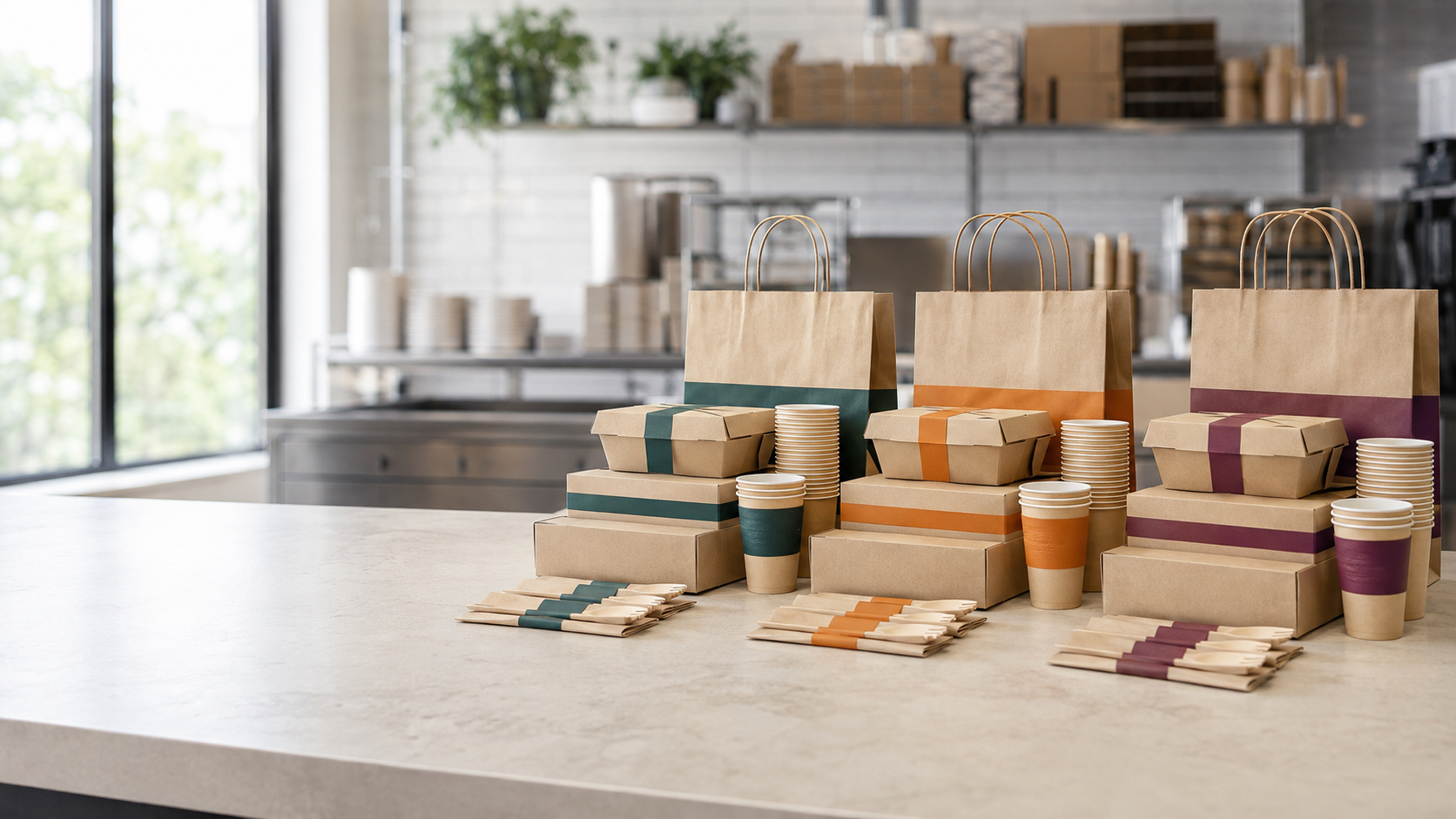
For example, one kitchen may use branded meal boxes for a rice-bowl concept, paper bags for a sandwich brand, and cups plus lids for a beverage brand. These are different product categories, not merely different logo files. A useful request for quotation identifies the product category, material preference, size or capacity, estimated quantity, print or color requirements, and destination country or port for each line.
Decide what can be combined and what must stay separate
A combined purchase can reduce administrative work, but it should not blur the differences between brands or SKUs.
Ask the supplier to quote each item separately even when the purchase order is consolidated. The quote should make clear which costs apply to a specific SKU, such as printing or plate-related charges, sampling charges, packing method, and shipping terms. This makes it easier to compare brand-level demand and prevents one design from hiding the cost or minimum order requirement of another.
Some items may share a similar structure, while others should remain separate because their size, coating, lid compatibility, or print requirements differ. Do not assume that identical-looking products use the same construction. Confirm the exact product specification for each SKU before using one item as the reference for another.
Keep each brand’s artwork under its own approval record
Multi-brand ordering becomes difficult when artwork versions are mixed up. Use a simple approval record for every branded SKU:
- Brand name and product category
- Artwork filename and version number
- Print colors and placement notes
- Size, capacity, and material or structure requested
- The person responsible for written approval
- The approved proof date and any changes after approval
For custom printing, TakeawayPack states that it prepares a digital proof from the customer’s files and starts production after written customer approval. That makes the approval record a practical control point: it should identify exactly which brand and SKU the approval covers. A proof for one box or bag design should not be treated as approval for all other formats.
If the kitchen and brand owner work in different locations, agree in advance who has authority to approve a digital proof and how changes will be documented. Avoid giving production approval through an informal chat message that does not identify the relevant artwork version.
Plan branded lots around the packing workflow
Separate branded lots are valuable only when they make the kitchen easier to operate. Tell the supplier how you want the goods identified and released: by brand, SKU, artwork version, destination, or planned delivery phase.
Before placing an order, align on the questions that affect receiving and storage:
- Which cartons belong to each brand and SKU?
- How should cartons and inner packs be identified for receiving?
- Which items are needed first, and which can be held for a later phase?
- What is the agreed packing configuration for each item?
- Who will confirm a change to artwork, quantity, or delivery destination?
The goal is not to promise a particular split-delivery arrangement before it is quoted. The goal is to convert the kitchen’s brand-segregation needs into written order requirements. Confirm availability, commercial terms, and delivery arrangements for the specific order rather than relying on a general assumption.
Treat boxes, bags, cups, and cutlery as separate sourcing decisions
A supplier that discusses several food-service packaging categories may still need different information for each item. TakeawayPack’s online catalog includes cups, bowls, boxes, containers, trays, lids, bags, and cutlery. In an RFQ, the team can discuss product structure, coating, capacity, printing, lid matching, and carton packing based on the project requirements.
That is useful for a multi-brand kitchen because the sourcing conversation can begin with the complete order list instead of a single product. It is not, however, a guarantee that every requested category, material, or customization will be available for every order. Confirm the relevant SKU, specification, and commercial terms individually.
For cutlery and other non-printed items, decide whether a neutral item is operationally preferable. Branded packaging can help staff recognize an order, but too many branded components may create excess inventory when a menu or brand identity changes.
Use samples and proofs to test the real operating conditions
A digital proof helps verify artwork, but it does not replace an operational packaging test. Before committing to a larger run, ask whether samples, drawings, or print files can be used to align requirements. Test the items with the actual menu, expected fill level, packing sequence, stacking method, and delivery journey.
Document what the test does and does not establish. A sample may help the team inspect fit and handling, but the buyer should confirm whether the sample matches the intended production construction, coating, lid configuration, and printing process. Where food-contact, sustainability, or market-specific claims are relevant, request documentation for the specific SKU, intended use, and destination rather than relying on general statements.
Build a change plan before your brands change
Virtual brands evolve quickly. New menu items, promotions, and rebrands can leave a kitchen with branded packaging that no longer matches the order flow.
Create a simple change-control plan before production. It should state the final date for artwork changes, the approved version for each SKU, the expected quantity by brand, and how unused printed stock will be counted. If you expect a phased launch, ask for order-specific options and costs before committing. Do not assume a supplier will hold inventory, accept returns, or release stock in stages unless those terms are included in the agreed quotation or order.
A practical next step for multi-brand buyers
One consolidated inquiry can be a sensible starting point when it is detailed enough to keep each brand distinct. Prepare a spreadsheet that lists every packaging SKU, its artwork version, quantity forecast, destination, and desired packing or release instruction. Then ask for an order-specific quotation and confirm the proof, production, packing, and delivery steps in writing.
TakeawayPack works with food-service packaging categories and can collect RFQ details such as product category, material, size or capacity, expected quantity, print or logo requirements, and destination. For a multi-brand packaging brief, start with the SKU list and ask which details are needed to assess the specific order. Learn more or submit an inquiry at **https://takeawaypack.com**.