How Small Businesses Get Custom Printed Boxes Without a Large Minimum Order
For a long time, custom printed boxes were built around big volume, long lead times, and costly tooling development. Suppliers set high minimum order quantities (MOQs) and treated them as non-negotiable, which pushed small brands out of the conversation. That is changing. Digital printing and lower MOQ programs now make it realistic for small and mid-sized brands to order custom printed boxes in modest quantities. The practical questions are about board strength, color accuracy, and print quality — not about whether small-batch custom branding is possible at all.
2026-08-12 - 7 min read
Why high MOQs kept small brands out
Conventional custom packaging was designed for brands that could order tens of thousands of pieces at a time. A supplier's setup costs — printing plates, cutting dies, tooling, and machine changeover — had to be spread across a large run to keep the unit price reasonable. When a small brand asked for a few hundred boxes, that fixed cost fell on very few pieces, so the per-box price climbed sharply.
Many suppliers responded by raising the MOQ rather than by changing their production method. The result was that small businesses heard one message: "we cannot do it, or it will cost too much." The real constraint was not a lack of demand. It was the production model built around offset printing and dedicated tooling.
Digital printing broke that dependence. Because digital presses do not need a separate plate for each design, a supplier can run a small number of pieces and still keep the marginal cost of changing the design low. Setup cost no longer has to be amortized over a huge run, which is what makes lower MOQs possible.
What low MOQ custom printing actually means
A low MOQ program does not mean "no minimum at all." It means the minimum is low enough that a small brand can test a design, cover a first order, or stock a modest quantity without overcommitting cash.
When you compare options, the useful question is not just the number. It is what the minimum includes. Ask whether the MOQ covers the finished box only, or whether printing setup, tooling, and finishing each carry their own quantity. A quote that looks low can still hide a separate minimum for a special finish or a custom die.
For a small brand, a low MOQ matters because it reduces risk. You can validate a design, measure sell-through, and reorder with confidence instead of tying up working capital in boxes you may not sell for months.
What to check before ordering a small run of custom boxes
Board and material strength
The box must hold the product and survive shipping regardless of the quantity ordered. Confirm the board type, thickness, and grammage suit the weight and handling of your item. A lightweight board may look fine in a sample but buckle under a delivery stack or a filled carton.
Color accuracy
Digital printing reproduces color well, but a monitor is not a reliable color reference. Agree on a color standard and check a physical proof before the full run. If your logo uses a specific brand color, ask how closely the available printing method can match it and whether a dedicated spot color is worth the extra setup.
Print quality and finish
Look at the printed result on the actual board, not on a screen. Check edge sharpness, ink coverage, and how the graphic sits around folds and score lines. A premium brand feel depends on print quality, the finish you choose, and how the design wraps the structure.
How small brands approach custom printed boxes in practice
A common first step is a modest custom box with a clean, simple design rather than a heavily printed structure. This keeps setup manageable and lets the brand establish a consistent look across the range.
Another approach separates the "fixed" from the "variable." A brand can keep one standard printed box and change a label, sticker, or sleeve per SKU. That keeps the box itself at a comfortable minimum while still giving each product its own identity.
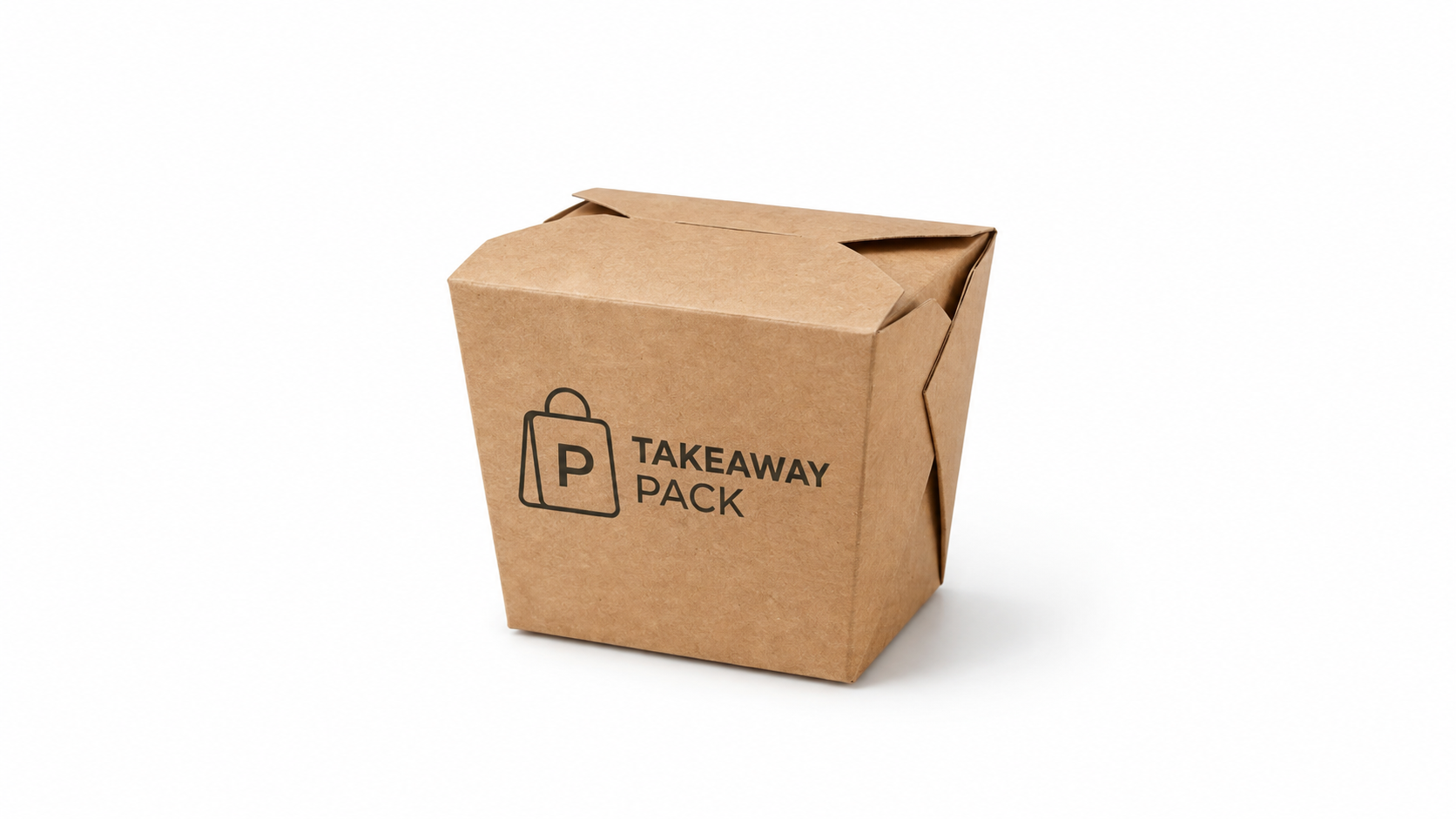
However, customization is not limited to big runs. If a supplier offers digital printing and a flexible MOQ, a small business can order a true custom printed box in a quantity that fits its first order — and reorder as demand grows.
Key questions to ask a packaging supplier
- What is the minimum quantity for the printed box, and what does it include?
- Does the MOQ change if I add a custom finish, a die-cut window, or a special size?
- How do you confirm color accuracy and print quality before production?
- Can I order a small trial quantity before committing to a larger run?
- What happens if I need to reorder a similar design later?
When custom printed boxes are worth it for a small brand
Custom printed boxes earn their cost when the box supports the brand, not just contains the product. That is especially true for direct-to-consumer brands, gift-oriented products, retail displays, and any business where the unboxing experience shapes repeat purchases.
If the product still sells well in a plain box, a label or sticker upgrade may be the more efficient first step. Custom printing is most valuable once the brand identity is settled and the box is meant to carry that identity consistently.
Frequently Asked Questions
Do I always need a large order for custom printed boxes?
No. Digital printing and low MOQ programs let small brands order custom printed boxes in modest quantities. The final minimum depends on the box type, size, material, printing version, finish, and production setup.
What is the difference between a custom box and a standard box with a label?
A custom printed box carries your design, logo, and colors directly on the structure. A standard box with a label is cheaper to start but offers less visual premium and adds a labeling step. The right choice depends on your budget and how much the box itself must represent the brand.
How do I check color accuracy before production?
Ask for a digital proof and, where possible, a physical sample on the actual material. Confirm the color standard you are matching and review the printed proof before the full run.
Do custom boxes need a special structure or die?
Only if the product shape or display requirement demands it. A simpler, dimensionally standard box is often the fastest and most cost-effective way to start custom printing, and you can add structure later.
Can I order a small trial quantity first?
Some suppliers can support a trial or small first order, especially for stock-based or digitally printed items. Confirm whether a trial quantity is available for your product and design before committing to a larger run.
Start with a flexible MOQ and custom printing
Small-batch custom printing is no longer confined to large brands. If you run a small business and want custom printed boxes without funding a huge first order, the practical path is to compare suppliers on their MOQ, their color and print-quality process, and whether they can support a trial quantity.
TakeawayPack works as a food-service packaging sourcing coordinator with multiple manufacturers and covers cups, bowls, boxes, containers, trays, lids, bags, and cutlery across North America, Europe, Australia, and the Middle East. Its RFQ process collects category, material, size, capacity, quantity, custom print and logo needs, and destination port. For custom printing, TakeawayPack prepares a digital proof from your files and proceeds only after written approval, and some stock items can support a trial order — so you can test a small custom run before scaling. Share your box type, quantity, and design status with TakeawayPack to discuss a flexible MOQ that fits a small business.