How Digital Proofs and Physical Samples Keep Multi-Brand Cloud Kitchen Packaging Error-Free
A multi-brand cloud kitchen can review several packaging ranges remotely without merging them into one risky approval. The key is to use the digital proof and the physical sample as two different error gates, then preserve the result for each brand and SKU before the bulk order is released.
2026-08-11 - 4 min read
A multi-brand cloud kitchen can review several packaging ranges remotely without merging them into one risky approval. The key is to use the digital proof and the physical sample as two different error gates, then preserve the result for each brand and SKU before the bulk order is released.
The digital gate asks, “Is the intended artwork attached to the intended packaging item?” The physical gate asks, “Does this identified item work in the kitchen's real handling process?” A single generic approval cannot answer both questions reliably.
Gate 1: verify identity before appearance
Before reviewing design quality, confirm identity. The proof file, review form, and quotation line should show the same brand, SKU, pack type, size or capacity, matching component, artwork revision, and destination. A reviewer should be able to tell which item is under review without relying on file order or memory.
This structure matters when multiple brands use similar boxes or share neutral components. A visible difference may help at dispatch, but the controlled identifier is what connects the artwork, sample, and order record.
Gate 2: review what the digital proof can actually show
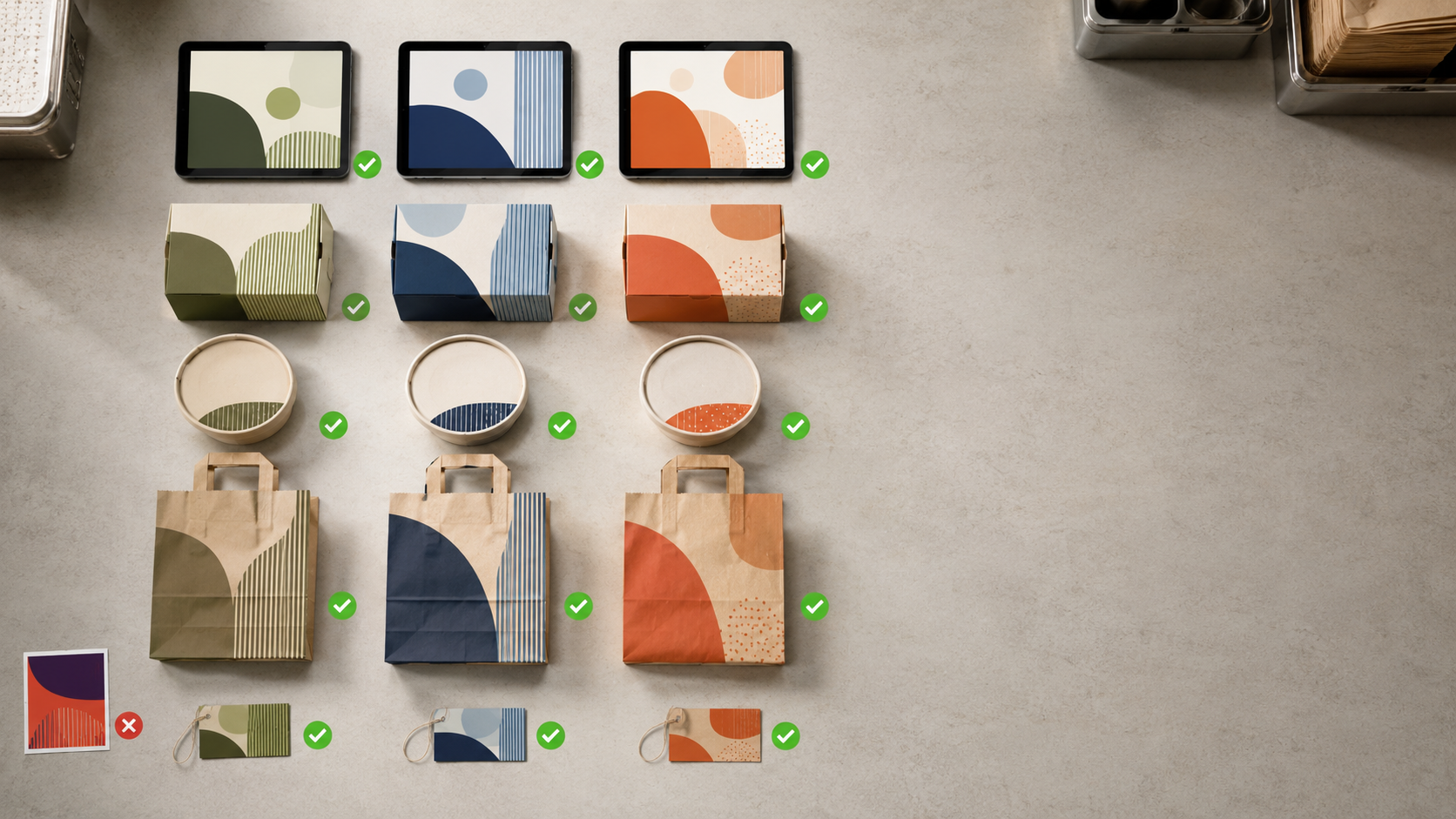
Use the digital proof to check artwork assignment and layout. Review the brand name, logo version, required copy, color references in the supplied artwork, orientation, panel placement, and any differentiation needed between brands. Record requested changes against one revision, then require the corrected proof to receive its own approval.
Do not use the screen proof as evidence of physical fit, closure, heat response, delivery durability, or exact appearance on the production material. Those questions require separate evidence. This boundary prevents a visual approval from silently becoming approval of everything else.
TakeawayPack's readable source states that it prepares a digital proof from customer files for custom printing and begins production after written customer approval. Buyers should make that written approval specific to the brand, SKU, and revision.
Gate 3: make the sample answer a defined question
Request or evaluate a sample when a physical question remains open. Examples include dimensions, assembly, container-and-lid pairing, handling at the packing bench, stack behavior, or whether several brand packs can be separated quickly under normal operating conditions.
Build a short test around the intended use. Pack the real menu item at the expected fill level, add any companion components, follow the usual staging sequence, and document what the team observes. If delivery performance is material to the decision, define the route and acceptance criteria before testing. A sample observation is evidence for that tested configuration only; it should not be generalized to a different material, lid, coating, or SKU.
The readable TakeawayPack source says samples, drawings, or print-file alignment can be discussed during inquiry and project coordination. It also cautions buyers to confirm whether a sample matches the intended production construction, coating, lid configuration, and printing process. Sample type, cost, timing, and availability therefore require project-specific confirmation.
Gate 4: compare the proof and sample records
The remote team should compare two records, not two impressions:
- The proof record identifies the approved artwork revision and its assigned packaging item.
- The sample record identifies the physical item tested, the menu application, the reviewer, the observations, and the decision.
If the identities do not match, stop the release. If the kitchen tested one container-and-lid pair but the order lists another, or if the printed sample carries an earlier artwork revision, the evidence does not support approval of the listed item.
Gate 5: isolate each brand's release
Create a small release packet for every brand and SKU. Include the final proof, sample reference where used, specification, quantity, carton-identification request, destination, and written approver. A consolidated purchase order may contain many packets, but each packet should stand on its own.
This separation limits the scope of corrections. A late artwork change for one virtual brand does not automatically reopen an unrelated brand's approved item. It also gives receiving staff a clearer reference when cartons arrive.
A compact remote error-control sequence
- 1. Freeze the brand-and-SKU list for the review round.
- 2. Match each digital proof to one controlled identifier.
- 3. Correct and reapprove any artwork mismatch by revision.
- 4. Define the physical question before requesting or testing a sample.
- 5. Compare proof identity, sample identity, and order identity.
- 6. Obtain written release for each final item.
- 7. Archive the evidence so reorders begin from the last approved version rather than an untracked file.
TakeawayPack can use an RFQ to discuss product category, material, dimensions or capacity, estimated quantity, print or logo requirements, and destination. Its catalog includes cups, bowls, boxes, containers, trays, lids, bags, and cutlery, but buyers should confirm the exact SKU, customization, evidence, and commercial terms for the proposed order. Start a project-specific inquiry at TakeawayPack.