Foodservice Packaging Compliance Documentation: A U.S. Buyer’s RFQ Guide
A practical documentation checklist for U.S. foodservice buyers: define the exact package, request claim-specific evidence, verify scope, and review destination-market requirements before ordering.
2026-07-17 - 7 min read
Start With the Exact Package and Market
Foodservice packaging requirements for the U.S. market depend on the complete product construction, intended food use, marketing claim, and destination market. A product name or material label alone is not enough to evaluate a proposed order.
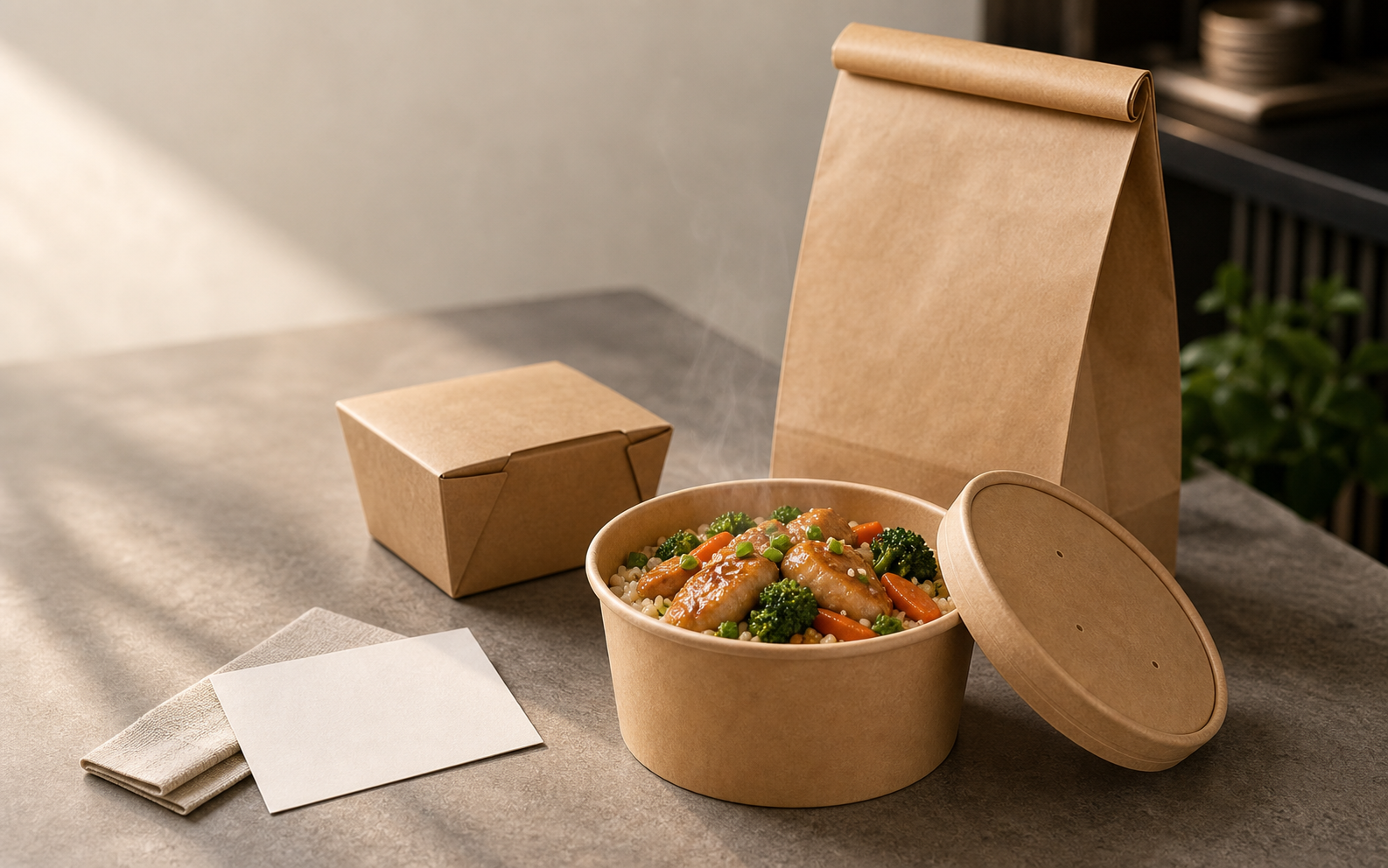
Before requesting documents, define the exact container and any matching components: container SKU, lid, coating or liner, inks or labels where relevant, intended food, serving temperature, handling conditions, destination, and any claim you plan to make. This gives both buyer and supplier a clear configuration to review.
This guide is general procurement information, not legal advice. Confirm requirements for the selected product and destination market with qualified advisers and relevant authorities.
Separate Product Requirements From Voluntary Certifications
Food-contact requirements, destination-market restrictions, sustainability claims, and quality-management systems serve different purposes. They should not be treated as one universal certificate stack or as a single pass-or-fail label for a supplier.
For food-contact review, ask the supplier to identify the finished configuration, relevant food-contact components, intended use conditions, and the documentation it relies on. If a Food Contact Notification is relevant, ask for the applicable reference and confirm that the notified use matches the material and conditions of use. An FCN reference alone does not approve a complete package.
State and local requirements can differ by destination and change over time. Before making PFAS, foam, chemical-warning, recycling, or compostability claims, identify the intended market and obtain current, product-specific support and appropriate regulatory review.
FSC, recycled-content certification programmes, compostability programmes, and ISO 9001 can each provide useful information in the right context. Their scope, current status, covered site, product configuration, and permitted claim use still need to be checked for the order at hand.
Documentation Checklist for an RFQ
A strong RFQ asks for evidence that follows the selected SKU rather than a generic company brochure. Include the product and component SKUs, full material description, intended food and temperature use, destination market, quantity, printing requirement, and the exact claim you want to assess.
Request the matching food-contact documentation; product or shipment documentation supporting any recycled-content, fibre, or compostability claim; current certificate scope where relevant; and laboratory reports where a test is being relied on. For a laboratory report, check the sample identification, test method, laboratory accreditation or scope, report date, and the threshold or claim being assessed.
For FSC-related claims, request certificate or licence details, the certificate holder, current status, and relevant product or claim scope. For recycled-content claims, request documentation applicable to the selected product or shipment; an organisation identifier by itself does not establish the recycled content of a particular SKU. For compostability claims, confirm whether the exact item is currently listed or otherwise documented under the relevant programme and review local acceptance of the complete package system.
ISO 9001 can be one quality-management input. Verify the current certificate, holder, covered site or sites, scope, and issuer, but do not use it as a substitute for food-contact or product-claim evidence.
How to Review a Certificate or Test Report
Use public registries where a programme provides one, but do not assume every requirement has a public certificate search. For each document, compare the legal entity, site, scope, product configuration, status, and date with the proposed order.
If a document names a different legal entity or production site from the quotation, ask for a clear documentary explanation before treating it as applicable. A difference may be legitimate, but it should be traceable to the supply arrangement.
| Document type | What it can support | What to check | What it does not prove |
|---|---|---|---|
| Food-contact documentation | The supplier’s basis for the identified product configuration and use | SKU, components, intended use, date, and referenced material | Automatic approval for every food, market, or configuration |
| Certification or registry record | Current status and scope under the named programme | Legal entity, site, product or claim scope, status, and dates | That every SKU or shipment is covered |
| Laboratory report | A result for the sample and method described | Sample ID, test method, laboratory scope, report date, and threshold | A conclusion beyond the sample, method, or market assessed |
| ISO 9001 certificate | A quality-management system at the stated site and scope | Certificate holder, covered site, scope, issuer, and current status | Food-contact compliance or substantiation of a product claim |
A Sample Buyer Workflow
Consider a fictional request for a printed, lidded soup cup. The buyer identifies the container SKU, lid SKU, coating, ink, intended hot-food use, destination market, and planned customer-facing claim before asking for any compliance or sustainability documents.
The buyer requests matching food-contact documentation, any claim-specific evidence, current certificate scope where relevant, and a test or sample record tied to that configuration. The buyer compares names, sites, scope, dates, and sample details with the quotation, then runs a filled-product and transport trial using the proposed cup-and-lid combination.
Only after the exact package and intended claim have been reviewed for the destination market should the buyer approve customer-facing claim language. This workflow keeps product selection, document review, and operational testing connected.
Red Flags That Should Pause an Order
Pause the purchase when a supplier cannot identify the exact SKU and construction; supplies documents that do not cover the quoted site or product; provides expired or unverifiable documents; cannot explain a legal-entity or production-site difference; or asks the buyer to make a claim that the supplier cannot support for the intended market.
A short pause at the RFQ stage is usually easier to manage than changing packaging, claims, or documentation after production. Record the requested document, version, scope, reviewer, and decision alongside the approved product specification.
Frequently Asked Questions
Is one certification enough for every U.S. market?
Not necessarily. Check the exact product, the claim you intend to make, the available supporting documentation, and destination state or local requirements.
Can a public registry result verify a complete package?
Usually not by itself. A registry result may confirm information about a programme participant or certificate, but the buyer should still check the product configuration, scope, current status, and supply-chain documentation.
What should a buyer check on a laboratory report?
Confirm the report identifies the relevant sample and configuration, states the test method and date, identifies the laboratory, and assesses the threshold or condition relevant to the planned claim or market review.
Does ISO 9001 prove food-contact compliance?
No. ISO 9001 relates to quality-management systems; it does not replace product-specific food-contact documentation or claim evidence.
When should destination-market review happen?
Start before approving the final SKU, claim, or artwork. Requirements can depend on the product, complete construction, intended use, and where it will be sold.
Request Documentation for Your Selected SKU
When requesting a quotation, send the selected product format, SKU or dimensions, components, intended food use, destination, quantity, and any proposed claim. Ask what documentation is available for that exact configuration and order.
After you receive the supplier bundle, use our companion guide, How to Read Foodservice Packaging Compliance Documents, to compare each document with the quoted package.
Browse products or request a quotation with your packaging brief.