How Restaurants Can Reduce Packaging Costs Without Downgrading Takeout Quality
Restaurant packaging costs are best controlled by measuring cost per order, matching each pack to the actual menu portion, and reducing unnecessary SKU variation. A lower unit price is not automatically a lower operating cost: the right choice depends on menu fit, purchasing data, storage capacity, and a documented trial. This article outlines a practical decision process that protects the customer experience while helping operators buy more deliberately.
2026-08-19 - 5 min read
Summary
Summary: Restaurant packaging costs are best controlled by measuring cost per order, matching each pack to the actual menu portion, and reducing unnecessary SKU variation. A lower unit price is not automatically a lower operating cost: the right choice depends on menu fit, purchasing data, storage capacity, and a documented trial. This article outlines a practical decision process that protects the customer experience while helping operators buy more deliberately.
Start with packaging cost per order
A container price alone does not show what packaging costs the business. Review a defined period, such as the last four weeks, and calculate:
Packaging cost per order = total packaging spend for the period ÷ number of orders in the same period
Use invoices, receiving records, and order data from the same dates. Include the packaging components used for takeout and delivery, then keep the result as a separate operating metric. This creates a baseline before changing suppliers, sizes, or order quantities.
A useful review also separates direct pack cost from the costs that follow a poor fit. Replacements, remakes, customer complaints, extra handling, and unused stock should be investigated alongside the invoice price. The purpose is not to assume that every issue comes from packaging; it is to make the decision with complete data.
Right-size each package to the menu
Over-sizing can raise material use and make a normal portion look undersized. Under-sizing can create packing difficulties or inconsistent presentation. Map the current packaging list against the menu before removing any format.
For each dish, record the prepared portion, temperature at packing, toppings or sauces, expected holding time, delivery route, and current package used. Then identify which formats genuinely need to be distinct. A small sauce portion, a side, and a full meal may need different pack sizes, but near-duplicate options often deserve a closer look.
The goal is not a fixed number of containers for every restaurant. It is the smallest practical set that supports the actual menu and service model.
Standardize only where the menu allows it
SKU reduction can improve purchasing discipline because demand is concentrated into fewer, better-understood items. It can also simplify storage, receiving, staff training, and reorder checks.
Start by grouping packages with the same functional purpose. Ask whether two formats serve different menu needs or merely reflect an old purchasing habit. Where the menu permits, a shared system can reduce the number of bases, lids, or accessories that the team has to order and store.
Do not force standardization across food types that have different requirements. Hot and cold dishes, dry and sauced items, and short- and long-distance deliveries should be evaluated separately. Standardization is valuable when it preserves the intended result, not when it creates a new operational problem.
Use purchasing data before changing the order pattern
Once the working SKU list is clear, examine purchasing history for each remaining item:
- units used per week or month;
- order frequency and stockout history;
- unit price at each supplier quote or volume tier;
- storage space available for the item;
- obsolete or slow-moving inventory; and
- total cost to receive and manage frequent small orders.
A larger order is not automatically better. It may lower the quoted unit price, but it can also tie up cash, occupy space, or create aged inventory if the menu changes. Compare the complete purchasing scenario rather than selecting an order quantity from the price column alone.
Test a packaging change in real conditions
A new format should earn its place through a controlled test. Test with the menu item, fill level, closure method, staff workflow, expected holding time, and a realistic delivery journey. Record the result consistently.
A simple trial log can include the dish, package configuration, date, tester, observations, customer feedback when available, and any corrective action. Compare the new configuration with the existing one on presentation, handling, assembly time, and incident records. If a change causes avoidable rework or dissatisfaction, the apparent unit-price saving may not be a saving at all.
This process is especially important when consolidating formats. A package that is suitable for one dish should not be assumed suitable for every item in the category.
Review the full cost of a “cheaper” container
A lower-priced alternative deserves a structured comparison:
- Menu fit: Does the format match the portion and the way the dish is packed?
- Operational fit: Can staff assemble and close it reliably during service?
- Delivery fit: Has it been tested under the conditions the restaurant actually uses?
- Purchasing fit: Does the order quantity match usage, storage, and cash-flow needs?
- Outcome data: Did the trial change waste, rework, complaints, or refunds?
If the answer is uncertain, keep the decision conditional and collect more evidence. Cost control is stronger when it reduces uncertainty instead of shifting risk to the customer experience.
Use a product specification as a comparison anchor
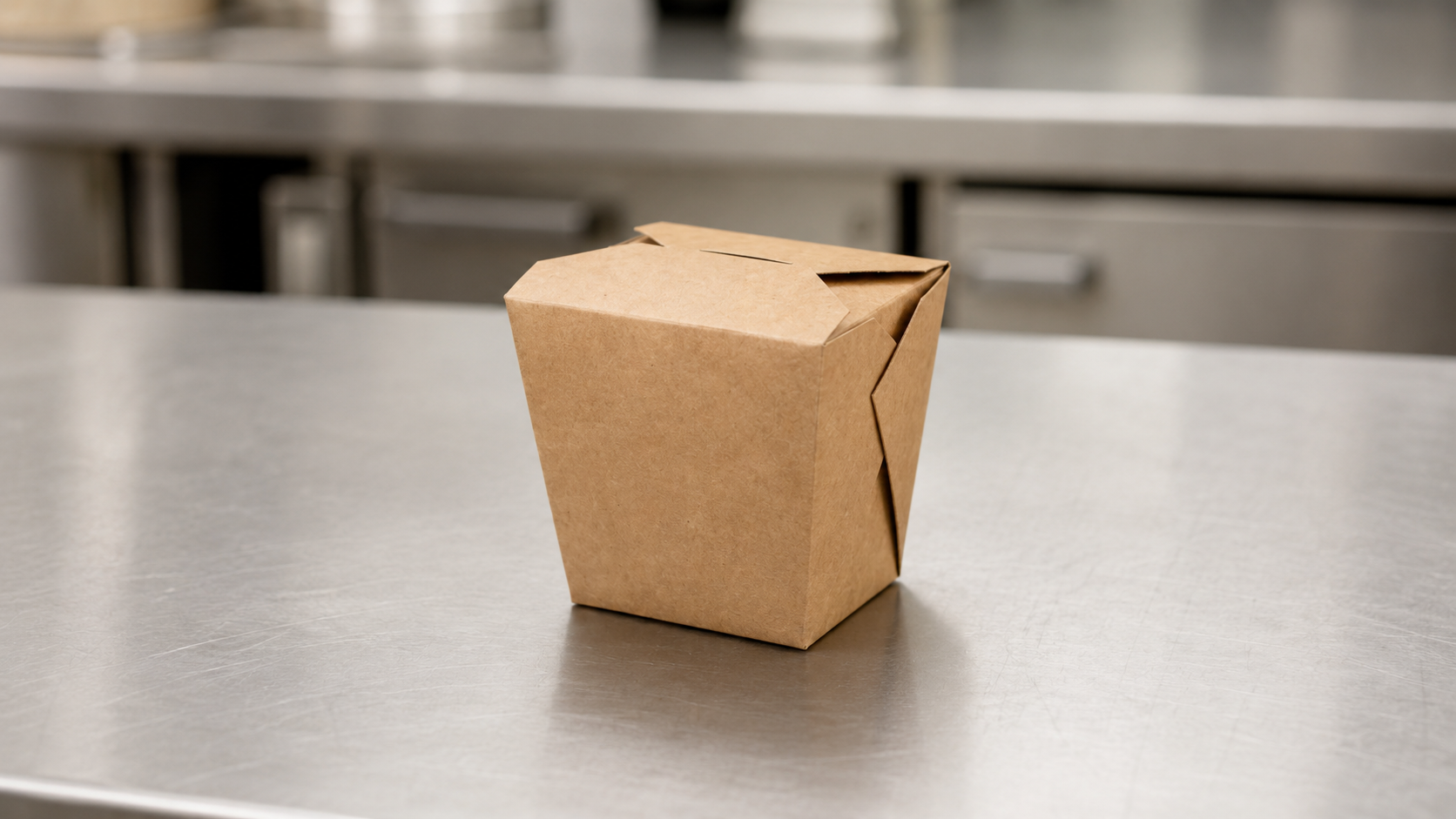
A consistent specification helps teams compare like with like. For example, TakeawayPack lists the Kraft Square Food Box 200ml as a paper food box with recorded dimensions of 70 × 55 mm at the top, 60 × 45 mm at the bottom, and 63 mm in height. Its recorded intended uses include rice, noodles, snacks, and takeaway meals.
Those facts can help an operator decide whether this 200 ml format belongs in a menu-specific trial. They do not replace testing, pricing review, or a supplier discussion. The appropriate package still depends on the recipe, portion, packing process, and delivery conditions.
Make packaging a recurring operating review
Revisit packaging cost per order whenever the menu, portioning, order mix, supplier terms, or delivery model changes. A short monthly review can flag a rising cost per order, an item that is no longer being used, or a pack that is being applied to the wrong dish.
The most durable savings usually come from a clear menu-to-package map, fewer unnecessary purchasing decisions, and evidence-based testing—not from blindly buying the lowest-priced container.
For packaging formats and specifications to use as part of your next review, visit TakeawayPack.