How to Approve Custom Takeaway Packaging Remotely: Digital Proofs vs. Physical Samples Before Your Print Run
Approving custom takeaway packaging from a distance follows a simple, safe sequence: review a digital proof first, then check a physical sample, and only then commit to a full print run. This guide explains the difference between digital proofs and physical samples, the order in which to use them, why color on screen never matches the printed box, and the exact steps to approve packaging for every brand in a multi-brand kitchen. By the end you will know what to ask your packaging supplier before you pay for production, and how to lock in accurate color and print with a remote team.
2026-08-11 - 6 min read
**Summary:** Approving custom takeaway packaging from a distance follows a simple, safe sequence: review a digital proof first, then check a physical sample, and only then commit to a full print run. This guide explains the difference between digital proofs and physical samples, the order in which to use them, why color on screen never matches the printed box, and the exact steps to approve packaging for every brand in a multi-brand kitchen. By the end you will know what to ask your packaging supplier before you pay for production, and how to lock in accurate color and print with a remote team.
Why Proofing Matters Before You Print Packaging
Printing proofs exist to prevent costly mistakes. In commercial printing, a proof is a preview of what your packaging will look like once it is printed. Proofing is how you confirm design, color, and layout before a full production run begins.
For takeaway packaging, the stakes are higher than for a business card. Packaging sits close to the food, carries your brand, and reaches customers physically. A print error means thousands of misprinted boxes, wasted material, and a delayed launch.
The right approach is not to skip proofing, but to use the right proof at the right stage. The three common options are PDF proofs, digital proofs, and physical samples.
Three Options for Checking Your Artwork
1. PDF Proof — Fastest Review of Layout and Text
A PDF proof is a digital file that shows your artwork on screen. It is the quickest and most economical way to check a print file before production.
Its main advantage is convenience. A PDF can be opened on almost any device, so your team and your kitchen partners can review it from anywhere, without shipping anything.
The limitation is color. Because every screen, software, and monitor shows color slightly differently, a PDF proof can never guarantee exact printed color. It is excellent for checking layout, logo placement, spelling, and branding. It is not reliable for approving color.
2. Digital Proof — Color-Accurate Pre-Production Preview
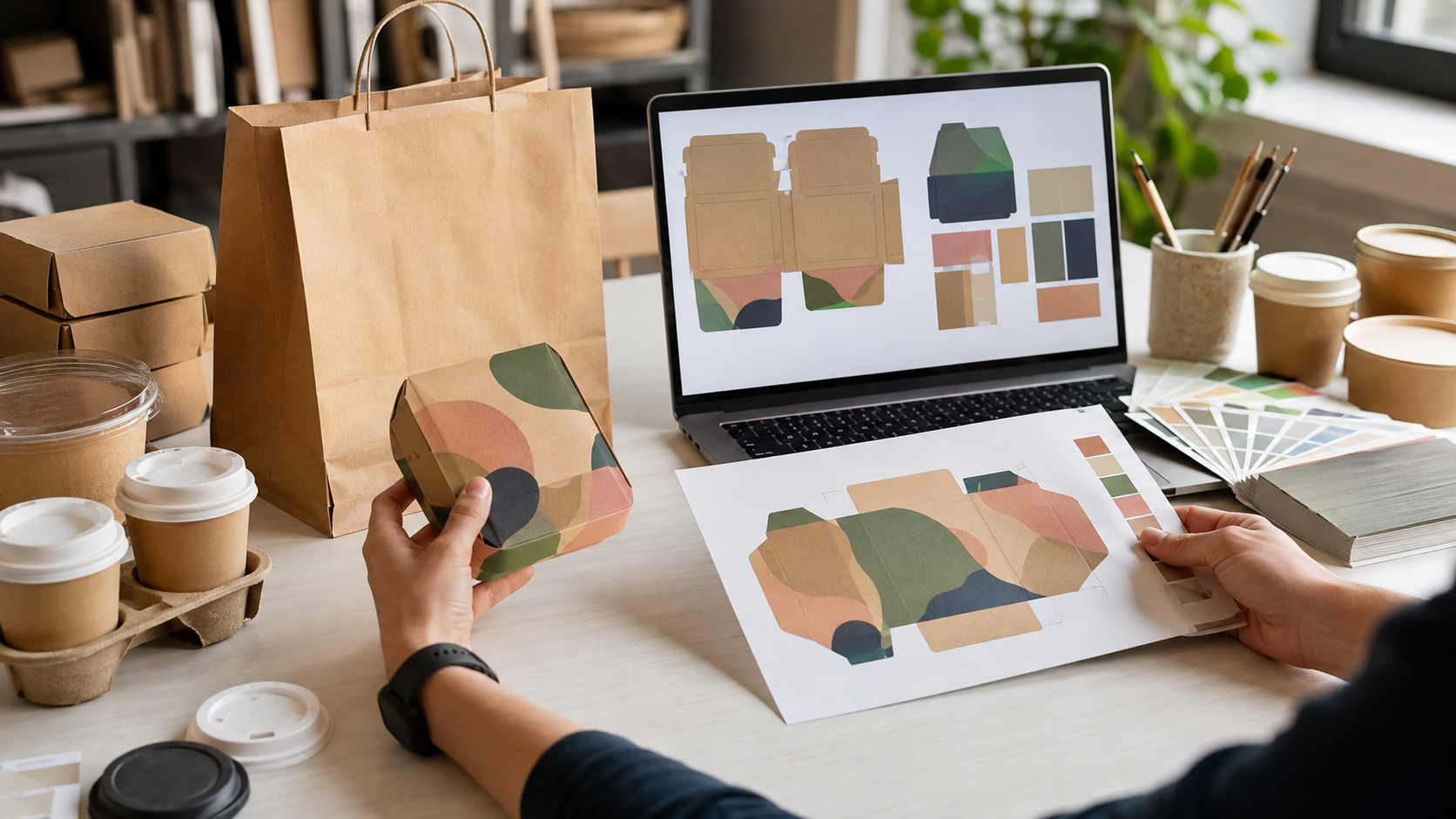
A digital proof is a color-calibrated preview, often produced as a laminated print that is matched to the press profile. In the industry this is sometimes called a GMG proof.
Unlike a PDF, a digital proof is color accurate. The supplier calibrates it to the printing press that will run your job, so the colors you approve closely match the final printed result.
A digital proof is still not the finished product material. It is used to lock in color and design before production. For custom packaging with brand colors, a digital proof is the right checkpoint for color.
3. Physical Sample — The Final Check on Real Material
A physical sample is an actual piece of the packaging, printed on the real material you plan to use. This is the closest preview to the final product.
For takeaway packaging, the physical sample matters because it shows the real feel of the material, the true finish, and how the print sits on the box, cup, or bag. It answers questions a screen cannot: Does the kraft paper look right? Does the lid fit? Is the logo crisp on the actual surface?
A physical sample is the most reliable confirmation before a full run, and it is the stage where you catch issues that no digital file can reveal.
The Right Order: Digital First, Sample Second, Then Production
For a safe approval workflow, do not jump straight to a full print run.
Start with a PDF proof to confirm layout, text, and branding. This catches most errors early and fast.
Then move to a digital proof to lock in color accuracy. This is where you and your kitchen partners agree on the brand colors each box will carry.
If the material finish matters, request a physical sample on the real material. This is especially important for multi-brand kitchens, where each virtual brand ships in its own packaging and a wrong color or finish could confuse customers.
Only after the physical sample is approved should you commit to the full print run.
How Remote Approval Works for a Multi-Brand Kitchen
When a virtual brand kitchen works with a packaging supplier in another city or country, the approval flow is still practical.
The key is a clear chain of approval. The supplier sends a digital proof, your team reviews it remotely, and you confirm in writing. From there, a physical sample is produced and shipped, and once you approve it, production begins.
The whole process is designed so that brand owners and remote kitchen operators never need to be in the same room. What matters is that every approval is explicit and documented before the production line starts.
Common Mistakes to Avoid When Approving Packaging Remotely
The first mistake is approving color from a PDF. Because screens vary, this leads to unexpected color on the printed box.
The second mistake is skipping the physical sample for a new product. New packaging benefits from a sample because it shows the real material and finish.
The third mistake is changing the design after a proof is approved. In printing, changes at a late stage add cost and delay, because the job must be re-prepared. Finalize the design early, approve it, and then let production run.
What to Ask Your Packaging Supplier Before a Print Run
Before you commit to production, ask direct questions.
Ask which proof types are available for your job. Ask whether a physical sample on the real material is an option. Ask how color is calibrated between the proof and the press. Ask what the approval step looks like, and what happens if you request a change after approval.
Answering these questions up front saves time and money, and it tells you whether the supplier can handle a remote, multi-brand approval workflow.
How a Packing Sourcing Partner Can Help You Approve and Ship
Working with a dedicated packaging sourcing partner makes remote approval simpler, because the partner handles the coordination between you and the manufacturing facility.
TakeawayPack acts as a food-service packaging brand and sourcing coordinator for international buyers, working with manufacturing partners to deliver cups, bowls, boxes, containers, trays, lids, bags, and cutlery to markets across North America, Europe, Australia, and the Middle East.
For custom printing, TakeawayPack produces a digital proof from your artwork and only goes into production after you confirm in writing, so each brand in your kitchen can be approved remotely before a full run starts. During the inquiry stage its team can align on structure, coating, capacity, printing, lid matching, and carton packaging, and provide samples, drawings, or print-file alignment as part of the project handoff.
If you are kitting out a multi-brand kitchen and need brand-segregated packaging to prevent mix-ups, request a quote and agree on the digital proof and physical sample process before you commit to a full print run. Start a conversation at takeawaypack.com to check what your packaging will look like before you print.