How to Calculate Food Packaging Cost per Delivery Order for Restaurants and Takeaway Businesses
Food packaging cost per delivery order is more than the price of a box. For a restaurant, cloud kitchen, or takeaway operator, the useful number combines the packaging components used for one order, the packing work required, and the costs created when the chosen format does not match the menu or delivery flow. Measuring that number by menu type and order channel makes purchasing decisions easier to compare.
2026-08-19 - 5 min read
Summary
Food packaging cost per delivery order is more than the price of a box. For a restaurant, cloud kitchen, or takeaway operator, the useful number combines the packaging components used for one order, the packing work required, and the costs created when the chosen format does not match the menu or delivery flow. Measuring that number by menu type and order channel makes purchasing decisions easier to compare.
This article provides a simple way to calculate packaging cost per order, identify the main cost drivers, and review purchasing options without assuming that general e-commerce benchmarks apply to a food-delivery operation.
Start With a Clear Cost-per-Order Definition
A practical food packaging cost per order is:
Packaging cost per order = packaging materials used for the order + packaging-related handling cost + packaging-related exception cost
The equation is deliberately simple. It keeps attention on the costs a delivery business can observe and test.
- Packaging materials can include the primary food container, lid where applicable, bag, napkins, cutlery, labels, seals, and any other item routinely packed with that menu item.
- Packaging-related handling is the time or service charge added because the order needs an extra packing step, special assembly, or a more complex pack-out.
- Packaging-related exception cost is the portion of credits, remakes, replacements, or waste that the business attributes to a packaging issue after reviewing its own records.
Do not treat this as the same metric as parcel-fulfillment cost for a general online retailer. A takeaway order has its own menu mix, order assembly process, delivery distance, platform fees, and operating conditions.
Build the Baseline From Real Orders
Begin with a short sample of completed delivery orders. Separate them into groups that use meaningfully different packaging, such as rice bowls, noodle meals, snacks, or multi-item family orders.
For each group, record the packaging bill of materials. A simple worksheet might look like this:
Use the prices and records available to your business. The result is more useful than a generic market average because it reflects the actual items packed in your orders.
| Order group | Packaging components | Materials cost | Packing time or fee | Exceptions observed | Total packaging cost per order |
|---|---|---|---|---|---|
| Rice meal | Container, bag, napkin | Your figure | Your figure | Your figure | Materials + handling + exceptions |
| Noodle meal | Container, bag, label | Your figure | Your figure | Your figure | Materials + handling + exceptions |
| Snack order | Tray or box, bag | Your figure | Your figure | Your figure | Materials + handling + exceptions |
The Main Drivers of Food Packaging Cost Per Delivery Order
1. The number of components in each pack-out
Each additional item can change the cost of an order. A packaging list with several containers, inserts, stickers, and add-ons may be appropriate for a particular menu, but it should be intentional.
Review whether every component has a defined purpose: containing a menu item, separating items, identifying the order, or supporting a requested service step. This is not an instruction to remove items indiscriminately. It is a way to identify duplication and make the pack-out easier to price.
2. Container format and menu fit
The container format should be reviewed against the food portion and the way the item is packed. A format that is too large may add material and transport volume; a format that is too small may create a different operational problem. The correct choice depends on the menu item and the business's own delivery testing.
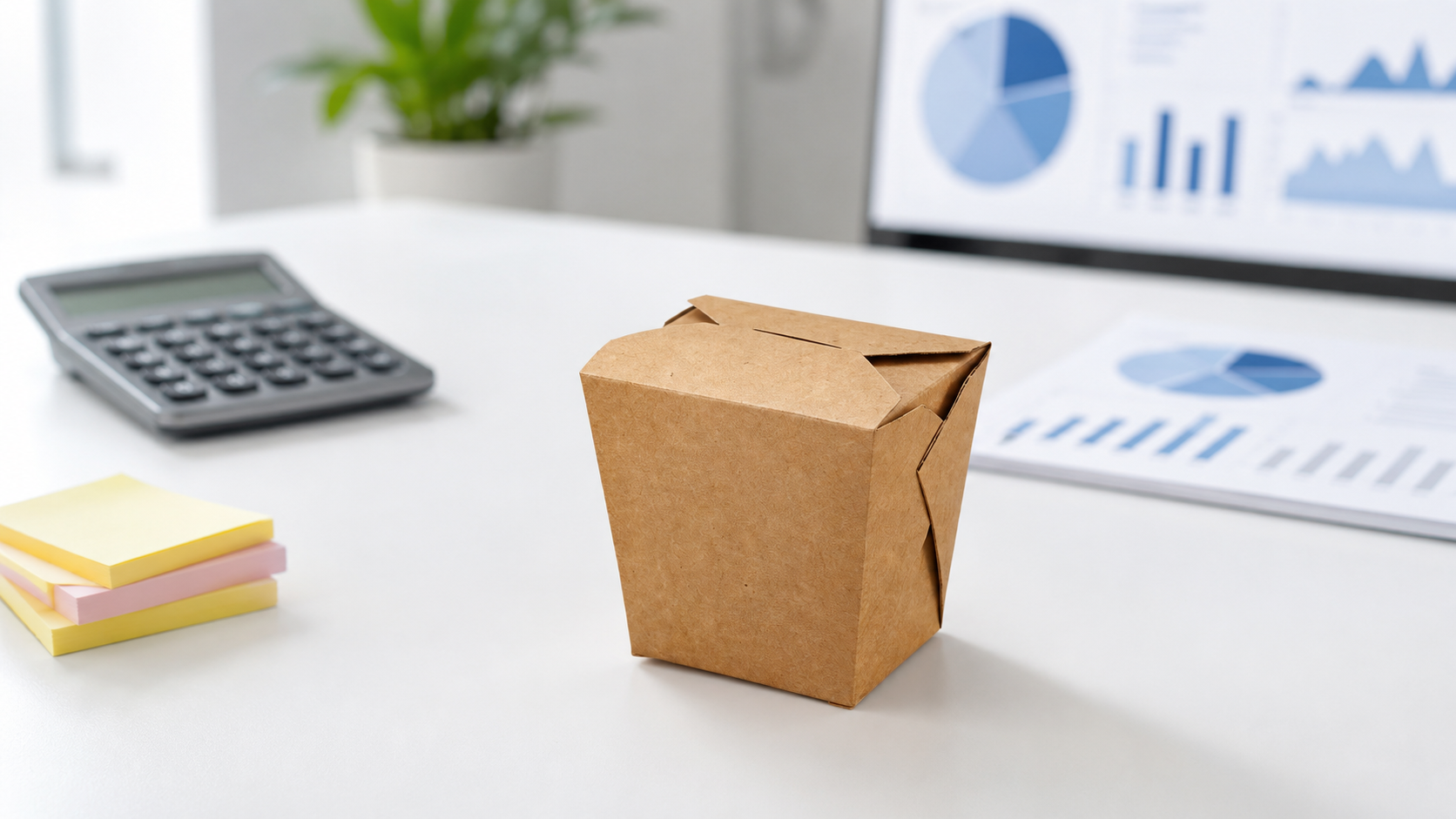
For a documented small-format example, TakeawayPack lists the Kraft Square Food Box 200ml as a paper product with a top size of 70 × 55 mm, a bottom size of 60 × 45 mm, and a height of 63 mm. Its recorded intended uses include rice, noodles, snacks, and takeaway meals. Those product details identify the format; they do not by themselves establish price, delivery performance, or suitability for every menu.
3. Order mix and frequency
A menu may use one packaging set during a quiet period and a different mix during busy delivery windows. Track consumption by the packaging SKU and by the order type it serves. This shows whether a low unit price on one item actually lowers the weighted cost across all delivery orders.
A useful review question is: Which packaging items appear in the greatest number of completed delivery orders, and what is their total monthly usage? The answer helps a buyer compare offers on the items that matter most.
4. Purchasing quantity, storage, and replenishment
Larger purchases can change the unit price, but the decision should include the full operating picture. Before comparing offers, list the delivered unit price, packaging specification, storage space required, working cash tied up, and the risk that a menu or design change leaves unused stock.
Instead of assuming a purchase tier will save money, calculate the total cost for each option using your own demand forecast. A lower material price is only one input.
5. Packing complexity
A packaging design can add cost through materials and through the time needed to assemble the order. If a team must fold, insert, label, or check several components for each order, measure the workflow rather than relying on a rough impression.
Observe a small number of normal shifts and document the steps for each order group. Then compare a proposed packaging change against the same workflow. This makes it possible to see whether a lower-priced component introduces more handling work.
6. Exceptions, rework, and waste
Packaging spend is not fully visible on the purchase order. Track the internal reasons for remakes, replacement packs, discarded stock, or customer credits when a packaging issue is involved. Keep the categories specific enough to investigate: incorrect component, packing error, container mismatch, or another documented cause.
The goal is not to assign every exception to packaging. It is to avoid evaluating a packaging choice solely on its invoice price when the operational record shows another cost pattern.
How to Compare Two Packaging Options
Use the same order group and the same time period for both options. A comparison template can include:
- Material cost: price of every packaging component used per order.
- Order build: number of components and documented packing steps.
- Product specification: dimensions, material, and stated use from the supplier record.
- Operational observation: what the team sees during normal packing and delivery handling.
- Exception record: any relevant internal credits, remakes, or waste recorded during the test period.
- Total cost per order: the sum of the categories above.
This framework lets a buyer compare like with like. It also prevents a supplier's unit quote from being mistaken for the total economic impact of a packaging choice.
A Simple Monthly Packaging Review
A monthly review can be short and repeatable:
- Calculate packaging cost per order for each major menu group.
- Compare the current result with the previous period using the same definitions.
- Check changes in order mix before drawing conclusions about unit cost.
- Review the highest-usage packaging items and their stock position.
- Investigate exceptions using documented internal records rather than assumptions.
- Test one focused improvement at a time, then measure it against the baseline.
This routine keeps packaging purchasing connected to restaurant operations. It also gives finance, procurement, and kitchen teams a common way to discuss trade-offs.
Questions to Ask a Packaging Supplier
Before selecting a food packaging format, ask for the details needed to compare it responsibly:
- What are the recorded material, dimensions, and intended uses?
- What components are included, and what must be sourced separately?
- What is the price basis for the requested quantity and delivery destination?
- How will the chosen format fit the menu's packing process?
- What documentation is available for any claim the supplier makes?
Requesting specifics helps the buyer distinguish a product description from an unverified commercial or performance promise.
Make Packaging Cost Decisions With a Complete Order View
The best packaging cost per delivery order is the one your business can explain from its own material list, packing flow, and exception records. Start with a consistent calculation, compare options for the same menu scenario, and make changes only after the result can be measured.
If you are reviewing paper food-container formats for rice, noodles, snacks, or takeaway meals, explore the product range at TakeawayPack.