How to Source Microwave-Safe Containers: Materials, Sizes and Shapes Explained
For food service businesses, ready-meal producers and takeaway brands, microwave-safe packaging is no longer optional — it is a baseline expectation. Consumers want to transfer a.
2026-06-30 - 7 min read
Overview
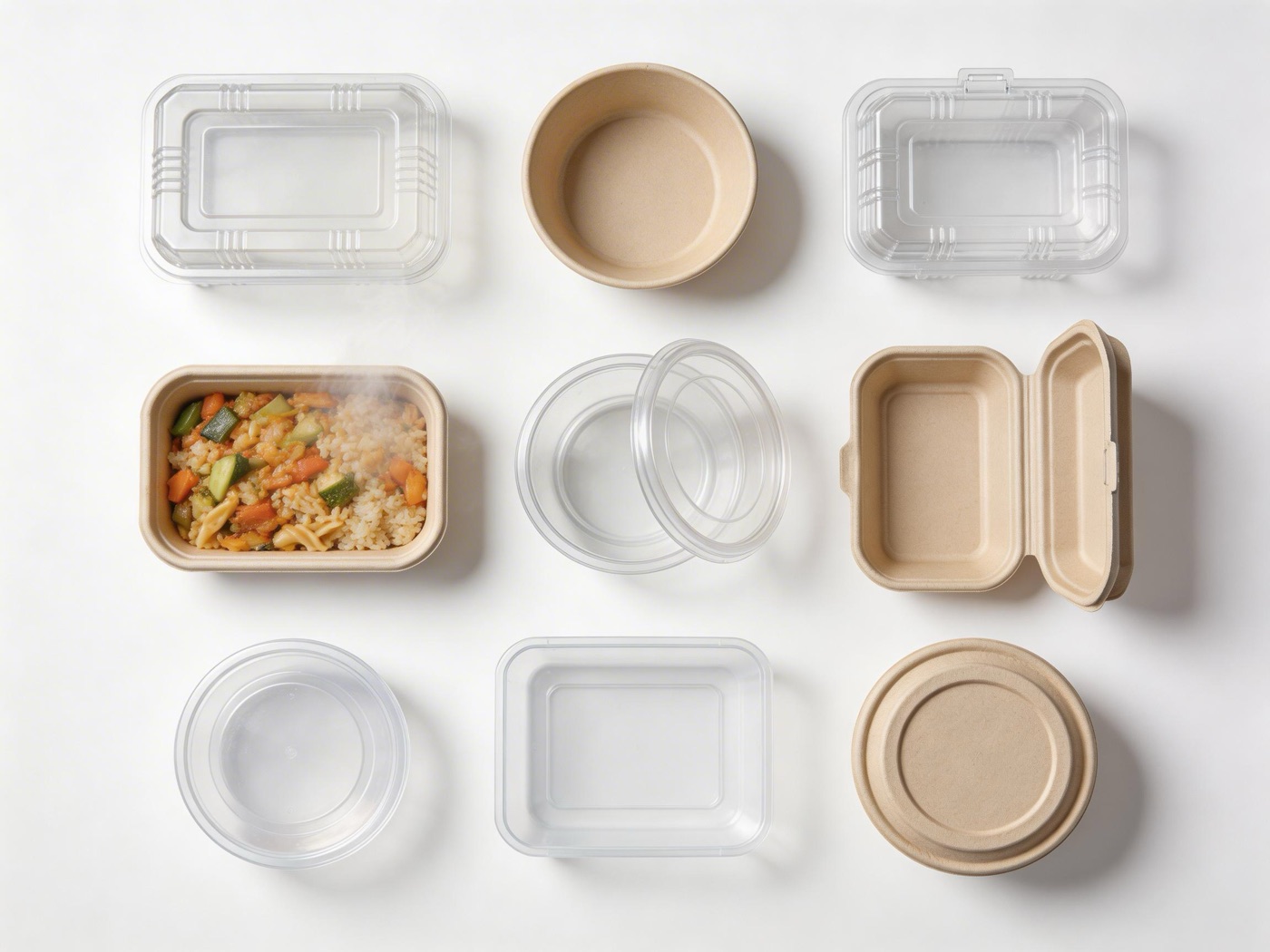
For food service businesses, ready-meal producers and takeaway brands, microwave-safe packaging is no longer optional — it is a baseline expectation. Consumers want to transfer a meal from fridge to microwave to table without changing containers, and regulators across Europe, the Middle East and North America continue tightening rules on food-contact materials. Getting the right microwave-safe container specification affects food safety, customer satisfaction and even repeat purchase rates.This guide walks through the key decisions buyers face when sourcing microwavable containers at scale: which materials perform best, how size and shape affect functionality, and what to look for in a supply partner.
What Makes a Container Microwave-Safe?
A microwave-safe container is one that can withstand the heat generated during typical microwave reheating — usually up to around 120 °C for short bursts — without warping, melting or leaching harmful chemicals into food.In practice, this means selecting materials that are:
Thermally stable at reheating temperatures for the intended duration
Chemically inert when in contact with acidic, oily or alkaline foods under heat
Free of restricted substances such as BPA, phthalates or heavy-metal-based pigments
Clearly labelled with appropriate food-contact and microwave-use compliance marksFor B2B buyers, "microwave-safe" must be verified through supplier documentation and, where required, independent lab testing. Relying on marketing claims alone is not sufficient when your brand reputation and regulatory compliance are at stake.
Microwave Container Materials: A Practical Comparison
Choosing the right material is the single most important specification decision. Each option has distinct cost, performance and sustainability trade-offs.
Polypropylene
Polypropylene is the dominant material for microwave-safe takeaway containers worldwide. It has a melting point between 130 °C and 171 °C, well above typical reheating temperatures, and it is chemically resistant to oils, acids and alkaline foods. PP is naturally BPA-free, lightweight, and cost-effective at volume.For buyers sourcing PP containers, it is worth checking:
Virgin vs recycled content — many markets now require or prefer food-grade virgin PP for direct food contact
Wall thickness — thinner walls lower unit cost but may deform under high heat; thicker walls improve stackability and perceived quality
Closure type — separate lids or integral hinge designsPP containers are widely recyclable, although actual recycling rates vary significantly by region.
Bagasse
Bagasse is a plant-fibre material made from sugarcane stalk residue after juice extraction. It is compostable, naturally grease-resistant and performs well in microwaves for short reheating cycles.Key considerations:
Heat tolerance is generally adequate for reheating, but extended exposure at high power can cause softening
Moisture resistance varies — some bagasse containers include a thin bio-based coating for improved liquid hold
Appearance is natural/kraft, which appeals to brands targeting an eco-conscious image
Unit cost is typically higher than PP, but the premium narrows as volumes increaseBagasse suits brands that prioritise compostability and are willing to manage the slightly higher per-unit cost.
CPET
CPET trays are widely used in the ready-meal industry. The crystallisation process raises the heat-deflection temperature, allowing CPET to tolerate both microwave and conventional oven reheating.CPET is a strong choice for:
Dual-oven applications where the same tray may go into a microwave or a conventional oven
Pre-packaged chilled or frozen meals sold at retail
Brands that want a single container format that covers all reheating scenariosIt is recyclable, though collection infrastructure for black CPET trays has historically been limited — clear or natural-colour CPET improves sortability.
Aluminium Foil Containers
Aluminium containers are microwave-safe under specific conditions: the container must not touch the oven walls, and food should cover most of the base to prevent arcing. In practice, many food-service operators avoid aluminium in microwaves due to the risk of misuse by end consumers.For sourcing, aluminium is best suited for:
Hot-fill and oven-reheat applications where microwave use is not the primary reheating method
Catering and bulk transport where the container is emptied onto a plate before reheating
Paperboard with Microwave-Safe Coatings
Paper or kraft containers with polyethylene or bio-based coatings can be microwave-safe for short reheating periods. They are popular for soup cups, noodle bowls and similar applications.Buyers should verify:
Coating type and food-contact compliance — PE-coated boards are common; PLA-coated boards are available for compostability claims
Maximum reheating time — paper-based containers are generally rated for shorter reheating durations than PP or CPET
Lid compatibility — paper lids or separate plastic lids must also be rated microwave-safe if the intention is to reheat with the lid on