How Multi-Brand Cloud Kitchens Approve Custom Packaging Remotely Before Production
A multi-brand cloud kitchen needs packaging that makes each virtual brand easy to identify without creating new opportunities for order mix-ups. A reliable remote approval process separates artwork approval from real-world testing, keeps decisions traceable, and gives every stakeholder one clear point to approve before production.
2026-08-11 - 7 min read
**Summary:** A multi-brand cloud kitchen needs packaging that makes each virtual brand easy to identify without creating new opportunities for order mix-ups. A reliable remote approval process separates artwork approval from real-world testing, keeps decisions traceable, and gives every stakeholder one clear point to approve before production.
Why remote packaging approval needs a defined process
A cloud kitchen may run several virtual brands from one production line. The packaging must help the team distinguish one brand’s meals from another while supporting the menu, service speed, and delivery experience. When the brand owner, kitchen operator, and packaging supplier are in different locations, informal approvals in chat messages can lead to unclear decisions, outdated artwork, or a version being sent to production too early.
The solution is not more messages. It is a simple approval path with named deliverables: a requirements brief, a digital proof, a physical sample where needed, and a written production release. Each stage answers a different question.
Start with a packaging brief for every brand
Create a separate brief for each virtual brand, even when the brands share a kitchen. This keeps the artwork, product choice, and operating rules distinct.
The brief should identify the packaging category, size or capacity, material preference, expected quantity, print or logo requirements, and destination. It should also describe the meal application: for example, an entrée, side dish, sauce, beverage, or bakery item. Where the kitchen is using a family of products, record the matching lid or companion component rather than treating it as an afterthought.
For a multi-brand operation, add an internal identification rule. It may be a clear logo treatment, a brand-specific color area, or an approved label position. The aim is practical: a packer should be able to identify the correct brand quickly without confusing it with another order.
TakeawayPack’s RFQ process can collect product or category, material, dimensions or capacity, estimated quantity, print/color/logo customization, and destination information. During an inquiry, it can also discuss structure, coating, capacity, printing, lid matching, and carton packing. That makes the brief a useful starting point for a focused supplier conversation.
Use a digital proof to approve layout, not every production detail
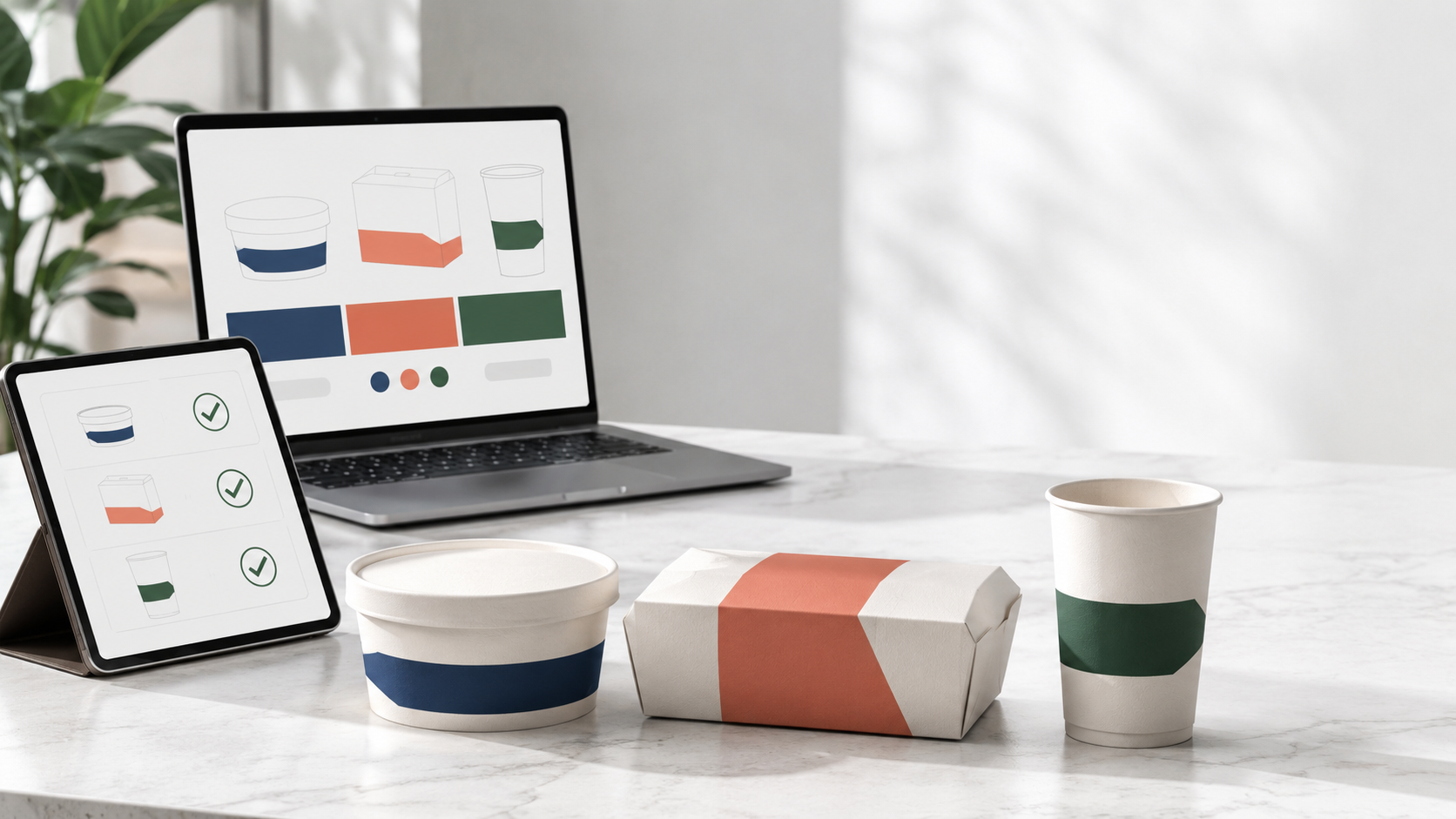
A digital proof is the controlled version of the artwork placed on the packaging layout. It is the right stage to confirm that the correct brand name, logo, colors specified in the artwork, required text, and any differentiating visual cues are on the intended pack.
Remote reviewers should use one shared checklist:
- Is this the correct virtual brand and menu application?
- Is the logo clear and placed away from critical folds, seams, or closures?
- Are brand colors, text, and design elements consistent with the approved artwork file?
- Does the proof distinguish the pack clearly from the other brands in the same kitchen?
- Are the product size, lid relationship, and other key specifications recorded correctly?
Do not treat a visual proof as a substitute for operational testing. It can confirm artwork alignment and version control, but it cannot show how a container feels in a fast service line or how the actual meal fits inside.
Test samples with the real kitchen workflow
A physical sample is most valuable when it is used by the people who will pack and dispatch the order. Test it with the actual menu item, any liners or labels, and the normal handoff process. If an item has a lid, test the complete container-and-lid combination rather than evaluating the parts separately.
For a multi-brand kitchen, ask the team to run a short packing exercise. Put the approved packs for two or three brands side by side and check whether the correct pack can be selected quickly. If there is hesitation, revise the visual distinction or internal packing rule before moving forward.
Capture the result in a small review record: sample version, tester, date, menu item, observations, requested changes, and photo or video evidence where useful. A remote brand owner can then review the same evidence as the kitchen manager instead of making a decision from a description alone.
TakeawayPack can provide samples, drawings, or alignment of print files during inquiry and project coordination. This supports a review process in which stakeholders compare a defined sample or drawing against the agreed brief.
Keep color and brand approval separate from operational approval
A package can work operationally and still be wrong for the brand. Keep the two approvals distinct.
**Operational approval** asks whether the packaging is suitable for the menu and packing process. **Brand approval** asks whether the visible artwork, logo treatment, and other brand elements are acceptable. Separating these decisions makes it easier to identify what needs revision and avoids an implied approval of everything at once.
For remote stakeholders, use a single approval record that names the exact artwork or sample version. A clear written response should state either “approved for production” or list the required changes. Avoid vague comments such as “looks good” when several versions are circulating.
Release production only after written confirmation
The production release is the handoff from review to manufacturing. Before it is issued, confirm that the approved digital proof, any approved sample feedback, the product specification, quantity, and brand assignment all match.
For custom printing, TakeawayPack prepares a digital proof from the customer’s files and produces only after written customer confirmation. This makes written approval especially important: it is the point at which the customer confirms the production artwork.
If several brands are being launched together, release each brand as its own approved item. That preserves a clear audit trail and limits the effect of a late change to one brand’s pack.
A practical remote approval workflow
- 1. Submit one brand brief per virtual brand. Include the pack type, application, quantity, artwork requirements, and destination.
- 2. Review the digital proof. Confirm the correct artwork version, layout, and brand differentiation.
- 3. Test the sample in the kitchen. Use the real meal and packing sequence; document observations.
- 4. Collect one consolidated response. The brand owner and kitchen operator should agree on the requested changes or approval.
- 5. Issue written approval by version. State the exact proof or sample version that is approved for production.
- 6. Archive the decision. Keep the final artwork, approval record, and product specification together for future reorders or changes.
Questions cloud-kitchen operators often ask
Can each virtual brand use a different packaging style?
Yes, provided each brand’s requirements are defined and the kitchen has a clear packing rule. The important point is to manage each item as a separate approved version, not as a loose collection of designs.
Is a digital proof enough before a full run?
A digital proof is useful for verifying artwork and layout. For a new format, new menu item, or a process where packing speed and product fit matter, a sample-based operational review gives the kitchen more evidence before it approves production.
What should be approved in writing?
At minimum, identify the exact artwork or proof version, the related packaging item, and whether it is approved for production or requires changes. Written confirmation prevents confusion when stakeholders work remotely.
Build a repeatable approval path for every new brand
Remote approval becomes easier when every launch follows the same sequence: brief, proof, operational review, written sign-off, and archived final version. That structure helps cloud kitchens protect brand separation while making day-to-day packing more consistent.
For cups, bowls, boxes, containers, trays, lids, bags, cutlery, or a custom packaging discussion for a multi-brand foodservice operation, visit TakeawayPack to start with an RFQ that captures the product, customization, quantity, and destination details relevant to your project.