Remote Sign-Off for Multi-Brand Custom Packaging: Align Brand and Kitchen Before Bulk Production
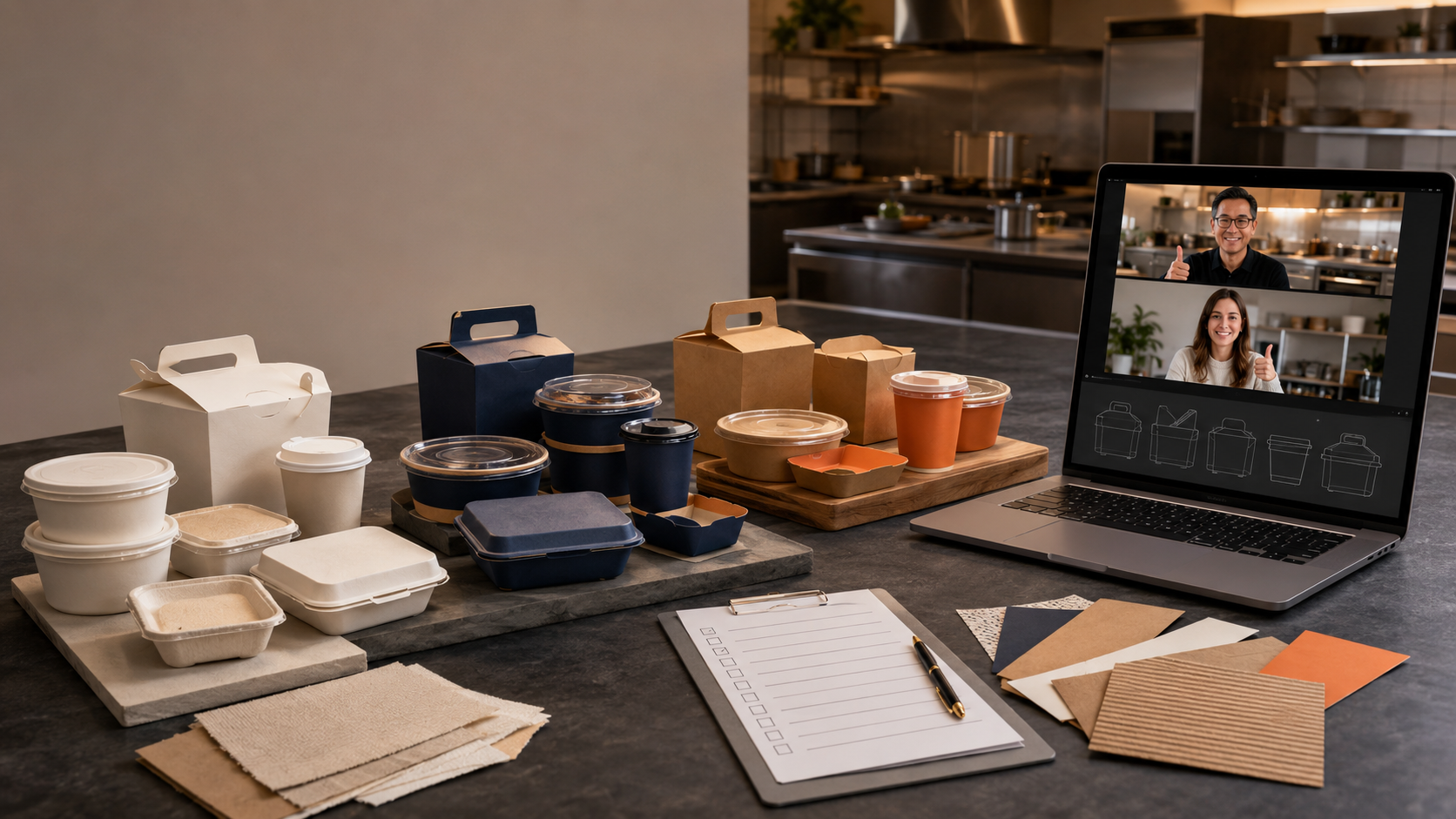
When the brand team and the production kitchen work in different places, the safest approval unit is not “the order.” It is one named brand, one packaging SKU, and one controlled version. That unit gives both reviewers the same object to approve before bulk production.
2026-08-11 - 4 min read
When the brand team and the production kitchen work in different places, the safest approval unit is not “the order.” It is one named brand, one packaging SKU, and one controlled version. That unit gives both reviewers the same object to approve before bulk production.
The workflow below treats the brand owner and kitchen operator as separate decision-makers. The brand owner confirms what customers will see. The kitchen confirms what staff can pack and handle. The supplier should receive a production release only when both decisions point to the same proof or sample version.
Create one approval card per brand and SKU
Start with a register that gives every item a stable identity. Record the brand, package type, dimensions or capacity, material or structure requested, matching lid or companion item, quantity estimate, destination, artwork filename, and revision. Use the same identity on review messages, sample labels, and the purchase documentation.
This recommendation is consistent with the information TakeawayPack can collect during an RFQ: product category, material, size or capacity, estimated quantity, print or color requirements, logo customization, and destination. Its catalog covers cups, bowls, boxes, containers, trays, lids, bags, and cutlery. Availability and commercial terms still need confirmation for each exact item.
Give the digital proof a narrow decision
The digital proof should answer whether the correct artwork is assigned to the correct item. The brand reviewer can check the brand name, approved logo file, visible copy, intended colors, and artwork placement. The kitchen reviewer can check whether the proof is tied to the correct pack format and whether the visual distinction will be usable at the packing station.
Neither reviewer should approve from an unlabeled screenshot or an informal “looks good.” The response should name the brand, SKU, artwork revision, and decision. If comments require a change, close the old version and review the replacement as a new revision.
TakeawayPack states in the readable source evidence that, for custom printing, it prepares a digital proof from the customer's files and starts production after written customer approval. That makes version-specific written approval an important customer control.
Route the physical sample to the kitchen first
A physical sample answers questions a screen cannot: whether the selected form works with the menu, whether the container and lid are the intended pair, how the item folds or closes, and whether staff can distinguish it from the other brands during a realistic packing exercise.
The kitchen should test the sample with the intended food, fill level, companion components, stacking pattern, and delivery handoff. The result should be recorded with the sample identity, test date, observations, photos where useful, and a clear disposition: accept, revise, or reject. This is a recommended buyer test; it is not evidence of a performance guarantee.
The readable TakeawayPack evidence says buyers can ask whether samples, drawings, or print files can be used to align requirements. Confirm whether a sample matches the intended production construction, coating, lid configuration, and print process before treating it as the production reference.
Use two signatures with different scopes
The two reviewers do not need to decide the same things:
- **Brand sign-off:** the named artwork revision and customer-facing presentation are accepted.
- **Kitchen sign-off:** the named physical item is workable for the intended menu and packing routine.
The release record should show both decisions beside the same brand and SKU. If one is missing, the item stays on hold. If a later change affects artwork, size, material, closure, or brand assignment, reopen the relevant decision rather than carrying the earlier approval forward.
Send one consolidated production release
After both reviewers agree, send the supplier a short release packet containing the final proof, any approved sample reference, the product specification, quantity, packing identification, destination, and one unambiguous statement that the named version is approved for production.
For an order covering several brands, release each SKU separately even if purchasing and shipping are consolidated. This keeps a late correction to one brand from being mistaken for a change to every item.
Remote sign-off checklist
- 1. Assign a unique identity to every brand and packaging SKU.
- 2. Confirm that the proof uses the current artwork file and intended pack specification.
- 3. Collect brand comments and kitchen comments against that same revision.
- 4. Test the physical sample in the real kitchen workflow when physical fit or handling remains an open question.
- 5. Record brand approval and kitchen approval with distinct scopes.
- 6. Release only the named final version, then archive the proof, sample record, and decision together.
This process does not guarantee that every requested material, customization, split delivery, or sample arrangement is available. Those points belong in the order-specific quotation and written project terms. To discuss a multi-brand packaging brief, buyers can submit the product, customization, quantity, and destination details at TakeawayPack.