Anti-Fog Lidding for Refrigerated Grab-and-Go: How to Evaluate Product Visibility
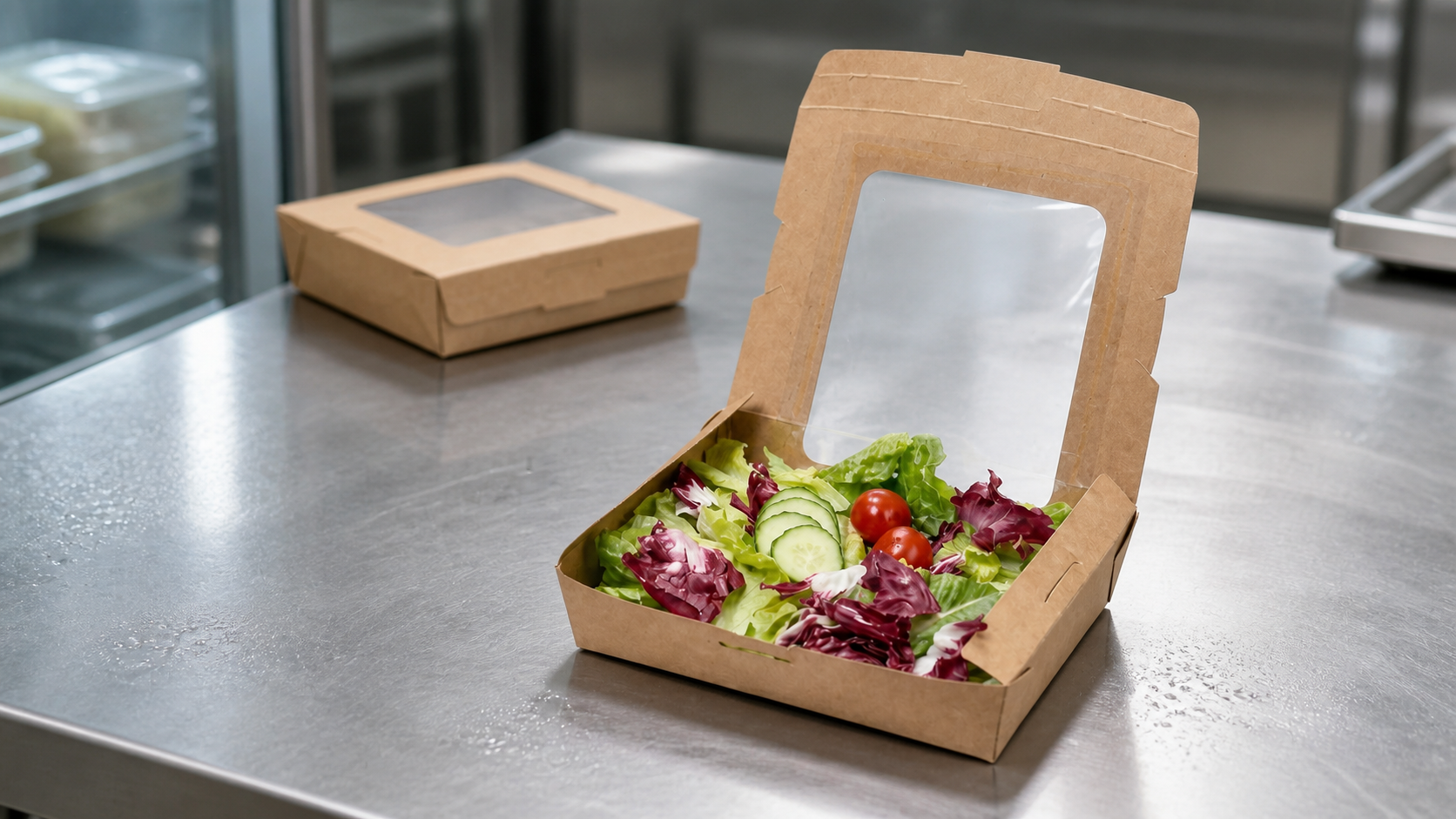
For refrigerated salads, sandwiches, fruit cups, and similar grab-and-go foods, a clear view of the product is part of the pack’s presentation. Condensation can obscure that view even when the food itself has not changed. An anti-fog lidding approach may be worth evaluating, but it should be reviewed as one requirement within the complete packaging system. Define the product, lid or film, sealing method, cold-chain conditions, and visual result to be assessed before treating any option as suitable for a project.
2026-08-19 - 6 min read
Summary
For refrigerated salads, sandwiches, fruit cups, and similar grab-and-go foods, a clear view of the product is part of the pack’s presentation. Condensation can obscure that view even when the food itself has not changed. An anti-fog lidding approach may be worth evaluating, but it should be reviewed as one requirement within the complete packaging system. Define the product, lid or film, sealing method, cold-chain conditions, and visual result to be assessed before treating any option as suitable for a project.
Why Product Visibility Matters in a Refrigerated Case
A refrigerated grab-and-go package often has to communicate its contents before the customer picks it up. When moisture forms as droplets on the inside of a clear lid or film, the product can become harder to see.
That change can affect the presentation of cut fruit, leafy salads, sandwiches, cold deli foods, and prepared meals. The buyer’s first question is practical: can the intended product remain visible at the point where it will be displayed or handed to the customer?
Visibility is not a substitute for a defined packaging specification. It is one requirement that should be recorded alongside the food type, format, closure, and expected handling conditions.
Understand Where Condensation Appears
Moisture can move from food into the headspace of a sealed pack and collect on a cooler inside surface. Temperature changes during filling, transport, stocking, and refrigerated display can make the visual result different from the result seen immediately after packing.
For this reason, do not assess a clear lid or lidding film only at room temperature or only when the pack is newly sealed. The evaluation should reflect the product’s intended refrigerated journey.
What an Anti-Fog Lidding Approach Is Designed to Address
Anti-fog treatments are designed to change how moisture behaves on a film surface. Rather than remaining as many separate droplets that scatter light, moisture may spread into a more continuous layer that is less visually disruptive.
That is a useful technical principle, not a blanket performance claim. The observed result can depend on the food, film structure, treatment, sealing process, temperature profile, pack geometry, and time in the refrigerated environment.
Some anti-fog solutions use a surface treatment, while others incorporate the treatment during film manufacture. A buyer should ask how the proposed option is intended to be used and what project-specific evidence is available for the proposed configuration.
Keep the Brief Focused on the Actual Product
A fruit cup, a prepared salad, and a sandwich pack may each create different moisture conditions. Record the product components, any visible dressing or sauce, fill condition, headspace, and the planned display environment.
Then identify the area through which customers need to see the product. A broad request for an “anti-fog lid” is less useful than a brief that describes the food, the format, the viewing area, and the conditions to be evaluated.
Treat Clarity, Seal, and Atmosphere as Separate Requirements
A package can need more than one function. A refrigerated food project may have a visual-presentation requirement, a closure requirement, and a gas-management or barrier requirement. These should be discussed as separate requirements that must work together in the final pack.
Do not assume that an anti-fog feature establishes seal integrity, oxygen control, gas transmission, shelf life, or food suitability. Each point needs its own project-specific review against the proposed material and configuration.
For example, if the operation uses a particular packing atmosphere, put that condition in the brief. If the pack needs a specific lid-to-container relationship, identify the exact components and sealing method. The supplier response should address the defined system rather than an unnamed film category.
Evaluate the Proposed Pack, Not a Generic Sample
A sample can help begin a conversation, but a generic sample does not settle the result on every food or packaging format. Use the actual or closely representative pack when reviewing the project.
Document the container or tray, lid or film, sealing settings, food application, packing date, observation points, and refrigerated conditions. Review the intact pack after the relevant handling and display period, then record what can be seen through the intended viewing area.
This process does not prove universal performance. It creates a clearer basis for deciding whether the evaluated configuration should move forward, be adjusted, or remain under clarification.
A Practical Evaluation Checklist for Cold Grab-and-Go Packs
A concise review can prevent the team from treating a clear-looking pack as a complete answer. Start with the following questions.
Product and Format
- What food is being packed, and what moisture-producing ingredients are included?
- Is the format a cup, tray, bowl, container, sandwich pack, or another defined pack?
- Which lid, film, or closure component is being evaluated with that format?
Operating Conditions
- What happens between filling, sealing, transport, storage, stocking, and sale?
- What refrigerated conditions and temperature changes are expected during that route?
- At what points should the team inspect product visibility?
Evidence and Decision Criteria
- What visual result is required for the customer-facing viewing area?
- What separate evidence is needed for the closure, material, intended food use, and any atmosphere-related requirement?
- Which observations would lead the team to revise the specification or request further clarification?
A written checklist makes it easier to compare proposals fairly. It also helps prevent a performance statement for one food, time period, or pack shape from being applied to a different project.
Build a More Useful TakeawayPack Inquiry
TakeawayPack’s online directory includes foodservice packaging categories such as containers and lids. Its inquiry process can collect the product category, material, size or capacity, expected quantity, customization requirements, and destination information.
For a refrigerated visibility project, add the food application, pack format, proposed viewing area, intended lid or film relationship, sealing method, and the conditions you want to evaluate. If oxygen control, a barrier property, or a particular document is relevant, state that requirement separately and ask for information tied to the proposed configuration.
A project discussion can also cover structure, coating, capacity, printing, lid matching, and carton packaging. Those details remain specific to the proposed project and should be confirmed for the selected configuration rather than inferred from a category description.
https://takeawaypack.com