Anti-Fog Lids for Cold Food Takeout: Do You Really Need Them?
Anti-fog lids are worth considering when condensation repeatedly hides cold food that customers are meant to inspect through a clear pack. They are not a universal upgrade: their job is visual clarity, not proof of better sealing, food safety, or shelf life.
2026-09-09 - 3 min read
Summary
Anti-fog lids are worth considering when condensation repeatedly hides cold food that customers are meant to inspect through a clear pack. They are not a universal upgrade: their job is visual clarity, not proof of better sealing, food safety, or shelf life. The practical decision is to compare a standard clear lid and an anti-fog sample with the real food, normal packing routine, and actual chilled route before committing to a specification.
Estimated reading time: 3 minutes
Does visibility contribute to sales?
Do you really need an anti-fog lid?
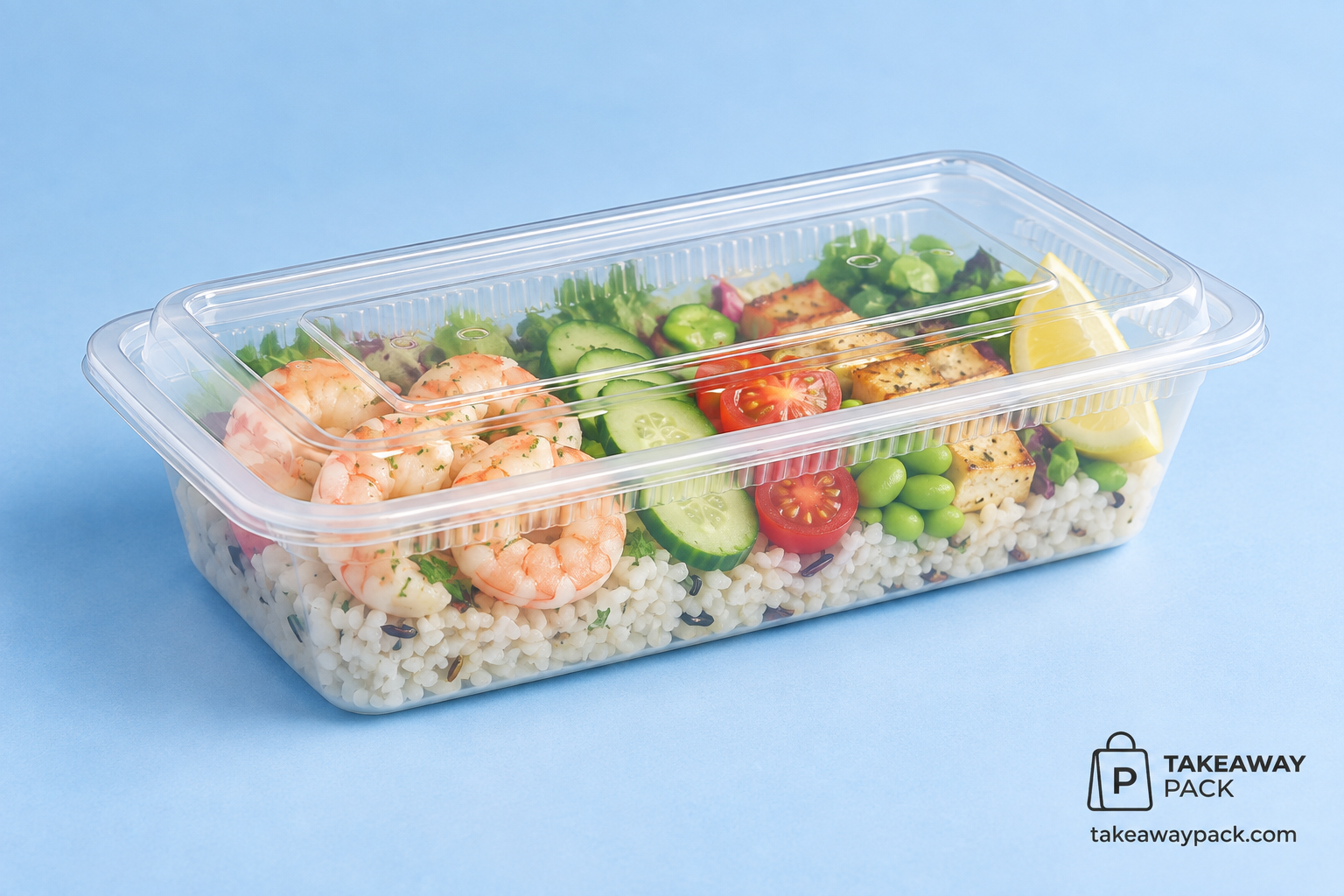
You probably do when a customer is expected to judge the food through the package before buying it. Think of a chilled self-service salad, fruit cup, deli side, or layered dessert in a grab-and-go cooler. If condensation makes the contents difficult to see, a transparent lid is no longer doing its merchandising job.
You may not need one when the food is sold mainly from a menu image, the package is mostly covered by a label or sleeve, or the food and route do not create noticeable condensation. A clear lid that stays acceptably clear in normal use does not need an extra feature simply because anti-fog is available.
The decision should start with a real observation: does the standard lid become cloudy during the way you actually pack, chill, transport, display, and hand over the food?
Why does a cold-food lid fog up?
Fogging is condensation. Moisture-rich air inside the pack meets a lid surface that is cooler, and water collects on that surface as small droplets. Those droplets scatter light, turning the viewing window cloudy even though the lid began clear.
The food is only one part of the picture. Surface moisture, food temperature, trapped air, headspace, lid temperature, refrigeration cycles, and changes between rooms or vehicles can all affect what appears on the lid. This is why an empty sample on a desk is a poor substitute for a filled-pack test.
What does anti-fog actually change?
Does it remove moisture? No. An anti-fog surface is intended to change how condensed water behaves. Instead of many visible beads, moisture can spread more evenly across the surface as a less visually disruptive film. The goal is a clearer view of the food under the conditions for which the lid was designed.
That distinction protects against a common purchasing mistake. Anti-fog is a clarity requirement. It is not evidence that a container is leak-resistant, tamper-evident, hermetically sealed, suitable for every temperature, or approved for a particular food-contact use. Each of those requirements needs its own specification and validation.
When does anti-fog add the most value?
It is most relevant when three conditions occur together:
- The food has enough moisture, or experiences enough temperature change, for a standard lid to fog.
- The food is displayed through a clear surface before the customer decides to buy it.
- The clarity loss is meaningful to the presentation of that particular item.
Cold salads, cut fruit, prepared deli foods, chilled desserts, and colorful composed bowls are sensible candidates to test because the package can be part of how the food is assessed. The same lid may add little value for dry bakery items, opaque packaging, or products sold and opened before fogging has time to develop.
Does delivery alone make anti-fog necessary?
Not necessarily. Delivery can introduce temperature transitions, but it does not automatically make lid visibility commercially important. A customer who selected a meal online may have little reason to inspect the lid while it remains in a delivery bag. In contrast, a chilled display pack may need to look clear before purchase.
Treat delivery as one test condition, not as the entire justification. If the customer sees the pack at pickup, if the food is also sold from a refrigerated display, or if the contents are important to the handoff experience, clarity may still matter. The answer depends on the food and journey, not on the word “delivery” alone.
What should you test before placing an order?
How can a buyer make a decision without relying on a sales sample?
Run a side-by-side comparison. Use an ordinary clear lid as the control and an anti-fog sample that fits the same food application. Then use the following discipline:
- Pack the actual recipe or food mix, including normal washing, draining, dressing, and fill practice.
- Record the food temperature, fill level, headspace, and closing method.
- Chill, move, store, and display the packs through the same sequence the product will experience in service.
- Inspect both the inside and outside of the lid after relevant temperature changes.
- Photograph the samples from the same angle and lighting at defined checkpoints.
- Check closure performance separately, especially when dressings, sauces, or free liquid are involved.
- Repeat the comparison rather than approving a single unusually good sample.
Agree the pass/fail rule before testing. For example: can a shopper still identify the contents and assess the intended presentation at the point of sale? A visible standard makes the result easier to discuss with a supplier and within the operations team.
How should you think about cost and stock availability?
Is there a standard price premium for anti-fog? No blanket number is reliable enough for a buying decision. The difference depends on the exact lid geometry, material, treatment, quantity, packaging format, and destination. Compare quotations only when the two options have the same size, closure, application, case pack, and delivery basis.
Who has ready-to-ship anti-fog containers? Treat this as a current specification question, not a catalogue assumption. Ask the supplier to confirm the exact part number, compatible base, available quantity, production status, intended use, and delivery destination in writing. A clear lid or a lid described as suitable for cold food is not automatically an anti-fog lid.
For this reason, do not approve a product from an image alone. Request filled samples and a written specification for the exact version being quoted.
What should a purchasing brief include?
A concise brief helps a supplier propose something testable rather than merely clear-looking. Include:
- food type and whether it is wet, dressed, chilled, or packed soon after preparation;
- normal fill temperature and storage temperature;
- expected time in cold storage, display, pickup, or delivery;
- desired capacity and container footprint;
- whether the lid must show first opening, resist leakage, or work with labels;
- the critical viewing area that must remain visible;
- the sample test and acceptance rule; and
- the quantity, destination, and timing needed for an availability check.
This separates the anti-fog question from the rest of the packaging system. It also makes it harder to confuse an unverified performance claim with a purchasing requirement.
A simple decision rule
Choose a standard clear lid if it remains clear enough through your real use cycle. Move to anti-fog only when comparative filled-pack testing shows a useful visibility difference at the moment a customer needs to see the food. Keep leak control, closure, tamper evidence, food-contact suitability, and temperature limits as separate sign-off items.
Plan the evaluation before choosing a lid
If you need to define a cold-food packaging requirement before requesting samples, visit Takeawaypack to start the conversation.