Aqueous-Coated Paper Cups vs PE-Lined: What's the Difference for Coffee Shops?
For a coffee shop, the meaningful difference is not a label alone: PE-lined and aqueous-coated cups use different liquid-contact constructions, so they need to be specified, tested, and assessed against the local waste route differently. Treat a switch as a procurement decision: verify the exact cup
2026-09-09 - 4 min read
Summary
For a coffee shop, the meaningful difference is not a label alone: PE-lined and aqueous-coated cups use different liquid-contact constructions, so they need to be specified, tested, and assessed against the local waste route differently. Treat a switch as a procurement decision: verify the exact cup construction, beverage conditions, destination-market documentation, collection route, and quoted project terms before treating a higher-cost option as better value.
Estimated reading time: 5 minutes
Q: What is the practical difference between PE-lined and aqueous-coated cups?
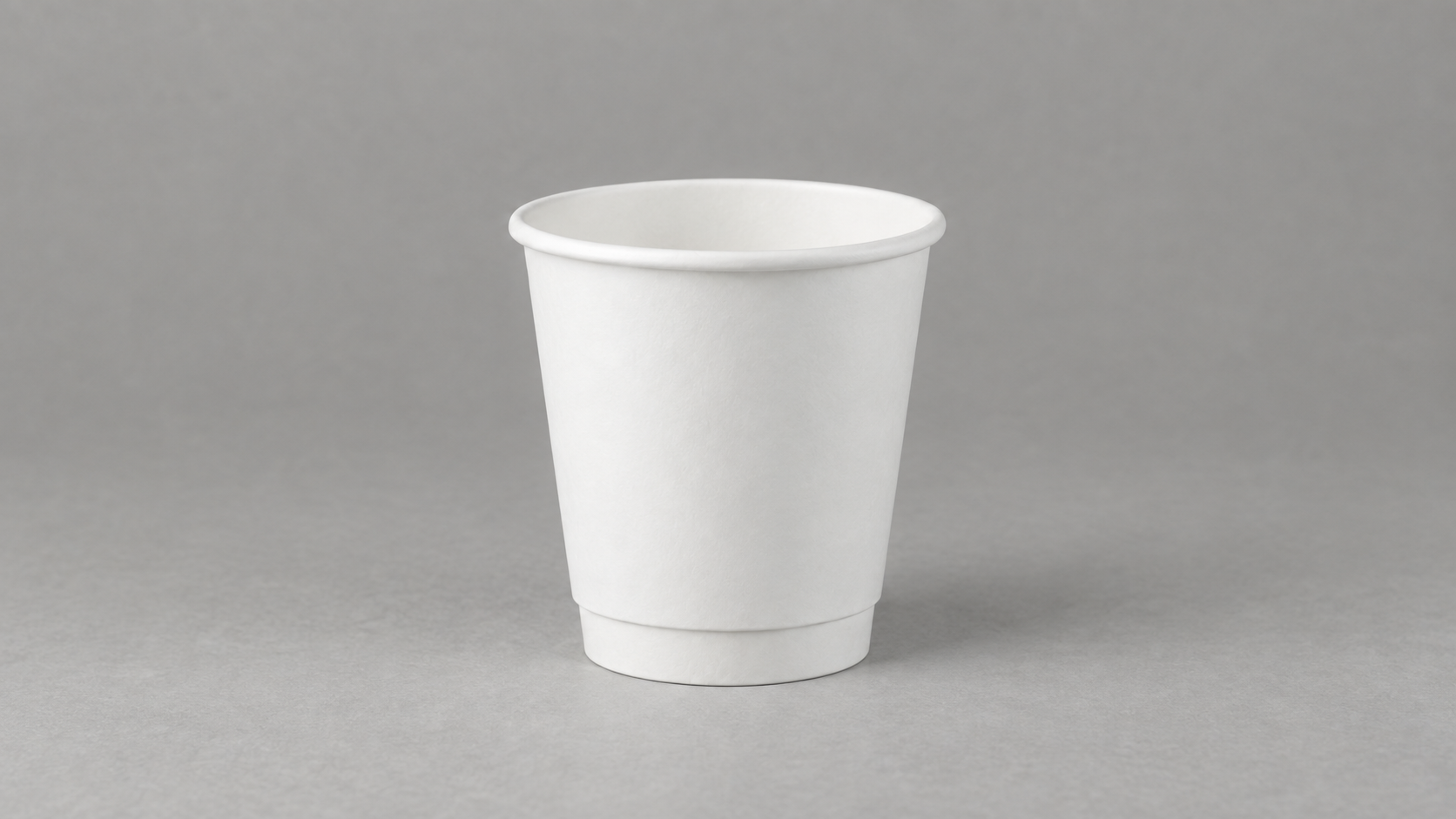
Answer: A PE-lined paper cup uses paperboard with a polyethylene (PE) lining. An aqueous-coated paper cup uses a water-based coating system applied to the paper. That construction difference is the starting point for a buying discussion, not the end of it.
For procurement, ask the supplier to identify the complete material build for the proposed item: paperboard, lining or coating description, coating location, inks, adhesives, and the matching lid if one will be used. “Aqueous,” “water-based,” and “plastic-free” should not be treated as interchangeable product specifications. The written specification for the exact cup is what your team can compare, test, and approve.
Q: Does one construction automatically give better leak resistance or drink performance?
Answer: No. Do not select a cup on that assumption. Cup performance is project-specific and can depend on the formulation, paperboard, cup format, beverage, fill level, holding time, storage conditions, and lid fit.
Build a use-case test around your actual menu. Include the largest and smallest cup sizes, normal service temperatures, iced drinks if relevant, beverages with milk or oils if relevant, the expected customer carry time, and any delivery or catering use. Record the pass/fail conditions before comparing quotes. If the supplier offers samples, test the production-relevant configuration rather than assuming that a material name establishes suitability.
Q: Can a coffee shop describe an aqueous-coated cup as recyclable?
Answer: Only after verifying the claim for the exact item and the intended collection system. A coating description does not prove that a local collector, sorting facility, or paper mill accepts used cups from your business. It also does not settle how cups with drink residue, lids, sleeves, or mixed materials will be handled.
Ask two separate questions:
- Product evidence: What documented recycling or repulpability evidence applies to this exact cup construction?
- Local route evidence: Does the waste contractor or local program accept this cup, in this condition, from your site?
Keep the answers together in the buying file. If either answer is missing, avoid making a definitive recycling claim in customer-facing copy. The same discipline applies to any compostability, recycled-content, PFAS, or environmental statement: request product-specific evidence and check whether it applies in the destination market and disposal route.
Q: What should be compared before accepting a higher quote?
Answer: Compare a complete project brief, not just the unit price. A higher-priced proposal may be reasonable if it meets a requirement that the lower-priced proposal does not, but that is a decision to verify rather than a general rule about either construction.
Use a side-by-side comparison that includes:
- the exact cup size, format, paperboard, lining or coating, and lid interface;
- the beverage and service conditions the cup must pass;
- relevant food-contact documentation for the destination market;
- written evidence for any end-of-life claim you plan to use;
- collection instructions confirmed with the local waste route;
- sampling and approval requirements;
- printing, artwork, carton, and freight assumptions; and
- the quoted price, minimum order quantity, production timing, and commercial terms for your project.
This prevents a simple “PE versus aqueous” comparison from hiding a difference in performance, components, documentation, or logistics. It also gives the café a clean basis for deciding whether a premium supports a real operational or communication need.
Q: When might a higher-cost aqueous-coated option be worth evaluating?
Answer: It may be worth evaluating when the café can document a need that the proposed cup meets: for example, a defined material requirement, a verified local end-of-life route, or a customer communication claim that has product and route evidence behind it. It may not be a sound premium if the local route is unknown, the required performance has not been tested, or the claim cannot be supported for the actual cup.
The decision should remain conditional. Start with the approved service requirements, then assess disposal evidence and commercial terms. That order helps avoid paying for a label that cannot be used credibly in the café’s own operating context.
Q: What should a coffee shop ask before placing an order?
Answer: Send a focused written brief and ask for answers in the same format from every supplier.
- What is the full material specification for the proposed cup and matching lid?
- Which beverage conditions has this exact configuration been evaluated for, and what test method or documentation is available?
- Which food-contact documents apply to the country where the cups will be used?
- What evidence supports any recycling, repulpability, compostability, or other environmental claim for this configuration?
- Who will collect the used cups, what condition do they require, and what must be separated?
- What sample, artwork, and production-approval steps are required?
- What are the project-specific price, minimum order quantity, production timing, packaging, and delivery terms?
A supplier that can answer these questions clearly gives the café a more defensible procurement record than a broad environmental claim or a price comparison on its own.
Ready to define a cup brief?
TakeawayPack’s RFQ process can capture the material, size or capacity, expected quantity, printing requirements, and destination details for a project. For a project-specific cup brief, visit TakeawayPack and provide the service conditions and evidence requirements you need confirmed.