Back-to-School Season: Why September Is the Best Time to Stock Bento-Style Lunch Containers
September is not a universal signal to buy more lunch containers or a guarantee that any item can be supplied on a particular schedule. It is, however, a useful planning checkpoint: the first school weeks can clarify the menus being packed, the portions that need separation, the sizes that fit the i…
2026-09-10 - 8 min read
Summary
September is not a universal signal to buy more lunch containers or a guarantee that any item can be supplied on a particular schedule. It is, however, a useful planning checkpoint: the first school weeks can clarify the menus being packed, the portions that need separation, the sizes that fit the intended lunch routine, and the SKU details a buyer needs before committing to an order. For foodservice suppliers and retailers, the productive question is not simply whether bento-style formats are popular, but which menu-led format, ordering plan, storage plan, and confirmation process fit the market being served.
Estimated reading time: 8 minutes
Why can September be a better planning checkpoint than a blanket buying deadline?
The back-to-school period often starts with assumptions: a buyer may expect one lunch format to suit every child, menu, or outlet. By September, the first days of actual packing and selling can supply more useful questions. Which items are being sent together? Which portions need to remain distinct? Is the chosen outside size practical for the lunch bag or retail shelf? Does the planned assortment leave room for an item that needs a separate cup or lid?
That makes September a point to review a plan, not proof that every buyer should increase stock. A retailer may find that a limited test needs refinement before a wider purchase. A distributor may discover that two formats serve distinct menu uses better than one all-purpose option. A school-calendar launch in one market may not match the timing in another. Treat the month as a prompt to replace guesswork with a documented brief.
What should be recorded before the next order is placed?
A useful record is simple and specific:
- the foods or menu components the container is expected to carry;
- the desired separation of main items, fruit, snacks, sides, or sauces;
- the approximate outside dimensions and the intended place of use;
- the opening, closing, packing, and cleaning questions the customer has raised;
- the retail, catering, or distribution channel the order is intended to support; and
- the target date by which the goods need to be received, reviewed, and ready for sale or use.
These notes are more valuable than a vague request for a “school lunch box.” They give the purchasing team a basis for comparing formats and asking for a precise SKU confirmation.
Which bento-style formats should a buyer assess first?
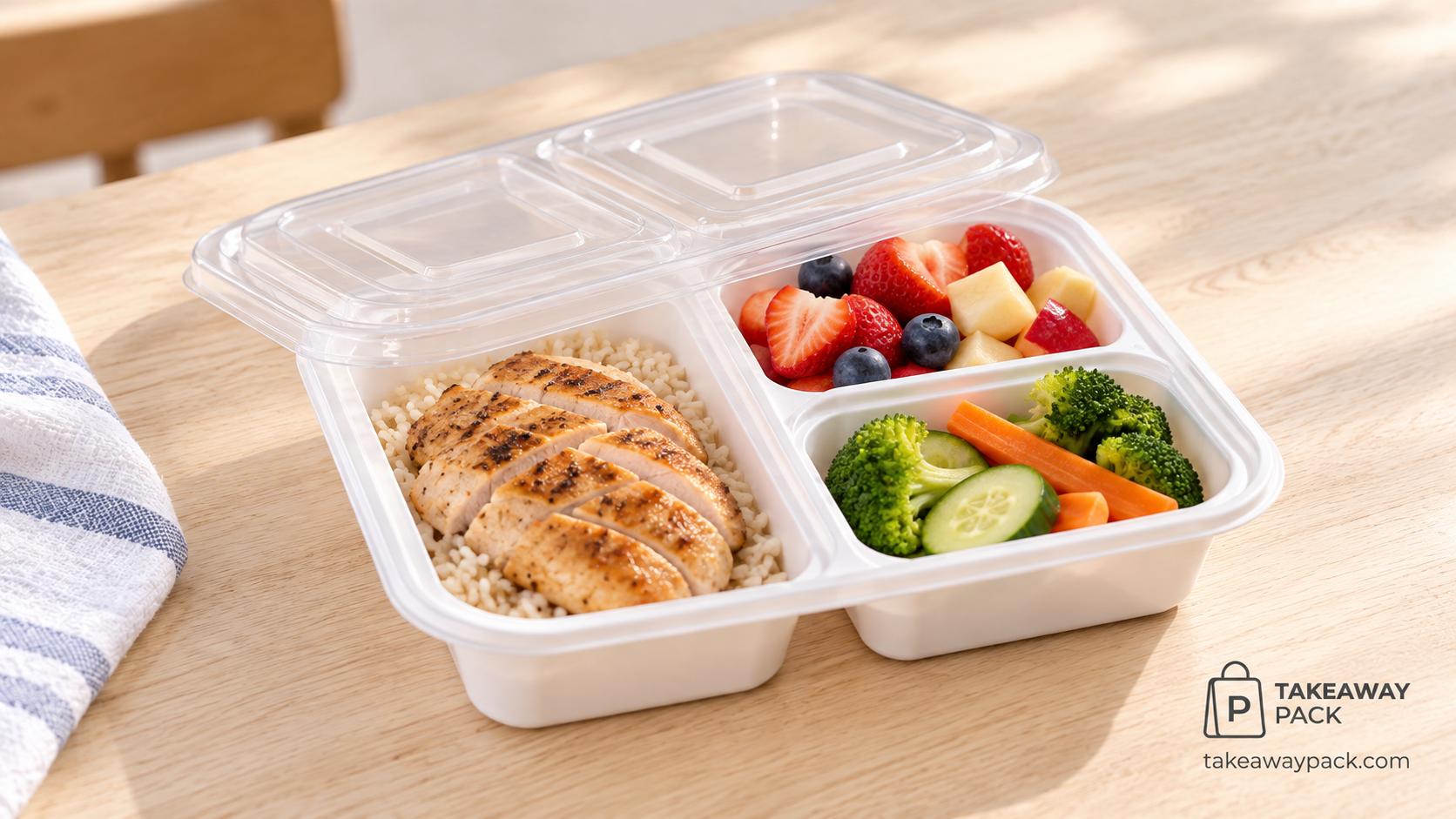
“Bento-style” is best treated as a format description rather than a single product specification. In practical terms, it usually points to a lunch container or tray layout that keeps several food components in defined areas. The right layout depends on the food being packed and the customer’s routine; it should not be chosen solely because it has the most sections.
Does the menu need one main area or several distinct portions?
Start with the menu rather than the container. A sandwich, a piece of fruit, and a dry snack call for a different layout from a meal with several prepared components. List the items that are meant to travel together, then decide which ones need their own space and which can share a larger area. This prevents a buyer from paying for dividers that do not serve the menu or, conversely, selecting a layout that makes the planned portions awkward to pack.
A compact format can be appropriate when the offer is deliberately simple. A divided format may be worth evaluating when the menu is built around several recognizable components. Neither is automatically the better seller; the decision should follow the assortment and the end user’s expectations.
How should portion arrangement be checked without making assumptions?
Use representative food portions or dimensional mock-ups during selection. The exercise is not a performance test or a promise about every meal; it is a way to see whether the proposed arrangement reflects the intended menu. Check the total footprint, the usable areas, and the relationship between the format and any bag, sleeve, or display plan.
If sauces, dips, or other wet items are part of the offer, identify whether they will be handled as a separate component. Do not assume that a divider, lid, or closure solves a menu-specific requirement without confirming the exact SKU and intended use.
When should a buyer consider more than one SKU?
A two-format assortment can be clearer than trying to force one container into every lunch occasion. For example, one option may be briefed around a simple meal and another around a multi-component meal. The decision should still be tied to evidence from the buyer’s own menu, price position, shelf plan, and expected quantity—not to a claim that a given configuration will sell in every school season.
What must be confirmed before a bento-style SKU is selected?
A product image or category name is not enough for an order decision. The purchasing brief should request the exact SKU and the details that determine whether it fits the intended application.
Which dimensions and capacity questions belong in the brief?
Ask for the specific outside dimensions, stated capacity where relevant, pack configuration, and the arrangement of any areas described for that SKU. Compare those details with the intended food portions, lunch bag, storage location, and display space. If a buyer is considering several formats, keep the comparison on one sheet so the differences are visible rather than relying on memory or product photos.
The public TakeawayPack catalog covers categories including containers, trays, boxes, lids, bags, and cutlery. Exact product, material, size, and availability still require SKU and quotation confirmation. That boundary matters: a category-level reference can start an inquiry, but it should not be treated as a promise about a particular lunch format.
What menu and handling questions should accompany the SKU request?
Describe the use case in plain language. State whether the item is for a prepared meal, a retail kit, a catering pack, or another defined application. Identify the foods expected to be packed together, whether separate components are planned, and any route or storage constraints known to the buyer. Then ask the supplier to confirm the details of the proposed SKU against that brief.
This approach keeps product evaluation honest. It avoids turning general market preferences—such as interest in separated portions—into unsupported claims about a specific item’s suitability, safety, or performance.
Can a small-batch custom order be assumed to fit the back-to-school window?
No. A request for a smaller quantity or custom presentation is an RFQ question, not a seasonal entitlement. It needs to be discussed against the exact product, expected quantity, artwork, destination market, quotation, and required timing. A September planning review is useful precisely because it gives the buyer a chance to identify those variables before making a commitment.
What should be included in a custom inquiry?
A clear inquiry should state:
- the container category and the desired format;
- the material preference, size or capacity range, and any required dimensions;
- the expected quantity and whether the order is a trial, a repeat, or a seasonal program;
- printing or logo needs, including the artwork status;
- the destination market and the desired receiving date; and
- any documentation or claim category the buyer needs evaluated for the specific order.
These fields do not create a price, lead-time, minimum-order, or availability promise. They give both sides the information needed to determine whether there is a workable option.
What does the printing approval step require?
For TakeawayPack custom printing, the verified workflow requires customer files and written confirmation of the digital proof before production begins. Build that approval step into the plan rather than treating it as an administrative detail after the ordering decision. It protects the buyer from moving forward with an unapproved representation of the intended artwork.
How should ordering and storage be planned after the September review?
Work backward from the date when the product must be usable, sellable, or available to the next stage of the buyer’s operation. Include internal review, supplier confirmation, artwork approval where applicable, receiving, and placement into storage or the sales channel. Do not turn that backward plan into a fixed supplier timetable; actual availability and quotation must be confirmed for the SKU and order.
What storage questions change the purchase decision?
Storage is not only a question of how many units fit in a room. A buyer should consider the pack configuration, the number of SKUs being introduced, the planned replenishment pattern, display requirements, and how easily stock can be counted and rotated internally. An oversized seasonal order can create avoidable complexity if the assortment has not yet been validated; an underspecified order can make later comparisons difficult.
Keeping a short SKU matrix—format, dimensions, intended menu, pack configuration, expected quantity, storage location, and decision status—helps turn the September review into an operating tool. It also makes it easier to distinguish confirmed facts from open questions.
What is the practical September decision for a foodservice supplier or retailer?
The practical decision is rarely “stock every bento-style container.” It is to choose the next evidence-based action. That may be confirming a short list of SKUs, testing a menu-to-format match, collecting customer feedback, preparing artwork for review, or holding an RFQ until the expected quantity and destination market are clear.
A useful result is a concise buying brief with a named owner, a list of open confirmations, and a decision date. This preserves the opportunity to respond to a school-season routine without presenting demand, product performance, or supply capacity as guaranteed.
Ready to turn a September container checklist into an RFQ?
To discuss a container category, material preference, size or capacity, expected quantity, printing or logo needs, and destination market—while confirming the exact SKU and quotation—contact TakeawayPack.