Best Containers for Group Orders and Family Meal Takeout Bundles
A dependable group-order packaging system begins with the menu and the handoff route, not with the largest available container. This guide shows buyers how to map mains, sides, sauces, and accessories into a repeatable bundle, test the setup in realistic conditions, and prepare an RFQ that makes SKU…
2026-09-13 - 3 min read
Summary
A dependable group-order packaging system begins with the menu and the handoff route, not with the largest available container. This guide shows buyers how to map mains, sides, sauces, and accessories into a repeatable bundle, test the setup in realistic conditions, and prepare an RFQ that makes SKU-specific confirmation possible.
Estimated reading time: 3 minutes
What should the main container solve before capacity is discussed?
Start with the food, not the headcount
A family bundle can contain foods with very different handling needs. A sauced main, a dry side, a chilled item, and a small condiment do not necessarily belong in one compartment or even in one format. Begin by listing every component that the customer receives, including garnish packets, cutlery, and sauces.
For each component, record its intended portion, temperature at packing, moisture level, and the point at which it is added to the order. This turns an abstract request for a “family-size box” into a practical packing brief.
Define the container’s job
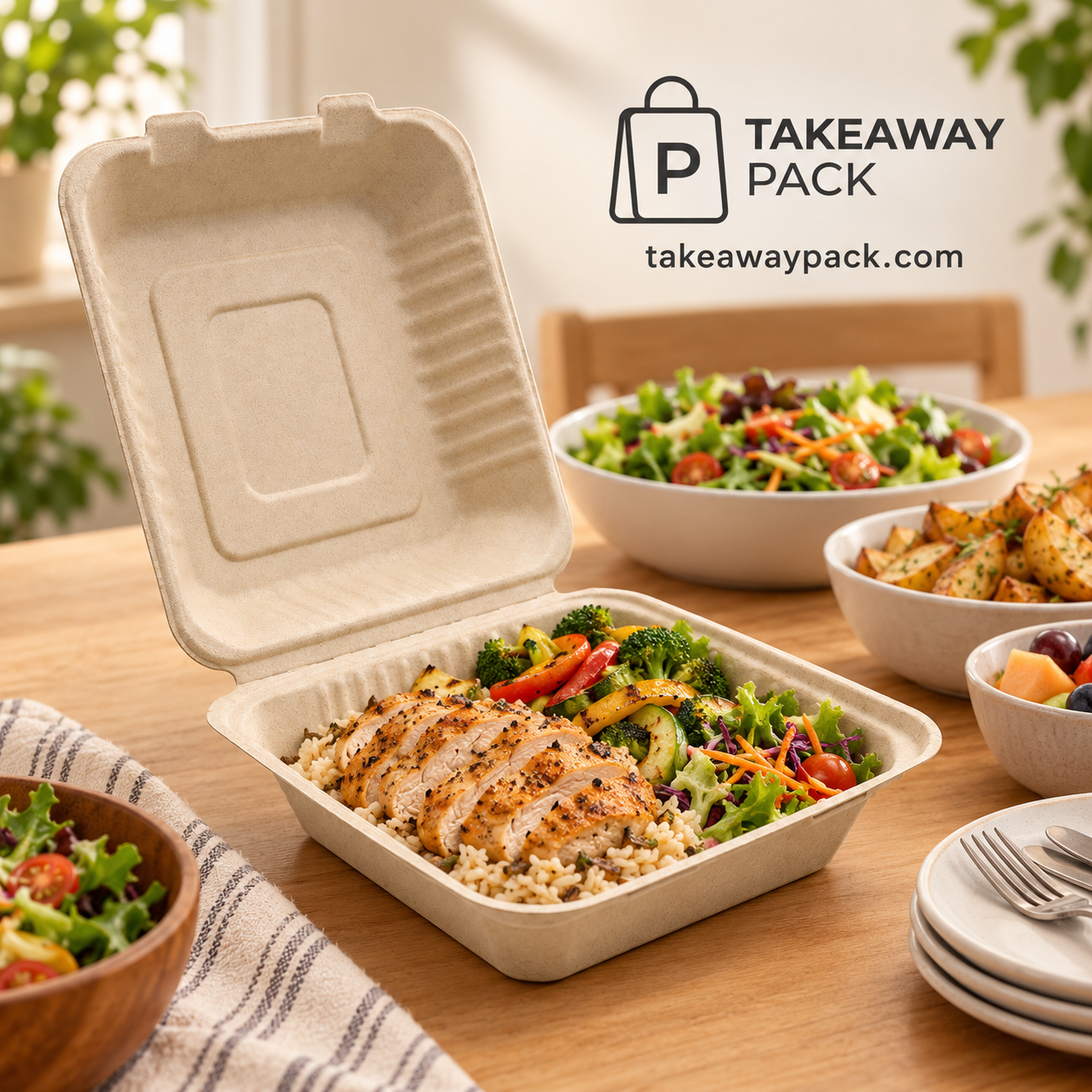
Ask what the main pack must do during assembly and handoff. It may need to hold one prepared main, organize multiple portions, keep separate components apart, or simply act as the outer carrier for several smaller packs. The right choice depends on that job, rather than on a generic person count.
A buyer should also decide whether a single large format creates useful simplicity or whether it makes portion control and presentation harder. The answer can differ between a shared meal, a meal kit, and a collection of individual dishes sold together.
How can a buyer build a repeatable bundle system?
Map the bundle in layers
Build the packaging plan from the inside out. First assign a format to the main item. Then decide where sides, sauces, and optional additions sit. Last, identify the outer pack or carry arrangement that keeps the order easy to check at pickup.
This layered approach makes it easier to see where components might touch, move, or be omitted during packing. It also avoids asking one container to solve every handling problem in the order.
Separate items only when there is a clear reason
Separate packing can be useful when a component must be added at the end, needs a different portion control method, or would make the rest of the bundle difficult to assemble. Keeping an item together can be useful when the menu is intended to be shared from one tray or box.
The decision should be documented as an assembly instruction. A brief instruction such as “main first, sauce last, side beside main” is more useful to an operations team than a container name alone.
Treat lids and accessories as part of the system
A container decision is incomplete without the matching closure and any relevant accessory. Specify whether the buyer needs a lid preference, a separate sauce format, cutlery, bags, or a way to identify variants in a larger order. Those details influence how the bundle is packed and checked.
What should be tested before a group-order format is selected?
Run a menu-specific trial
Test a proposed arrangement using the actual menu components and intended portions. Include the normal fill level, the planned order of assembly, the anticipated holding period, and the handoff method. Observe the setup after it has been carried in the way staff and customers will use it.
The purpose is not to prove a universal performance claim. It is to identify whether this specific food, format, and route work together well enough for the operator’s own standard.
Use a simple pass-or-revise checklist
During the trial, check whether all components fit as planned, whether the order can be counted quickly, whether sauces and sides have an assigned place, and whether the pack remains practical to carry. Note any change that would make assembly clearer or reduce last-minute decisions.
If a result depends on an unconfirmed material, closure, or destination requirement, keep it as a question for the supplier rather than as an assumption. A documented test result is useful only when its SKU and use conditions are clear.
What belongs in an RFQ for family-meal packaging?
A useful RFQ gives the supplier enough information to discuss a real project. Include the product category, desired material, size or capacity, quantity, lid preference, printing or logo need, packing context, and destination. Add a short description of the menu and indicate which component each format is expected to hold.
TakeawayPack can coordinate inquiries around cups, bowls, boxes, containers, trays, lids, bags, and cutlery. Its RFQ process can collect product or category, material, size or capacity, quantity, printing or logo details, and destination information. Each individual material, size, and availability point remains SKU- and quote-specific.
Which items should remain open until they are confirmed?
Do not convert a preliminary packaging idea into a claim about certification, food contact, environmental attributes, PFAS, minimum order quantity, delivery timing, or product availability. Ask for the applicable SKU, quantity, destination, and claim-specific documentation before relying on any of those points.
This separation protects the buying decision. The menu team can finalize its assembly logic while the procurement team gathers the documentation and commercial details that belong to the specific request.
How should a buyer make the final selection?
Choose the configuration that gives the clearest assembly process for the actual bundle and leaves the fewest unresolved questions. Keep the finished layout, packing order, and RFQ details together so a future reorder or menu change can be reviewed against the same standard.
A group-order container is most useful when it is one intentional part of the whole bundle system, not a substitute for defining that system.
Build an RFQ-ready family-bundle plan
Discuss a SKU-specific group-order packaging request with TakeawayPack and include your menu components, quantity, preferred format, lid needs, printing requirements, and destination.