Best Disposable Containers for Meal Prep and Weekly Batch Cooking
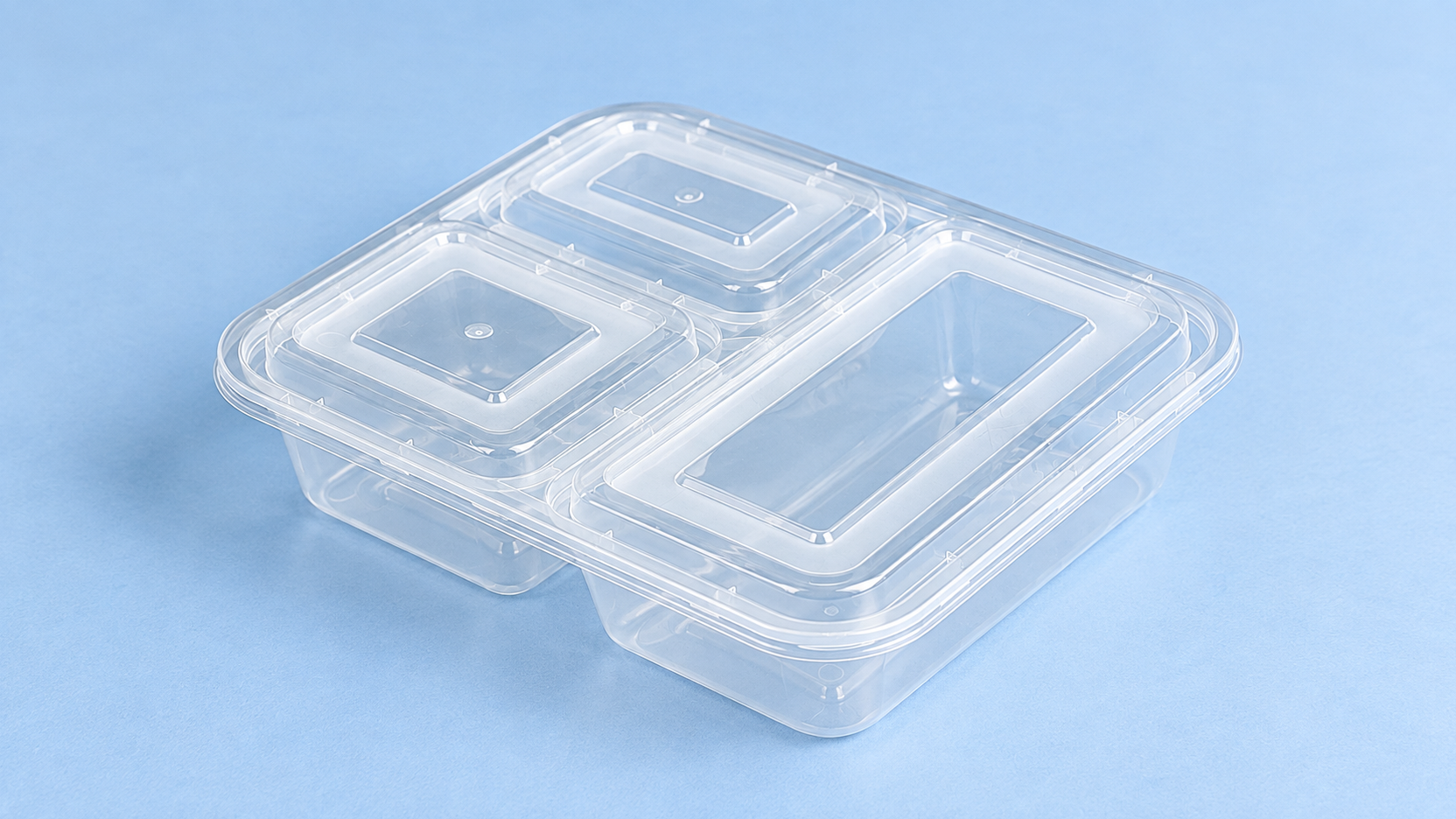
For a meal-prep business packing standardized protein, carbohydrate, and vegetable meals at volume, a three-compartment container is usually the practical default. It gives staff a repeatable pack-out format and gives customers one complete meal to store and reheat. Keep separate pots in the system
2026-09-09 - 6 min read
Summary
For a meal-prep business packing standardized protein, carbohydrate, and vegetable meals at volume, a three-compartment container is usually the practical default. It gives staff a repeatable pack-out format and gives customers one complete meal to store and reheat. Keep separate pots in the system for sauces, dressings, crunchy toppings, desserts, and any component that should be isolated from the main tray. Choose the final format from actual menu portions, storage conditions, lid fit, and delivery handling—not from a headline unit price.
Estimated reading time: 6 minutes
Should a meal-prep business choose three-compartment containers or individual pots?
Answer: Start with a three-compartment format when the menu is built around a repeatable plate: protein, carbohydrate, and vegetables. One tray keeps the standard meal together, makes the portion map visible to the packing team, and reduces the number of separate items that must be picked, lidded, labelled, and checked at dispatch.
Individual pots are not a failed version of the same system. They solve a different problem: protecting a component that should arrive independently. A dressing, gravy, crunchy garnish, fruit topping, or dessert may deserve its own container when combining it with the meal would complicate the customer experience or the packing sequence.
When is a three-compartment tray the better default?
Use it for meals with a stable three-part build and a predictable portion plan. The buyer should be able to write the meal architecture before requesting quotations: which compartment holds the protein, which holds the carbohydrate, and which holds vegetables or a side. That makes it easier to compare cavity layout, total capacity, and lid compatibility across suppliers.
This format is especially useful when the team needs a simple standard operating procedure. The packer sees the same sequence on every tray, and the customer sees the finished meal in the same arrangement. A three-compartment tray is therefore a format decision as much as a container decision.
When should individual pots stay in the line-up?
Keep individual pots for components that require isolation or flexible substitution. Typical candidates include sauces, dressings, wet toppings, crunchy additions, snacks, and desserts. A small separate pot can protect the main tray from an ingredient that would otherwise change the texture of the rest of the meal during storage or delivery.
The trade-off is operational. Each extra pot adds another item to select, fill, close, label, count, and place in the delivery pack. Use that complexity only where the menu or customer experience makes it worthwhile.
Is a hybrid system usually the most useful option?
Often, yes. Standardize the core range around one three-compartment tray and a small number of matching support items, then reserve separate pots for exceptions. This avoids forcing every menu item into one format while also avoiding a long list of rarely used container sizes.
A hybrid system should be designed from menu families, not individual recipes. Group meals that share a portion layout, then identify the few ingredients that genuinely need their own pot. That approach gives procurement a clearer forecast and gives operations fewer items to manage.
Which container attributes matter most for weekly batch cooking?
Answer: Prioritize fit with the actual meal and operating flow before comparing material labels or cosmetic details. A container can look suitable on a supplier page and still be wrong for the fill level, storage cycle, label size, or delivery method used in your kitchen.
Does total capacity tell the whole story?
No. Total capacity is only a starting point. A 1,000 ml tray can be unsuitable if the individual cavities do not match the meal build. Ask for the cavity layout and internal dimensions, then run a real portion test with the foods you will sell.
Do not select a tray solely because its stated total volume resembles your meal weight. Foods have different shapes and densities, and the usable space changes once the lid, garnish, sauce pot, and safe closing space are considered.
What should be checked about the lid?
Treat the base and lid as one purchasing decision. Confirm the exact matching lid, whether it is included in the quoted set, how it fits after the meal is filled, and how the closed unit behaves in the intended packing orientation. If meals are labelled on the lid, check that the label has a consistent, usable placement area.
For menu items that will be chilled, frozen, or reheated, ask for product-specific use instructions and run your own test with the proposed SKU. Do not assume that a statement about one container applies to every size, lid, or material variation.
How important are stacking and warehouse handling?
They matter because weekly batch cooking creates repeated handling: receiving empty containers, staging them near the line, packing finished meals, loading deliveries, and storing meals at the customer end. Test stacked, filled units in the same crates, bags, and storage orientation that your operation uses. A sample review should include the full workflow rather than a single empty-container inspection.
How should a buyer compare disposable-container quotations?
Answer: Compare like with like and calculate cost per completed meal, not only price per loose base. A useful quotation comparison lists the base, matching lid, material, compartment count, total capacity, internal layout, carton pack, any printing requirement, destination, and the quantity tier being quoted.
Ask suppliers to state what is included and what remains subject to confirmation. This prevents a low-looking figure from being compared against a different configuration, a different pack quantity, or an incomplete set.
Avoid treating a generic internet price as a procurement benchmark. Wholesale pricing can change with the chosen SKU, order quantity, print requirement, packaging configuration, destination, and commercial terms. The defensible comparison is a written quotation for the same defined meal-prep set.
What should be tested before a bulk order?
Answer: Test the proposed SKU with the foods and routine your customers will actually experience. Use production portions, the intended label, normal closing steps, planned storage time, delivery orientation, and customer reheating instructions where relevant.
A practical sample review can answer these questions:
- Does each meal component fit its designated cavity without preventing a proper close?
- Can the team pack and label the unit consistently during a normal batch?
- Does the selected lid remain the correct match after filling and stacking?
- Are sauces, dressings, or toppings better held in a separate pot?
- Does the tray fit the delivery bag, crate, refrigerator shelf, and customer storage pattern?
- Can procurement identify the exact SKU, set configuration, carton pack, and quotation basis for a reorder?
Record the results by SKU and menu family. That record is more useful than a general statement that a container is “good for meal prep,” because it links the decision to your portions and workflow.
How can TakeawayPack support a meal-prep RFQ?
TakeawayPack’s current product records include three-compartment PP sets in more than one format, including a 42 oz rectangular set, a 40 oz round set, and 1,000 ml three-compartment trays. The records also include 1,000 ml four-compartment variants. These are catalogue examples, not a promise of stock, price, certification, or suitability for a particular market.
For a useful RFQ, provide the meal category, preferred material, total capacity and cavity layout, expected quantity, printing or colour requirements, matching-lid requirement, and destination country. TakeawayPack can use those inputs to organize the inquiry; final product selection, commercial terms, documentation, and availability should be confirmed for the specific SKU and order.
Need a meal-prep container plan matched to your menu?
Start with one representative meal, its portion map, the number of compartments required, and the components that need separate pots. Then submit those requirements to TakeawayPack for an SKU-specific meal-prep packaging discussion.