The Best Packaging for Hot Meals and Delivery Depends on the Food and Journey
The best packaging for hot meals depends on the food, closure, route, and operating conditions. Compare common materials and formats, then validate the complete system in real delivery conditions.
2026-08-06 - 9 min read
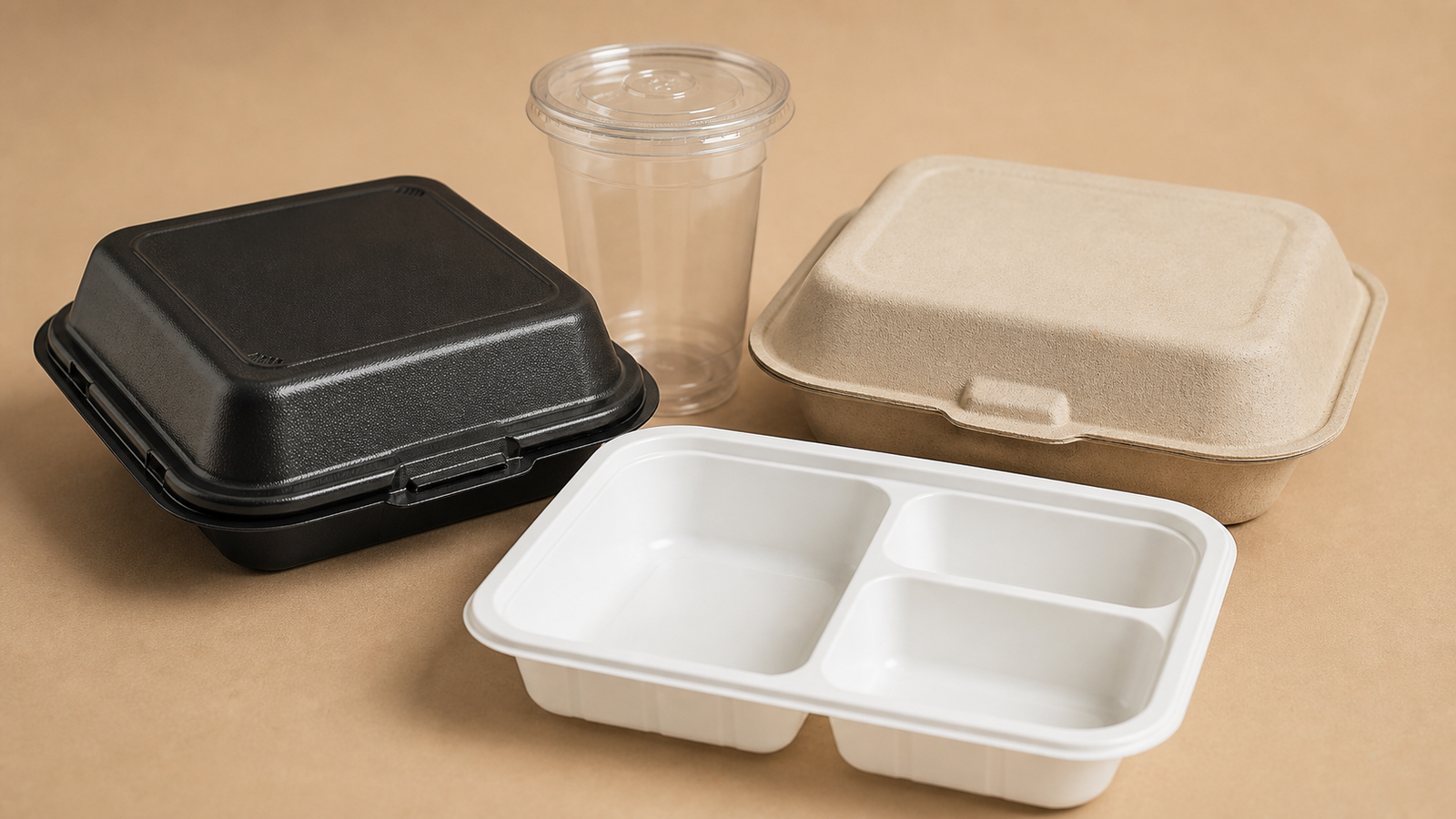
Choosing packaging for hot-food delivery is not a simple materials decision. It affects meal quality, leakage risk, customer perception, operating consistency, and the total cost of serving food away from the restaurant. PP, CPET, bagasse, paperboard, PET, and bio-based alternatives all behave differently when exposed to heat, steam, oil, liquid, stacking pressure, and a 30–45 minute delivery journey.
For a multi-location restaurant group, the most reliable solution is rarely one universal container. The better approach is to match a tested container-and-closure system to the food, the route, and the operating requirements of each menu category. That makes it possible to protect the guest experience while maintaining a practical, consistent packaging program across locations.
Quick Summary
Hot meals create several packaging challenges at once: heat can soften or distort unsuitable materials; steam can create condensation; oils and sauces can find weak points in a lid or seam; and courier handling can expose containers to vibration, pressure, and stacking. A package must therefore be judged as a complete system rather than as a material alone.
PP and CPET are commonly strong choices for high-temperature, oily, or liquid-heavy meals when the correct format and closure are used. Bagasse can provide a natural presentation and useful heat tolerance for many takeaway meals, but highly oily or soupy dishes require case-by-case testing. PET, RPET, and PLA are generally better suited to cold or lower-temperature applications. Before standardizing across a restaurant chain, buyers should compare specific SKUs with the intended food, lid, delivery duration, and regional operating conditions.
1. Why Hot-Food Packaging Fails in Delivery
A container that looks satisfactory at the pass can still fail before it reaches the customer. Hot food releases steam, sauces move as a vehicle turns or stops, and containers are often stacked or carried at an angle. These conditions can lead to leaks, softened structures, soggy textures, loose lids, and an unappealing presentation on arrival.
Temperature is only one part of the problem. A dry grilled dish, a rice bowl, a rich curry, and a soup can all leave the kitchen at similar temperatures but demand very different packaging performance. Grease resistance, headspace, lid engagement, venting, compartment design, and stacking strength can matter as much as the base material. The best choice is therefore the one that performs reliably throughout the actual food-and-delivery journey.
2. Comparing Packaging Materials for Hot Meals
Material selection should begin with the menu item and the intended use. The following comparisons outline where common food-packaging materials are most useful, where their limits appear, and what chain buyers should validate before a wider rollout.
2.1 Polypropylene (PP)
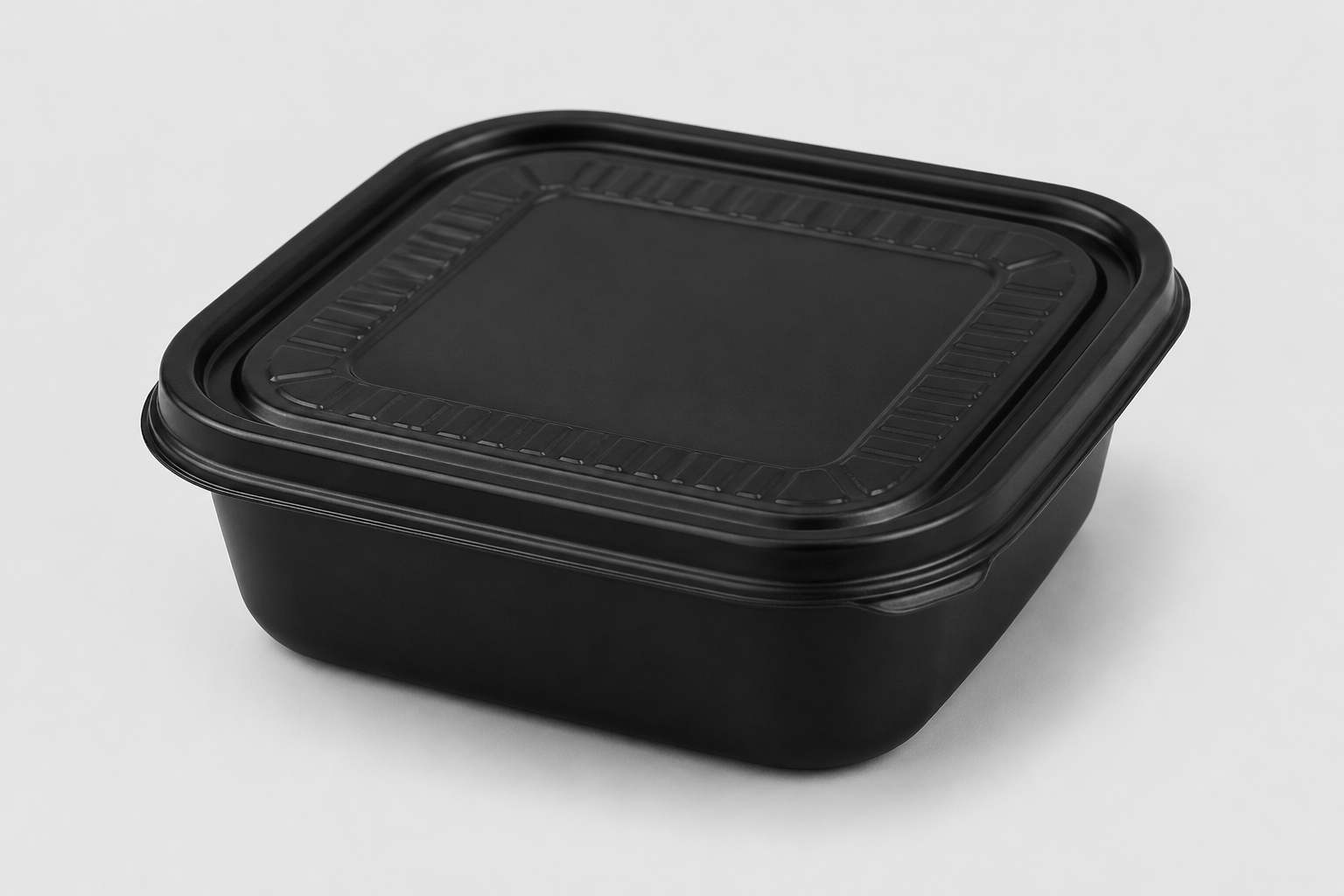
PP is widely used for hot takeaway food because it offers a practical combination of heat resistance, toughness, and cost control. It is available in bowls, trays, lunch boxes, compartment containers, and matching lids, making it suitable for operations that need a consistent range of formats.
Advantages
- Good resistance to hot-food temperatures and microwave reheating
- Strong performance with soups, curries, sauces, and oily foods when paired with a suitable lid
- Lightweight, durable, and practical for high-volume service
- Available in many shapes, capacities, and compartment layouts
- Often provides a favorable balance of unit cost and delivery performance
Limitations
- Not intended for conventional ovens
- May be perceived as plastic in markets where that affects brand positioning
- Requires suitable molding, wall thickness, and lid design to limit warping or leakage
Best for
- Takeaway bowls
- Lunch boxes
- Microwave-reheatable meals
- Soups
- Rice dishes
For soups, curries, and oily dishes travelling 30–45 minutes, well-designed PP bowls or trays with tightly matched lids are often a practical performance-to-cost option. Chain buyers should compare lid fit, stackability, portion capacity, and leak results across the specific SKUs under consideration.
2.2 CPET
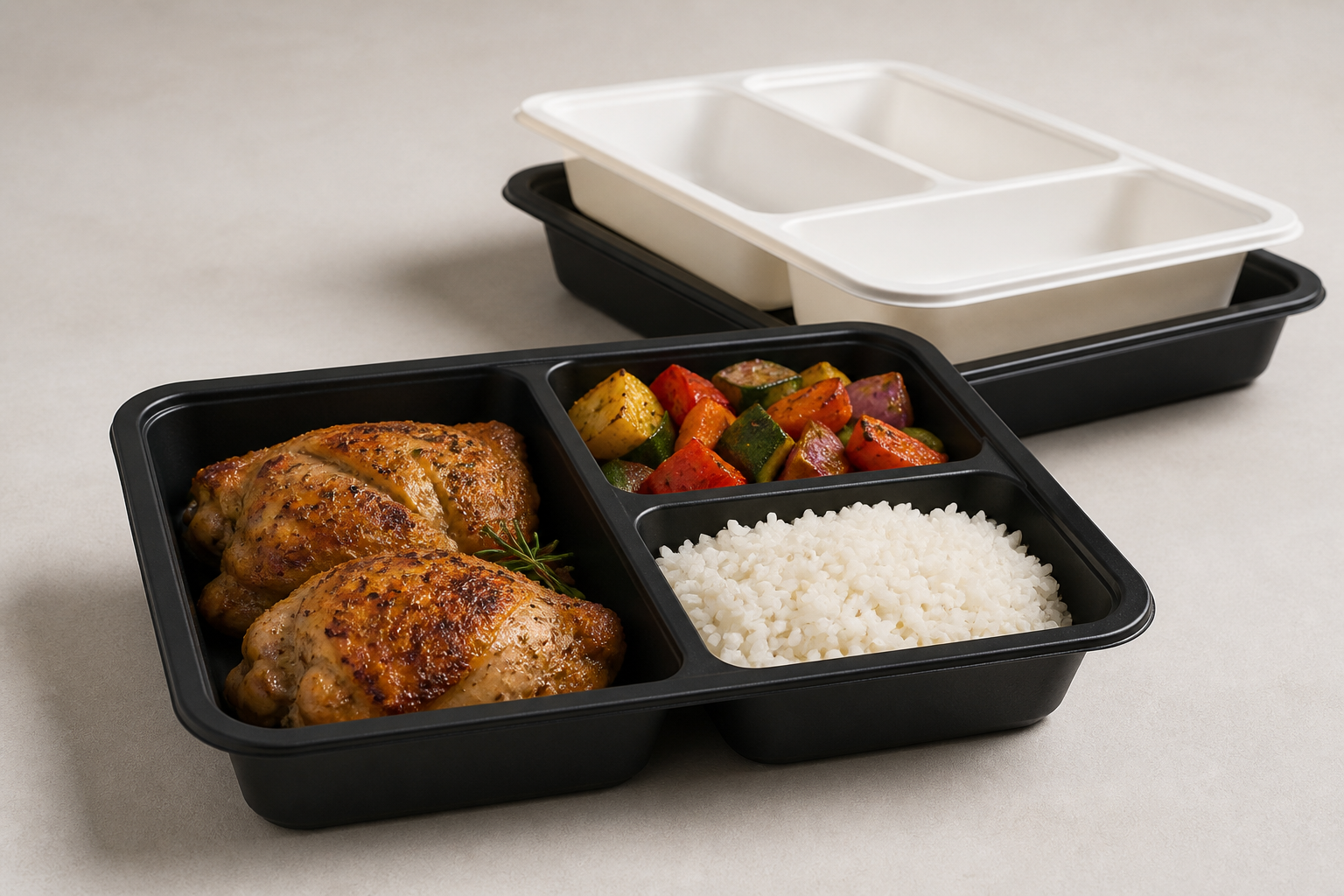
CPET is a higher-heat polyester material commonly used for prepared meals and trays that may be reheated. It is valued where a meal needs greater temperature tolerance, rigidity, or an oven-safe presentation, subject to the specifications of the individual product.
Advantages
- High heat resistance for demanding hot-food applications
- Good structural stability for prepared meals and trays
- Can be suitable for microwave and conventional-oven use when the product specification allows it
- Works well with sealing films for a controlled, professional presentation
- Useful for meals that may be reheated after delivery or retail purchase
Limitations
- Usually costs more than standard PP formats
- May offer fewer lightweight or flexible format options
- Requires compatible sealing film or lids and validation of the complete system
Best for
- Ready meals
- Baked dishes
- Oven-reheatable formats
- Premium prepared-food programs
- Meals requiring film sealing
CPET can be especially useful when hot-food durability and reheating convenience are central to the offer. Its value is strongest when the tray, closure, sealing process, and handling conditions are evaluated together rather than selected independently.
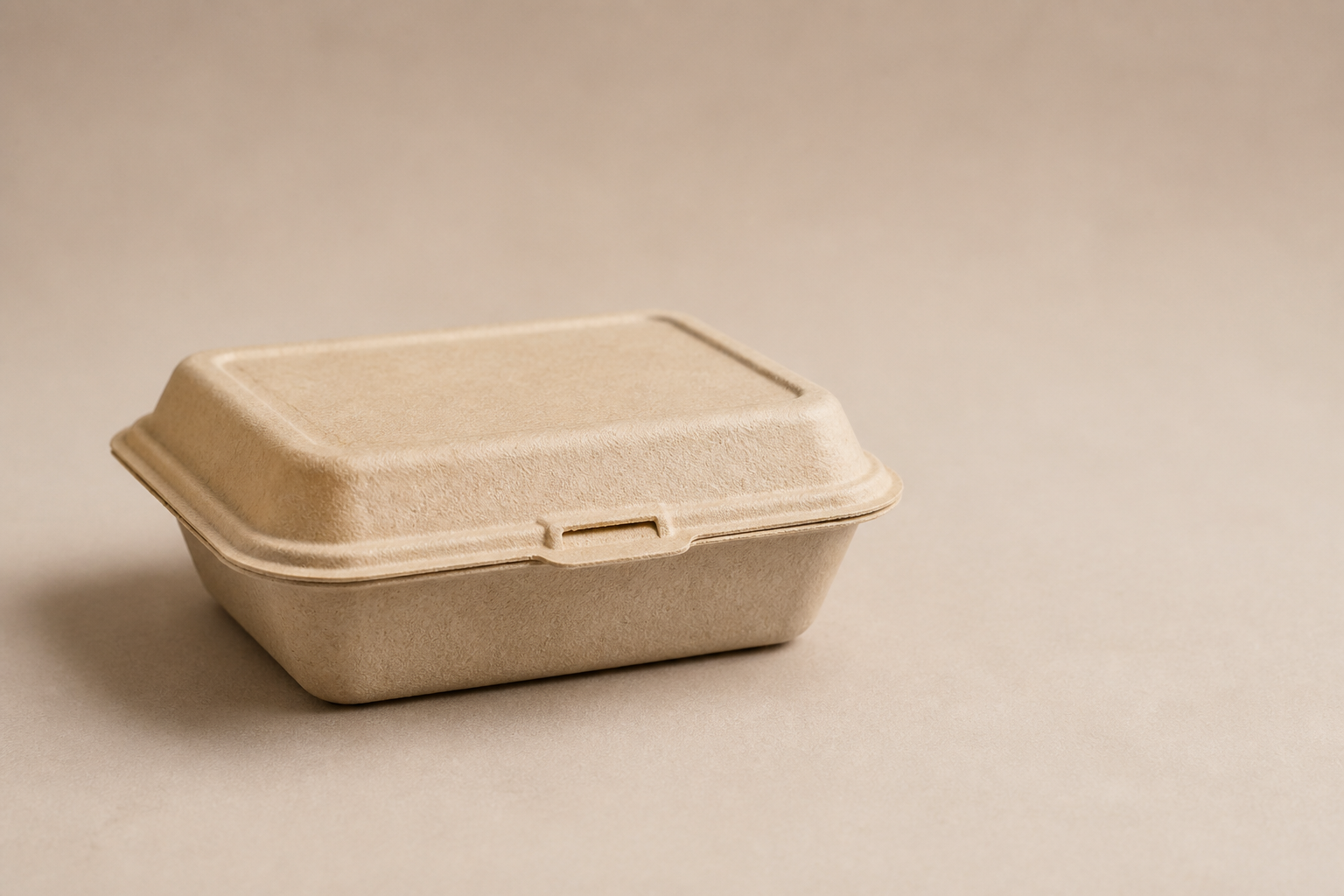
2.3 Bagasse
Bagasse is made from agricultural by-products and is valued for its natural appearance.
Advantages
- Good heat tolerance
- A breathable structure that can help reduce condensation
- Can remain strong with hot and oily foods
- Often perceived as an environmentally conscious choice
- Supports a natural or sustainability-led brand presentation
Limitations
- Not designed for prolonged oven baking
- Must be stored carefully to avoid moisture absorption
- Often needs a lid made from another material
Best for
- Rice and noodle meals
- Grilled dishes
- Combination plates
- Takeaway concepts emphasizing sustainability
Bagasse can work particularly well when brand image and sustainability matter. However, for very oily dishes or liquid-heavy foods, each container and lid combination should be tested in actual delivery conditions before use across multiple locations.
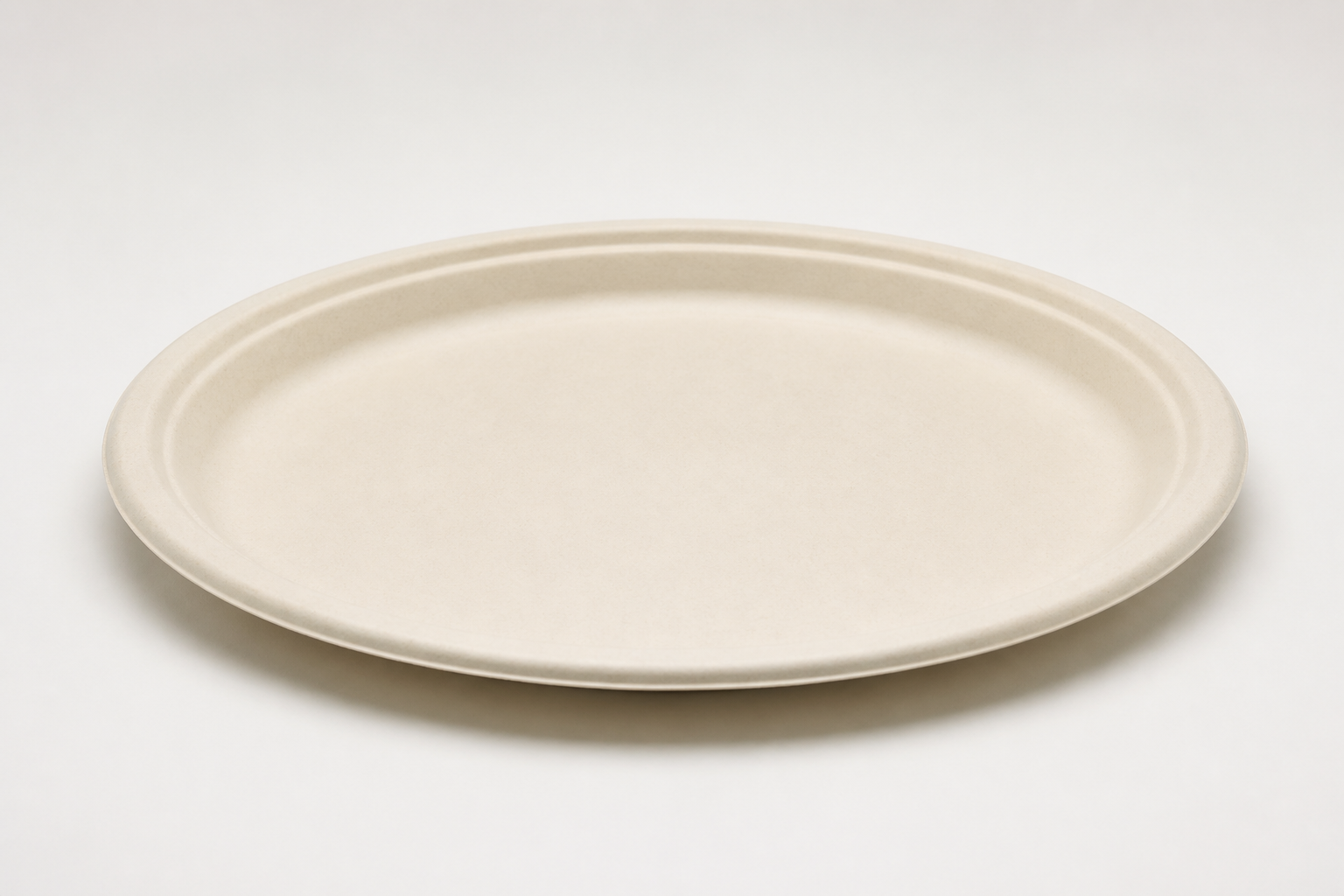
2.4 Cornstarch and Other Bio-Based Blends
Cornstarch tableware and containers are often selected because of their environmental positioning.
Advantages
- Plant-based content
- An eco-oriented consumer perception
- Suitable for some warm, non-boiling foods
Limitations
- More limited heat resistance
- Not necessarily industrially compostable unless certified
- Performance can vary widely by formulation
Best for
- Light takeaway meals
- Dry foods
- Short delivery routes
Buyers should verify the real technical properties of a bio-based material rather than assuming that every plant-based option performs the same way. For high-oil, soupy, or very hot dishes, these materials generally require careful validation.
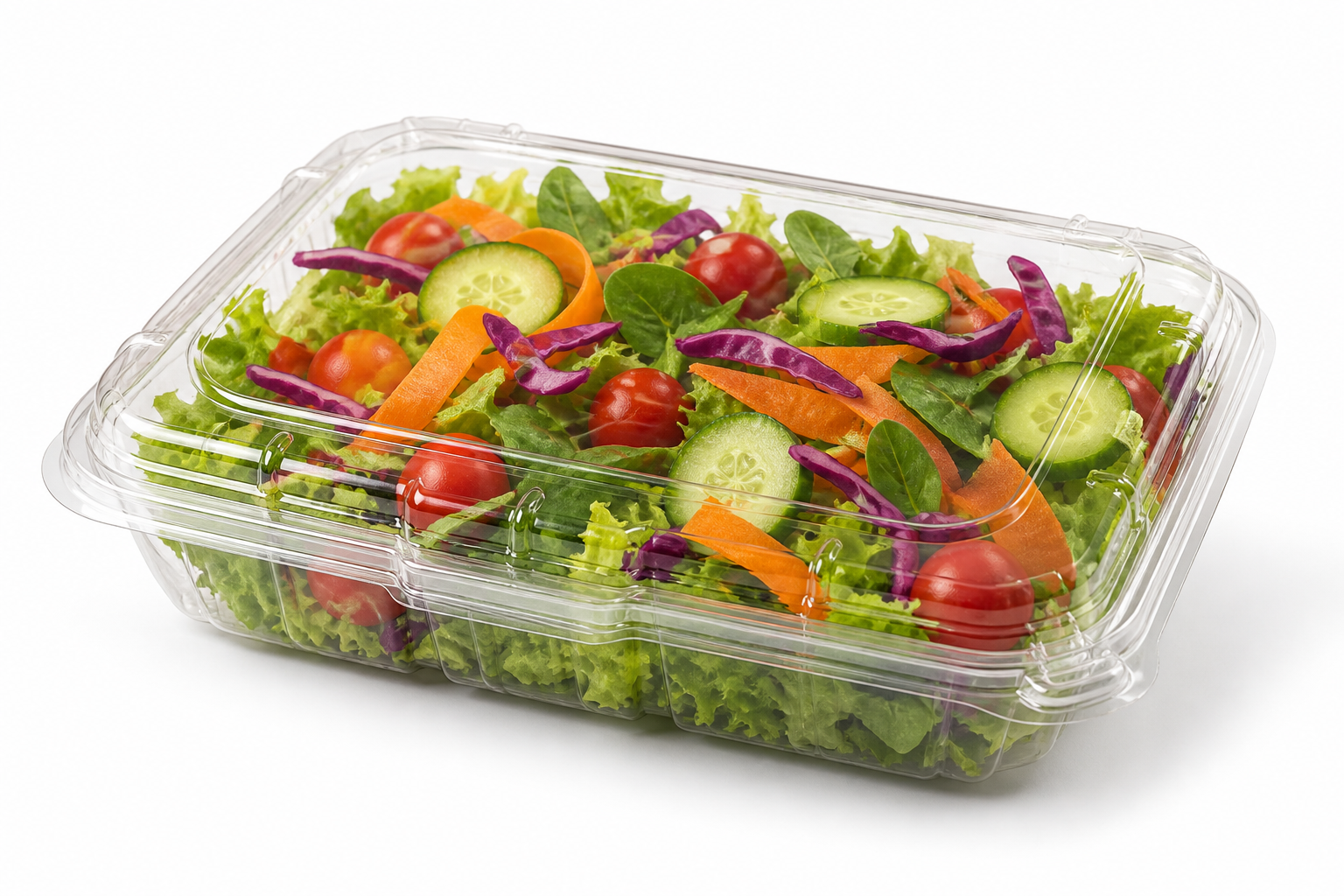
2.5 RPET and PET
PET and RPET can perform well for cold food, desserts, salads, and drinks, but have limits with hot meals.
Advantages
- Clear, attractive presentation
- Strong structure
- Recyclable where systems and labeling support it
- RPET can support circularity objectives
Limitations
- Not appropriate for high heat
- May deform when used with hot soups or oily meals
Best for
- Cold dishes
- Sushi
- Bakery products
- Beverage lids
PET and RPET are generally better reserved for cold categories rather than hot delivery meals.
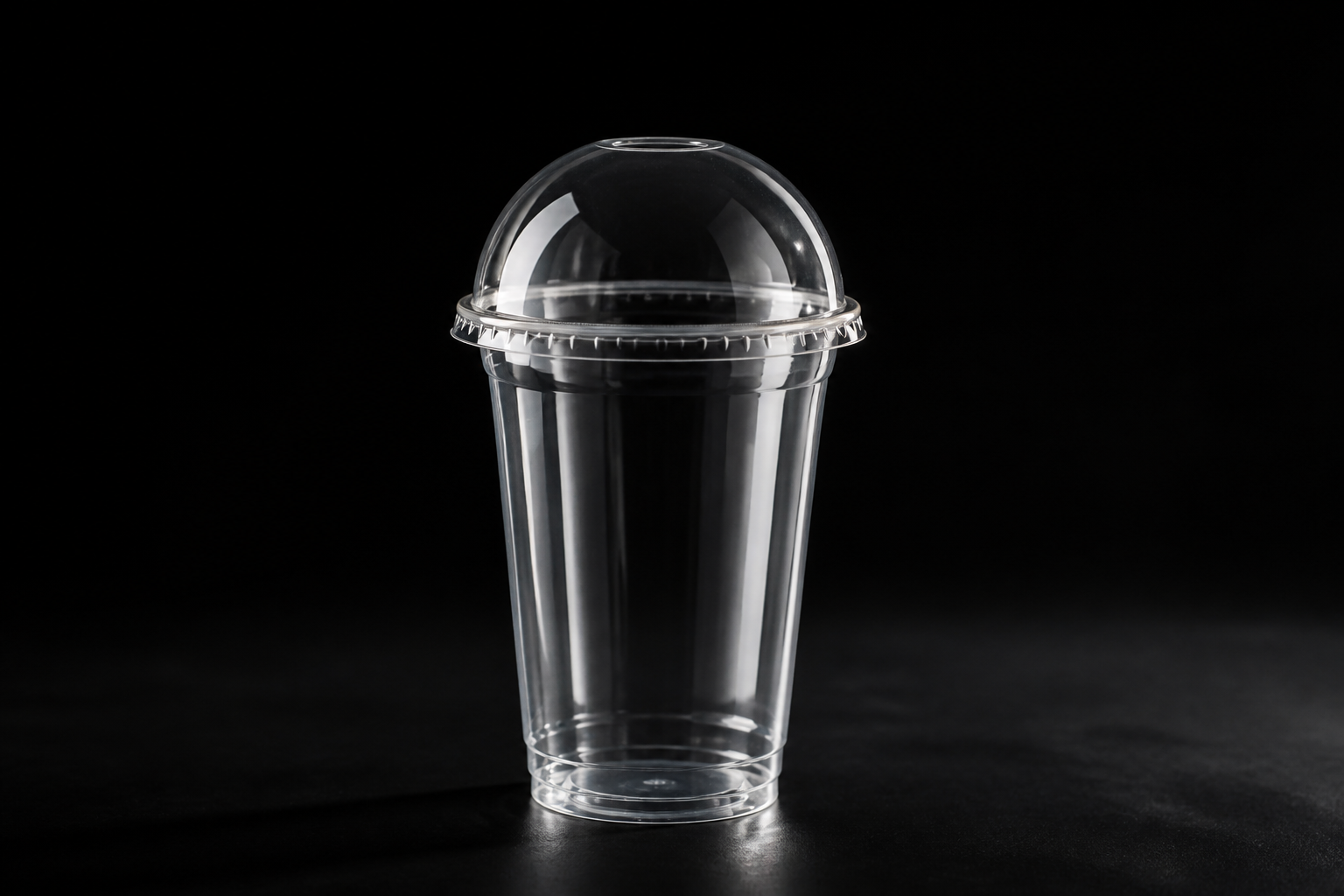
2.6 PLA
PLA is often used for cups and certain lids.
Advantages
- Bio-based
- Clear and visually appealing
- Suitable for cold foods
Limitations
- Limited resistance to high temperatures
- Softens easily under heat
- Usually unsuitable for hot meals
PLA is better suited to sustainability-positioned cold products than to hot-food delivery.
3. Packaging Format Matters as Much as Material
The correct material can still fail if the format is unsuitable.
Clamshells vs. Compartment Trays
Compartment trays help keep sauces away from crisp or dry components, reducing sogginess. Clamshells can be more convenient for fast-service operations.
Lidded Bowls vs. Hinged Containers
Bowls are usually better for noodles, soups, and saucy dishes. Hinged containers are often suitable for rice boxes and combination meals.
Sealed Trays vs. Snap Lids
Film-sealed trays can improve leak resistance, particularly in delivery environments. For a 30–45 minute route, sealing performance should be assessed alongside drop, vibration, and stacking conditions.
Venting Systems
Venting helps prevent condensation buildup and is especially important for fried and crispy foods.
Anti-Fog Lids
Clear visibility can support presentation and customer confidence, particularly on delivery platforms and in retail settings.
4. Matching Food Types to Suitable Packaging
Soups and Broths
Best: PP bowls with secure lids
Avoid: PET and PLA
Oily Stir-Fries and Curries
Best: PP or CPET
Bagasse may be suitable depending on the amount of oil and liquid.
Rice and Noodles
Best: PP or bagasse
Consider compartment formats where sauces, toppings, and textures need to remain separate.
Grilled or Baked Foods
Best: CPET for reheating; bagasse for takeaway service
Delivery Platform Orders
Use tamper-evident formats where needed and avoid containers that are fragile or poorly suited to stacking.
5. Testing and Quality Validation
Professional buyers should not make decisions from catalog descriptions alone.
Important evaluations include:
- Microwave and oven testing
- Drop and vibration testing
- Leak testing
- Seal-strength testing
- Odor and taste-transfer assessment
- Stacking and load testing
For a multi-location chain, samples should be compared side by side across the intended material options, food types, and regional delivery conditions. A small delivery trial can reveal issues with leakage, heat retention, condensation, lid fit, courier handling, and customer presentation before a broader rollout.
6. Sustainability and Market Requirements
Sustainability is not simply a matter of selecting an eco label.
Key questions include:
- Is recycling infrastructure available in the destination market?
- Is compostability realistic, and is it industrial or home compostability?
- What testing documents and declarations are required?
- Does the material align with local plastic restrictions and food-contact requirements?
Many brands use a mixed approach:
- Bagasse for dine-in and sustainability-led presentation
- PP or CPET where dependable performance is essential
- RPET for cold-food categories
- Bio-based options where appropriate and properly documented
This kind of portfolio can balance food performance, local requirements, environmental objectives, and brand consistency.
7. Cost and Total Value
The lowest unit price can create hidden costs through:
- Food returns
- Leakage compensation
- Negative reviews
- Wasted meals
- Extra logistics and replacement work
A more useful calculation considers total value, not only price per piece. The relevant comparison includes material cost, compatible lids or film, failure rates, operational consistency, supply reliability, and the cost of a poor customer delivery experience.
8. Practical Recommendations by Scenario
Restaurants and Takeaway Shops
PP and bagasse often provide a strong overall balance.
Meal Delivery and Cloud Kitchens
PP can suit soups and saucy dishes; bagasse can work for set meals; CPET can suit reheatable meals.
Supermarkets and Ready Meals
CPET trays with sealing films can offer a professional appearance and dependable performance.
Distributors and Importers
Offer a portfolio rather than depending on one material. Buyers need comparable SKUs, clear usage conditions, customization parameters, cost information, supply planning, and market-specific documents before they can confidently test and quote a short list.
FAQ
What material is safest for very hot meals?
PP and CPET trays generally perform well with high-temperature foods because of their heat resistance and structural stability. Food-contact documentation and migration-test records should be checked for the intended market and application.
Can compostable packaging handle greasy foods?
Bagasse can handle moderate grease, but extremely oily or soupy dishes may need coatings or alternative formats such as PP bowls. Testing under real delivery conditions is essential.
Is PET suitable for hot-food delivery?
Standard PET is better for cold or moderately warm foods. It can warp with hot meals. RPET may offer sustainability advantages but has the same heat limitations.
Which option is most cost-effective?
PP often provides a strong balance of price and performance. However, total cost should also account for leaks, replacements, lost meals, and customer complaints.
Are compostable materials always better for the environment?
They offer the greatest potential benefit when suitable collection and industrial composting systems exist. Without the necessary waste-management conditions, the advantage may be limited.
How can restaurants reduce packaging complaints?
Use containers with dependable lids, suitable venting, and appropriate heat resistance. Run limited delivery trials before implementing a packaging change across all locations.
Can one container work for every menu item?
Rarely. Most operations benefit from a combination: PP for soups and curries, CPET for reheatable meals, bagasse for sandwiches and rice bowls, and paperboard for bakery and pizza items.
Conclusion
There is no single best package for every hot meal. The right selection depends on temperature, food type, delivery conditions, sustainability goals, market requirements, and budget.
By comparing material properties, validating complete container-and-closure systems, and testing products in real delivery conditions, food businesses can protect meal quality, reduce leakage risk, control total cost, and maintain a stronger, more consistent brand experience across locations.