The Best Takeaway Containers Keep Hot, Oily, and Liquid Foods Secure in Delivery
Picture a busy Friday delivery shift. A customer opens a bag expecting butter chicken, but the container has leaked, the rice is wet, and sauce has spread through the order. For a multi-location restaurant chain, the cost is not limited to one meal. Packaging affects ratings, repeat orders, store consistency, replenishment, and brand presentation.
2026-08-06 - 4 min read
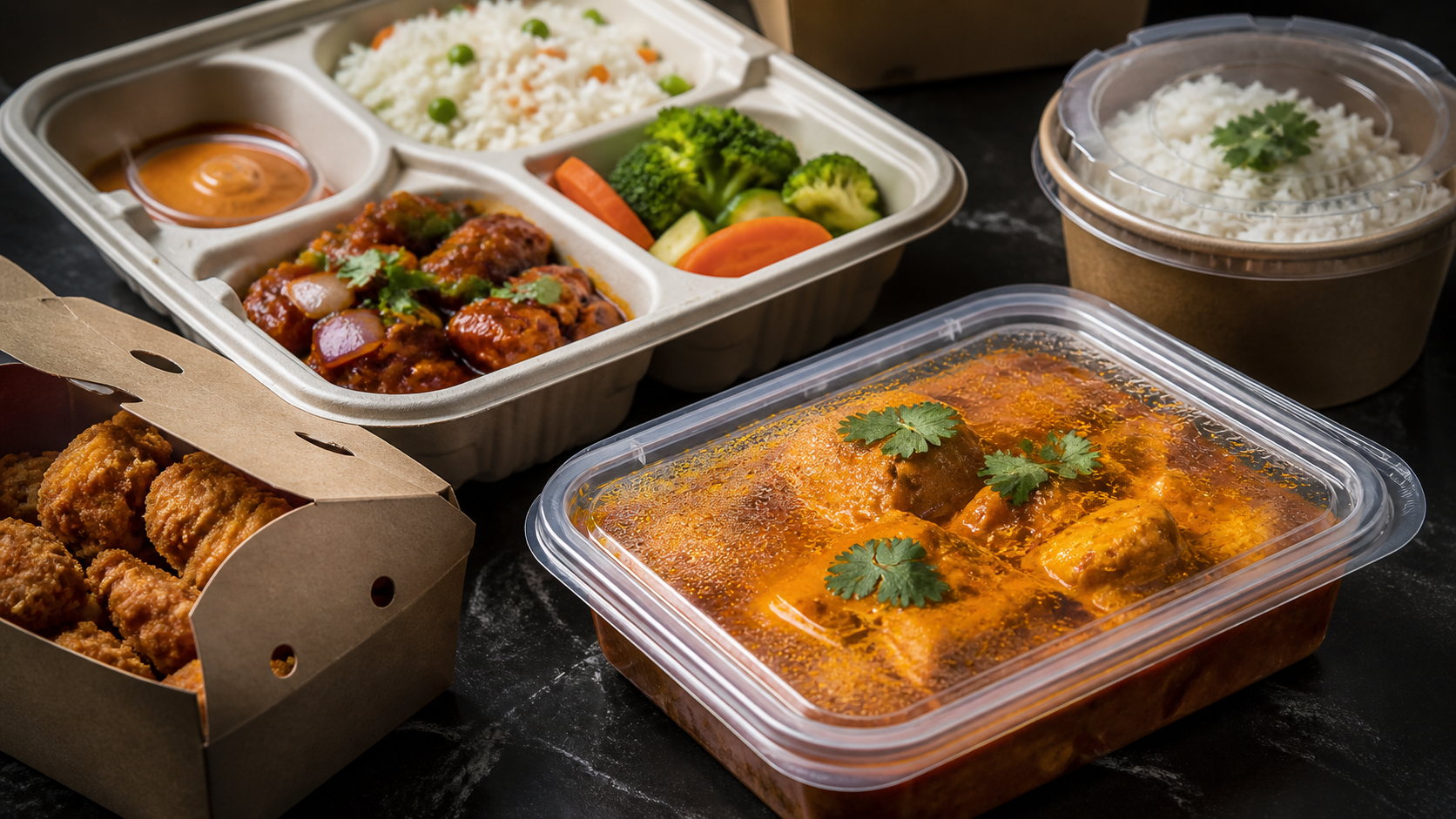
Picture a busy Friday delivery shift. A customer opens a bag expecting butter chicken, but the container has leaked, the rice is wet, and sauce has spread through the order. For a multi-location restaurant chain, the cost is not limited to one meal. Packaging affects ratings, repeat orders, store consistency, replenishment, and brand presentation.
The right takeaway container depends on food type and the delivery journey. A curry needs a different environment from a Caesar salad, and pizza needs a different solution from soup. The reliable approach is to select a small packaging system around the menu rather than force every dish into one universal box.
Start With the Food, Not a Universal Container
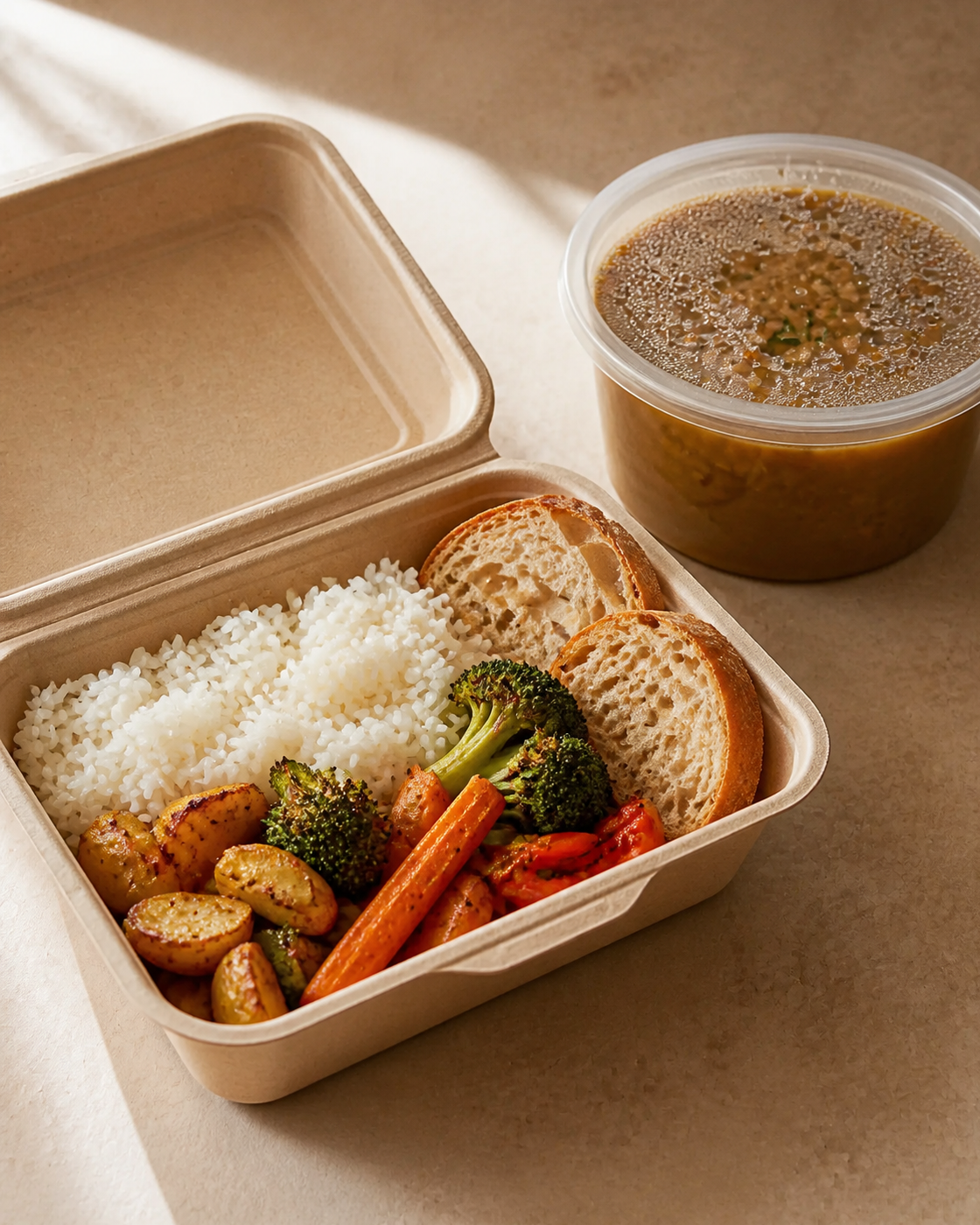
For gravies, dal, soups, noodles, curries, and other sauce-heavy dishes, the priority is a secure seal and shape retention under heat and movement. Deep polypropylene containers with a matching snap or locking lid are a practical route to evaluate. For dry rice items, breads, sides, and food that benefits from steam release, fiber-based or kraft formats may be useful when the exact construction supports the use case.
The material name is not a complete answer. Capacity, rim geometry, lid force, headspace, stacking, and the way food is carried in a delivery bag all affect performance. A low unit price does not offset remakes, complaints, or store-level workarounds.
Build a Three-Container System
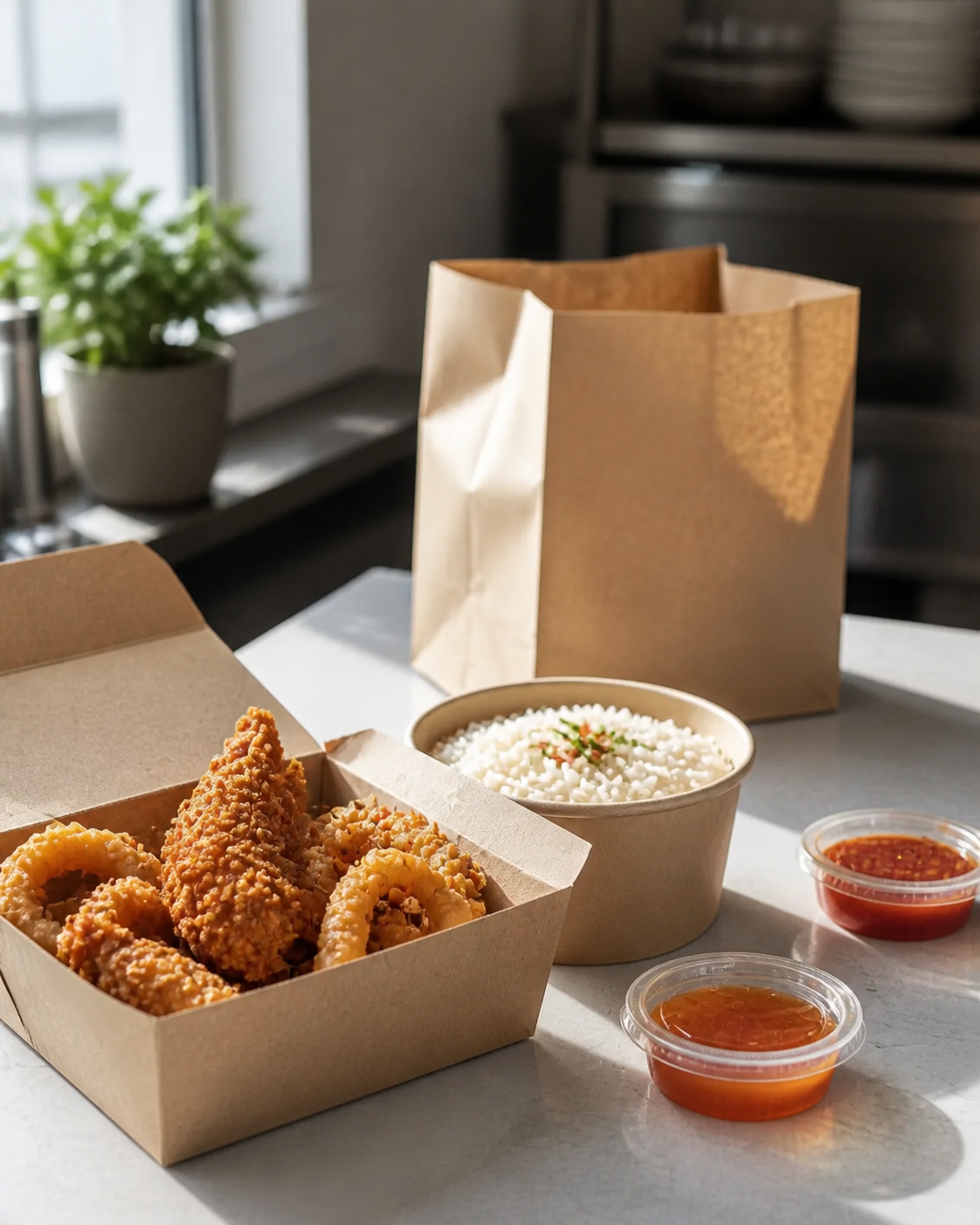
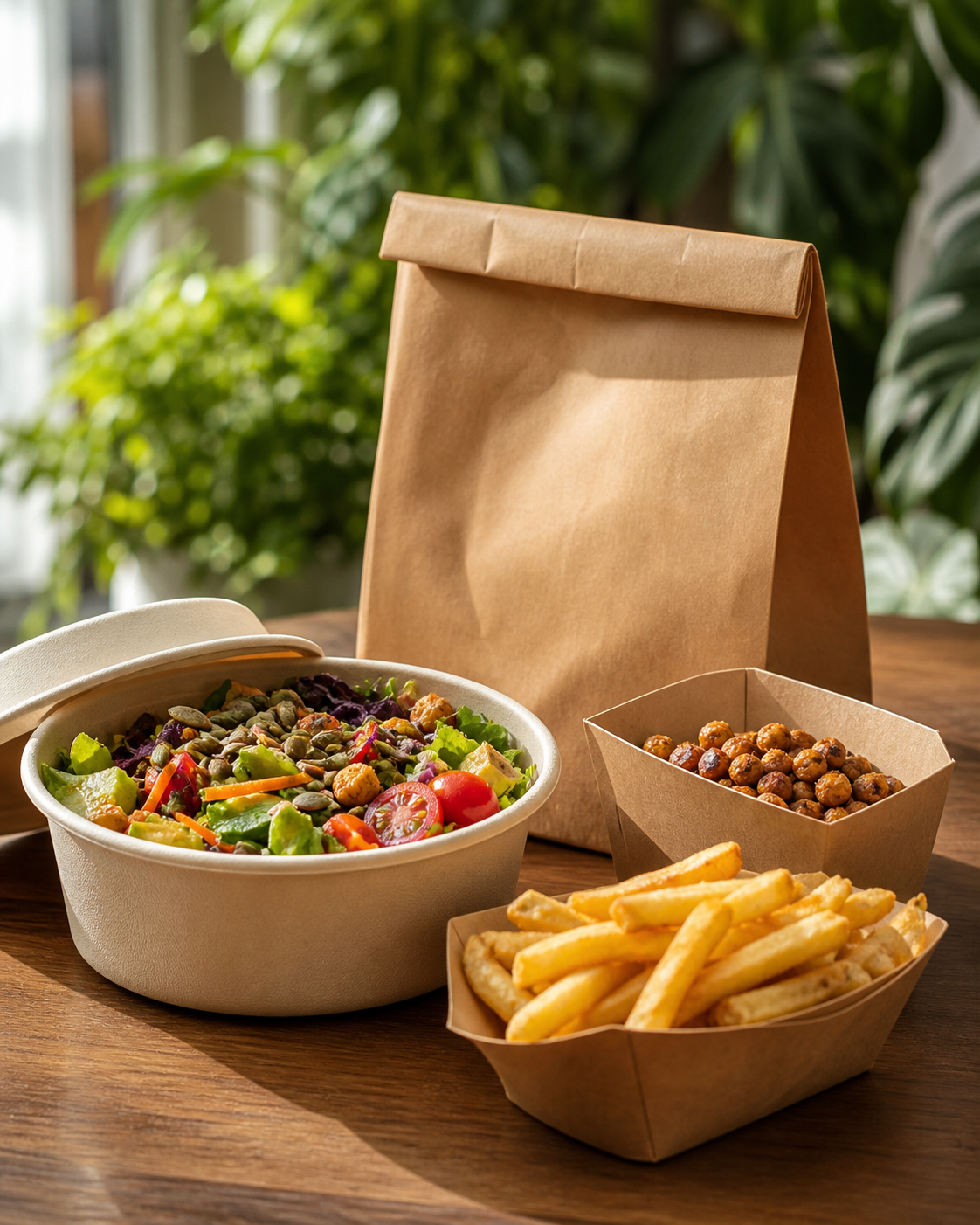
A delivery kitchen can often simplify selection with three clear routes. Use leak-resistant PP containers for gravies, curries, soups, and wet items. Use kraft or bagasse boxes for dry food, breads, and sides where steam management and presentation matter. Use a branded outer delivery bag to keep the order organized and support a consistent customer experience.
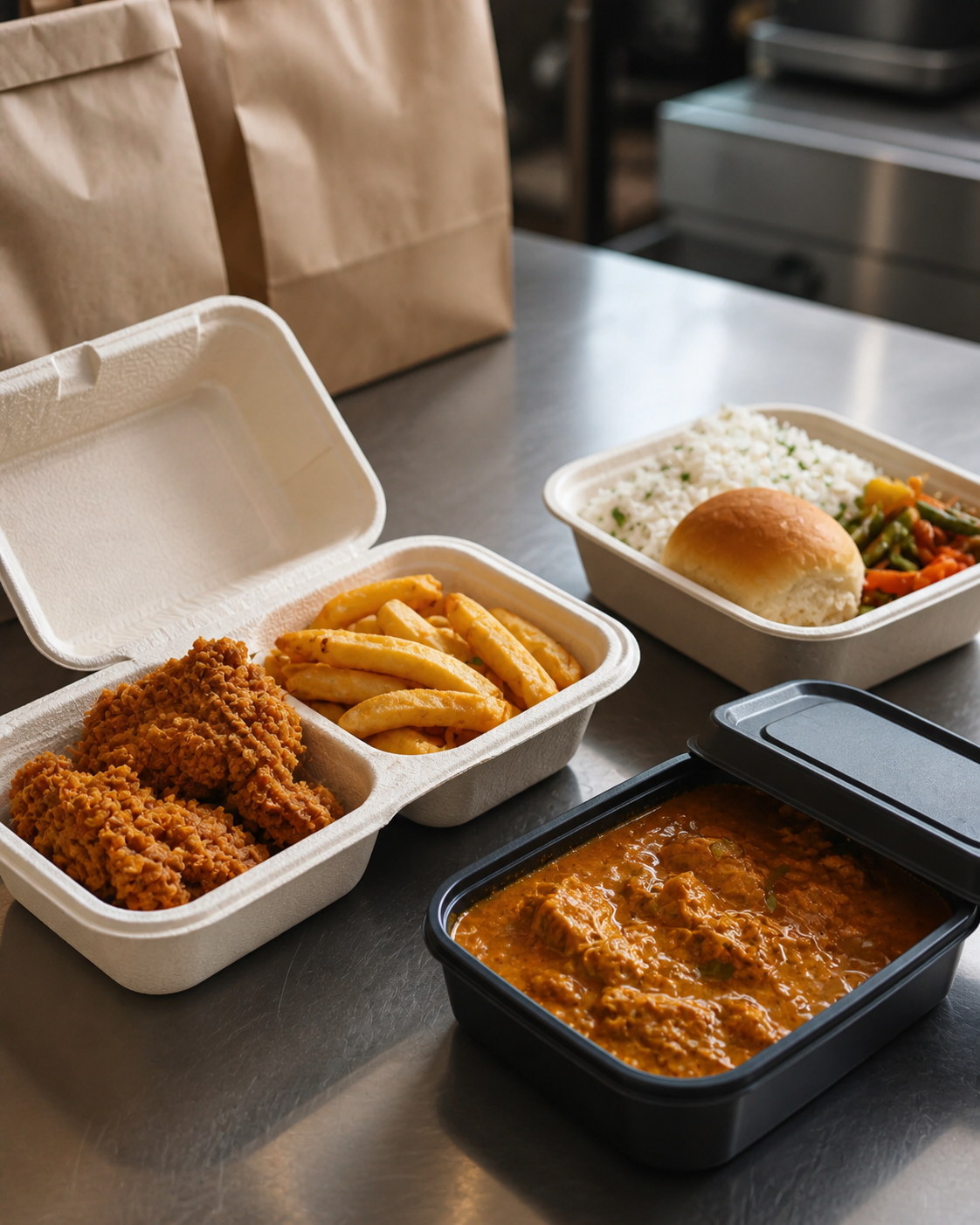
This approach does not assume that a material is correct for every meal. It gives each menu item a format that suits its moisture, oil level, texture, and transport behavior. For a multi-site rollout, test the exact container-and-lid combination in stacked delivery bags and compare capacity, rim fit, lid lock force, nesting, case quantity, and replenishment lead time.
Choose by Menu Type and Delivery Performance
Liquid and sauce-heavy dishes need closure security. Fried food needs a route that limits condensation. Rice bowls and grain dishes may need a balance between heat retention, portion control, and controlled venting. The goal is to prevent liquid movement without making crisp food soggy.
Approval should take place under realistic conditions: fill the unit hot, close it, hold it, stack it, and simulate a 30–45 minute delivery route. Review the closure, corners, base, food texture, and exterior of the bag. A container should be approved for the actual dish and route, not just because it appears rigid on a sample table.
Buy for Reliable Supply as Well as Product Performance
Packaging suppliers should be assessed against operational evidence, not generic claims. Ask for samples of the exact SKU-and-lid pairing, clear food-contact documentation for the markets involved, realistic customization conditions, and supply planning that supports all locations.
The best takeaway container arrangement is the one that keeps specific menu items secure, preserves the intended eating experience, and can be supplied consistently as the business grows. Packaging is part of the delivered product, so the right system is both a food-quality decision and an operating decision.
FAQ
Which containers are best for sauce-heavy meals?
Deep PP containers with closely matched locking lids are practical formats to test for curries, soups, gravies, and noodles because the complete closure system can be selected for liquid-heavy use.
Can one container serve every delivery menu?
Rarely. Most delivery operations perform better with a small set of formats matched to wet dishes, dry dishes, and crisp foods.
What should a chain test before rollout?
Test the exact filled SKU-and-lid pairing for hot holding, stacking, bag movement, leak resistance, texture protection, and replenishment suitability across the intended locations.