The Best Takeout Containers for Hot Food Prevent Leaks During Delivery
A carefully prepared bowl of ramen, slow-braised short ribs in sauce, or creamy tomato bisque can lose its appeal when it reaches the customer surrounded by spilled liquid, beneath a fogged lid, or inside a stained delivery bag. For foodservice operators, hot-food packaging is an operational decision, not a minor purchasing detail.
2026-08-06 - 5 min read
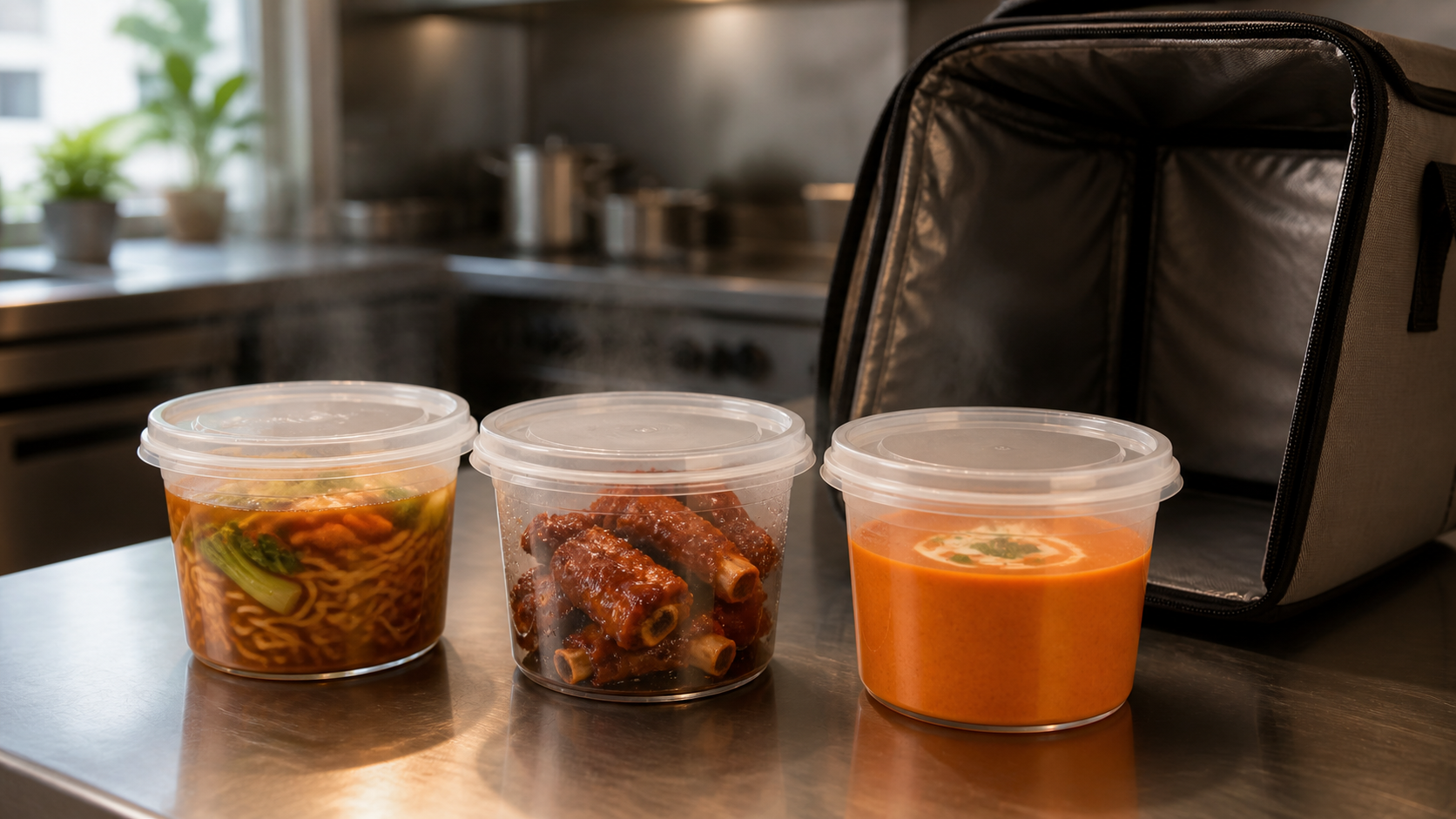
A carefully prepared bowl of ramen, slow-braised short ribs in sauce, or creamy tomato bisque can lose its appeal when it reaches the customer surrounded by spilled liquid, beneath a fogged lid, or inside a stained delivery bag. For foodservice operators, hot-food packaging is an operational decision, not a minor purchasing detail.
For a multi-location restaurant chain, a leak is more than a single failed order. It can lead to refunds, remakes, poor ratings, inconsistent store practices, and a weakened delivery experience across markets. The right container must be assessed with the actual food, closure, stack, and delivery journey in mind.
Why Hot-Food Containers Leak
Heat, steam, oil, sauce, and movement act together. A container that closes securely at room temperature may behave differently after hot filling, while a shallow format can push sauce into the lid cavity when a delivery bag is tilted. The rim, lid fit, closure design, headspace, and the food load all affect the result.
The first step is to match the container to the dish. Soups, curries, ramen, stews, and saucy noodles need deep formats with secure, non-vented lids. Fried foods and crisp components need controlled venting so condensation does not damage texture. A single universal format rarely handles both jobs well.
Choose the Material and Format Together
Polypropylene is widely used for hot-food takeout because well-designed PP containers can handle elevated temperatures, oil, and a range of lid configurations. For liquid-heavy dishes, round or deep PP bowls with closely matched locking lids are a practical format to test. Four-corner snap lids and perimeter-lock designs can provide more consistent closure than loose friction-fit lids.
Molded-fiber and bagasse formats can be useful for suitable menu items where a fiber-based presentation is a priority. Their actual performance still depends on the exact structure, coating, and lid pairing. They should not be approved for oily or liquid-heavy food simply because the base looks rigid when empty.
Aluminium trays can be useful for baked dishes and certain oily meals when their closure is secure. Paper bowls with an appropriate barrier and matched lid can serve some soups and saucy foods, but the complete configuration must be tested under the intended heat and delivery conditions.
Lid Design Is the Critical System Component
A strong base with a weak lid still leaks. The best closure for a dish depends on liquid volume, steam level, delivery movement, and whether the meal will be reheated. For soup and curry, every unnecessary vent creates a possible liquid escape path. For fried food, a controlled vent can be necessary to prevent condensation.
Look for a matched container-and-lid system rather than selecting each part independently. The lid should hold securely after hot filling, retain its fit during stacking, and protect the rim from sauce migration. For deep liquid dishes, a threaded or strong locking lid may be more appropriate than a simple press-on lid.
Test the Delivery Journey, Not the Empty Sample
A useful approval test fills the proposed package with the real menu item, closes it immediately, holds it hot, stacks it as it will be packed, and subjects it to realistic tilting and movement. Review the lid seal, corners, rim, bottom panel, condensation, and the food presentation after a 30–45 minute route.
Test several fill levels. Overfilling increases pressure at the lid and reduces the ability of a package to manage steam and movement. Where a dish combines broth with noodles or crisp toppings, separating components can reduce leakage and improve the delivered result.
Build a Practical Delivery Lineup
Restaurant groups often need a small system rather than one container: a leak-resistant bowl for soups and gravies, a secure rectangular format for rice and saucy meals, and a vented format for fried or crisp food. Each SKU should be evaluated with its compatible lid, intended portion, menu family, stackability, replenishment needs, and market-specific documentation.
The best takeout container is not simply the thickest or the cheapest. It is the container-and-lid combination that keeps the actual hot meal secure, presentable, and dependable from kitchen to doorstep.
FAQ
What works best for soup and curry delivery?
Deep PP bowls or containers with a closely matched locking lid are commonly practical formats to test for hot, liquid-heavy food. The exact combination should be validated with the menu item and route conditions.
Should hot-food lids be vented?
Not always. Controlled venting can help fried food, but a non-vented secure closure is generally more appropriate for soups, curries, and other liquid-heavy dishes.
How can a restaurant verify leak resistance?
Test the exact filled container-and-lid combination under hot holding, stacking, tilting, and delivery-style movement for the expected delivery period. Empty-sample checks alone are not enough.