
Best Takeout Containers for Sushi and Sashimi: Airtight, Cold, and Presentation-Ready
The best sushi or sashimi container is not defined by a single material or lid style. It is a tray-and-lid system that fits the finished portion, gives garnish safe clearance, keeps wet components controlled, stays level through the intended handoff, and is validated under the restaurant's actual co…
2026-09-13 - 3 min read
Summary
The best sushi or sashimi container is not defined by a single material or lid style. It is a tray-and-lid system that fits the finished portion, gives garnish safe clearance, keeps wet components controlled, stays level through the intended handoff, and is validated under the restaurant's actual cold-food process. Do not assume that any container is airtight, anti-fog, or suitable for a raw-fish route without SKU-specific evidence and testing.
Estimated reading time: 3 minutes
What should a sushi takeout container protect?
Sushi packaging has to protect more than the food itself. It also protects the arrangement the customer sees when the lid is opened. Rolls can slide, nigiri can tip, garnish can contact the lid, and loose condiment cups can turn into moving objects during delivery. A tray that looks generous when empty can leave too much space around a finished order.
Begin with the plated portion. Put the normal number of pieces, garnish, and sauces into a candidate tray. Close the lid and inspect the side profile. There should be enough height for the tallest item without the lid resting on the food, but not so much unused room that rolls move when the bag turns or brakes.
Should you choose a clear lid or a paper lid?
A clear lid can help a customer see the sushi, sashimi, color contrast, and order presentation without opening the pack. That can be useful for display and order checking. A paper-based lid or box may suit a different service style, but it can reduce immediate visibility. Neither choice is automatically better.
Compare the options using the actual menu. Look at clearance, lid fit, resistance to movement, the way the food photographs through the lid, and whether condensation affects the view during the normal route. Do not treat a clear lid as anti-fog simply because it is transparent. Ask for information on the exact product and test it at the temperatures and timing that apply to your operation.
How should the tray size and shape be chosen?
A low rectangular format often gives individual rolls and small sets a stable footprint. The key is not the name of the shape but the fit to the finished layout. A wide platter may need a broader, more rigid format; forcing it into several loose packages can create movement and complicate the customer's opening experience.
Check the base while it is filled. Hold it from one side, place it in the delivery carrier, and look for flex or tilt. Then test how the lid behaves when another item is nearby. If the lid can be pressed by the bag or by a separate order, add a support layer or choose a more suitable outer carrier rather than expecting the lid alone to carry the load.
How should sauces, wasabi, and ginger be packed?
Keep wet items in their own controlled locations. A sauce cup should be paired with a lid intended for that cup, filled with appropriate headspace, and placed so that it cannot move across the sushi tray. Ginger liquid, soy sauce, and other moist components can damage presentation when they migrate into rice, nori, or garnish.
A recessed well, a separate corner compartment, or a dedicated side carrier can give condiments a defined location. Test the filled cup after tilting, bag movement, and light compression. A closure that appears fine at the prep bench may perform differently in a delivery bag.
How does cold handling affect the packaging decision?
The container is only one part of a cold-food system. The restaurant's approved food-safety procedure, time controls, temperature controls, and local requirements should govern raw fish and sashimi handling. A tray or lid does not prove that a cold chain is maintained.
Use a carrier with a level base and enough internal height to avoid pressing on the lid. Keep hot items away from chilled sushi. If cooling media is part of the restaurant's validated process, position it so it does not crush the tray or create unmanaged condensation. For a route with variable traffic or weather, take temperature checks as part of the business's own delivery trial.
What should be tested before standardizing a sushi container?
Test a normal finished order from packing through handoff. Include the intended tray, lid, sauce cups, carrier, outer support, and other items that normally share the bag. Check piece movement, lid clearance, closure engagement, condensation, sauce leakage, carrier tilt, compression risk, and the appearance at arrival.
Record the result for each menu format. An individual roll box, a sashimi set, and a large platter may need different packaging systems. Standardize only after the restaurant has reviewed the route results for its own food, staff workflow, and delivery conditions.
Is there a current product record to review?
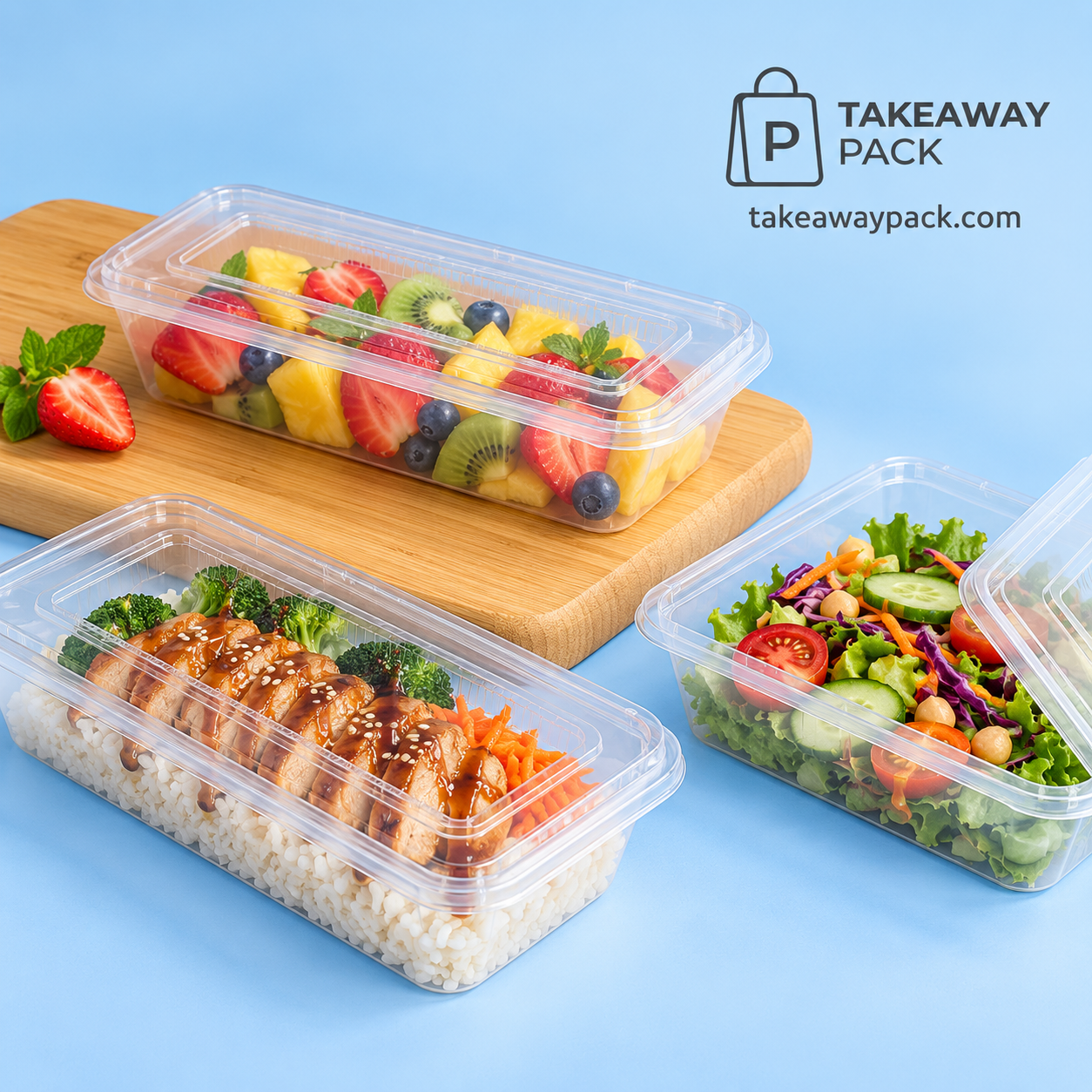
Takeawaypack's current product data lists a 750 ml rectangular PP lunch box with lid, with recorded dimensions of 21.5 cm × 14 cm × 4 cm and listed applications including sushi, bento meals, and cold dishes. Treat that record as a starting point for SKU-specific evaluation, not as proof of airtightness, anti-fog performance, raw-fish suitability, or a particular delivery duration.
Build a cold-food packaging brief
A useful brief names the finished menu item, piece count, tray footprint, garnish height, sauce volumes, normal packing temperature, carrier type, route length, and desired presentation. With that information, a supplier can help identify products to sample while the restaurant retains responsibility for validating the finished delivery system.
For help building a sushi or sashimi packaging shortlist, visit Takeawaypack and share the required format, portion, delivery conditions, and destination with the supplier network.