Designing Return Points, Deposits, and Washing Workflows for a Borrow-a-Cup Program on a Closed Campus
Starbucks' 2019 Gatwick Airport borrow-a-cup trial showed that reusable cup programs work best in contained environments where customer movement is predictable.
2026-09-03 - 10 min read
Summary: Starbucks' 2019 Gatwick Airport borrow-a-cup trial showed that reusable cup programs work best in contained environments where customer movement is predictable. If you run a coffee kiosk in a hospital campus or another closed setting, you can adapt the same three levers: return points placed along natural walking routes, a deposit or borrow model matched to your user mix, and a professional washing loop that keeps dirty and clean inventory strictly separated. This article breaks down how the Gatwick trial actually worked, why a hospital campus is in some ways an easier environment than an airport and harder in others, and how to translate that into a practical 90-day pilot covering return-point placement, deposit design, bin specs, washing workflow, fleet sizing, and metrics.
What the Starbucks Gatwick Trial Actually Did
In June 2019, Starbucks and the UK environmental charity Hubbub launched the UK's first airport reusable coffee cup trial at Gatwick's South Terminal. The mechanics were deliberately simple:
- Customers could take a free reusable cup instead of a paper cup, which carried a 5p charge.
- Borrowed cups could be dropped at five return points across the terminal — including the store itself — before boarding.
- Around 2,000 reusable cups were put into circulation.
- Gatwick staff collected cups from the drop-off points, washed them, and returned them to Starbucks for reuse.
- Starbucks projected that if just 250 customers per day chose the reusable option, more than 7,000 paper cups would be saved over the month-long trial.
Two details matter for anyone designing their own closed loop. First, the trial made reuse the free default and made the disposable option the one that cost money — the nudge was structural, not moralistic. Second, the coffee brand did not run washing logistics itself; the airport's own teams collected and cleaned the cups, reusing infrastructure that already existed. Hubbub's CEO Trewin Restorick noted the airport was chosen precisely because it is a closed environment with high paper waste, and the goal was to learn how customers respond to dropping cups back off to be washed and reused.
No detailed post-trial return-rate figures were widely published, so treat Gatwick as a design reference, not a benchmark. Later closed-loop and campus pilots consistently show that return rates rise when returns are convenient, signage is clear, and cleaning is professional — and that closed or semi-closed settings (airports, campuses, hospitals) outperform open urban systems when friction is minimised.
Why a Hospital Campus Is a Different Kind of Closed Loop
A hospital campus looks like an airport at first glance — high foot traffic, predictable movement, a contained population — but the underlying rhythm is different.
An airport optimises for "return before departure." Everyone has a hard exit event, so the system only needs to intercept cups along the path to the gate. A hospital campus has no single departure moment. Visitors drift between clinics, staff move on shift cycles, and patients may stay for days. What a campus does have is habit loops: staff buy coffee at the same time each morning, walk the same corridor, take the same elevator. The strongest users of a hospital kiosk are almost always employees, and they come back tomorrow.
That leads to the most important design insight for this setting: do not copy the airport model exactly. Airports catch cups on the way out; campuses should build return behavior into the daily routine — morning coffee, walk to the ward, lunch, elevator, return the cup, repeat tomorrow. Design the system around your employees first, then treat visitors as incremental volume.
Return-Point Placement: Map the Coffee Journeys, Not the Floor Plan
The Gatwick trial succeeded by putting return points along natural travel paths rather than relying on the store alone. For a hospital campus, that means mapping where people actually finish their drinks before choosing locations.
Primary return point — at the kiosk. Make this the default return location, positioned where customers naturally pass after finishing their drink. It should be a dedicated return cabinet or branded bin, never a trash-like container.
Secondary return points — along coffee journeys. Depending on campus size, add two to six stations at:
| Location | Why it works |
|---|---|
| Main entrance / lobby | Visitors exit through here |
| Elevator banks | High circulation, natural stopping point |
| Staff break areas | Repeat users with downtime |
| Cafeteria tray-return stations | Returning dishes is already a habit |
| Outpatient waiting areas | Patients and families have idle time |
| Badge-access doors to staff zones | Creates reliable return behavior |
Two placement rules help more than any map. First, every user should encounter a return point within one to two minutes of normal walking after finishing their drink — if someone has to backtrack or carry an empty cup through a ward, you have already lost the return. Second, density beats perfection: in a contained campus it is cheaper to add one more station than to chase lost cups later.
Return Bin Design: The Small Details That Decide Return Rates
The bin itself is where many pilots quietly fail. A return station in a hospital environment should:
- Accept cup and lid together — do not make customers separate components.
- Show a clear instruction such as "Return here — we wash it," ideally in the languages your campus actually uses.
- Require no app, no account, and no cleaning by the customer.
- Be visually distinct from trash and recycling — different color, different shape, different opening.
- Handle liquids. A dual-compartment design (one side for leftover liquid, one for the cup) prevents mess, odors, and pest problems in a clinical setting.
- Be sturdy and easy to empty into secure totes, and designed to keep out general waste.
The cup itself is also a communication tool: printed messaging on the borrowed cup was a significant way customers learned how these programs work. Barista scripts matter just as much — "Would you like a reusable cup? You can drop it at any return station around campus" outperforms any poster.
Deposit or Free Borrow? Match the Model to Your User Mix
Gatwick used a pure free-borrow model — no deposit — because the environment was closed and returns were expected before exit. A hospital campus is even more contained, so free borrow maximises uptake and is a reasonable starting point. But your user mix changes the risk profile:
- Staff-heavy campus: a small refundable deposit (around $1) returned via employee badge or account credit works well, because staff return tomorrow anyway.
- Mixed staff and visitors: a small deposit refunded immediately on return, with no account or app required, keeps the loop frictionless.
- Visitor- and patient-heavy: consider running the first pilot with no deposit, or a small incentive instead — for example, a modest coffee credit per returned cup.
The goal is cup recovery, not deposit revenue. Deposits above a token amount feel punitive and suppress uptake — the wrong trade where your best returners are daily staff. Avoid models that require apps, registration, or receipts. Whichever model you choose, keep a small charge on the remaining single-use option, as Gatwick did with its 5p paper cup fee — the relative price signal does more work than the deposit itself.
Tracking: Enough Data to Manage Inventory, Not Enough to Annoy Anyone
You need enough tracking to manage the fleet, not to police customers. A QR code or tag on the cup base, scanned internally at issue, return, and wash-complete, gives a pilot everything it needs: cups issued per day, return rate by location, time in circulation, loss rate, and wash turnaround.
Realistic early targets for a contained campus: an 85–90% return rate and an average cup cycle under 48 hours. Closed-setting pilots frequently exceed 70–90% returns when convenience is high, so use these as review thresholds, not promises. Start low-tech; add sensors or automated refunds only if the data shows you need them.
Washing Workflow: Keep the Dirty and Clean Worlds Separate
A hospital environment requires stronger hygiene discipline than a typical café, and this is where the design must be explicit. Gatwick outsourced washing to the airport's own teams; a campus can do the same with its existing food-service infrastructure. The loop has five steps:
- Customer return. Cups enter a closed collection bin — never an open one.
- Sorting. Remove trash, napkins, and leftover liquid; pull any damaged cups.
- Wash. A commercial dishwasher cycle: pre-rinse, high-temperature wash, sanitizing rinse, drying. Never rely on customer rinsing.
- Clean storage. Inverted storage in covered racks, physically separated from returned cups.
- Back to service. Same-day or overnight recirculation.
Visible messaging that cups are professionally washed and sterilised is one of the strongest trust builders in a clinical setting.
Where should washing happen? Three workable models:
- On-site wash at the kiosk — a commercial under-counter warewasher, best for fastest turnaround and visible hygiene.
- Central hospital kitchen wash — often the best compromise: the kiosk collects, the dietary/food-service department washes in commercial equipment, the kiosk receives clean inventory. This is the direct analogue of Gatwick's use of airport teams.
- External commercial wash partner — professional sanitation without in-house infrastructure, at the cost of transport time.
Align collection runs with campus rhythms: two or three sweeps per day, timed to the post-morning rush and shift changes, beat any fixed schedule.
Fleet Sizing and the Disposable Fallback You Cannot Avoid
Size the fleet to circulation, not to daily sales. A common planning ratio is around three cups in the system for every one sold daily, plus a buffer of 1.5–2× expected daily demand, so inventory never runs dry during peak washing cycles. A small kiosk starting a 90-day trial can begin with a few hundred cups in no more than three sizes — every additional size multiplies sorting and restocking complexity.
And here is the part most reuse plans skip: no pilot eliminates the disposable stream. Some customers will decline the borrow option, some cups will be mid-wash at peak, and demand will sometimes exceed clean inventory. Gatwick kept a paid paper option alongside the free reusable for exactly this reason, and your fallback line still needs to be a good cup — ideally one that carries your return-point messaging, since the disposable cup is seen by exactly the customers who have not yet opted in.
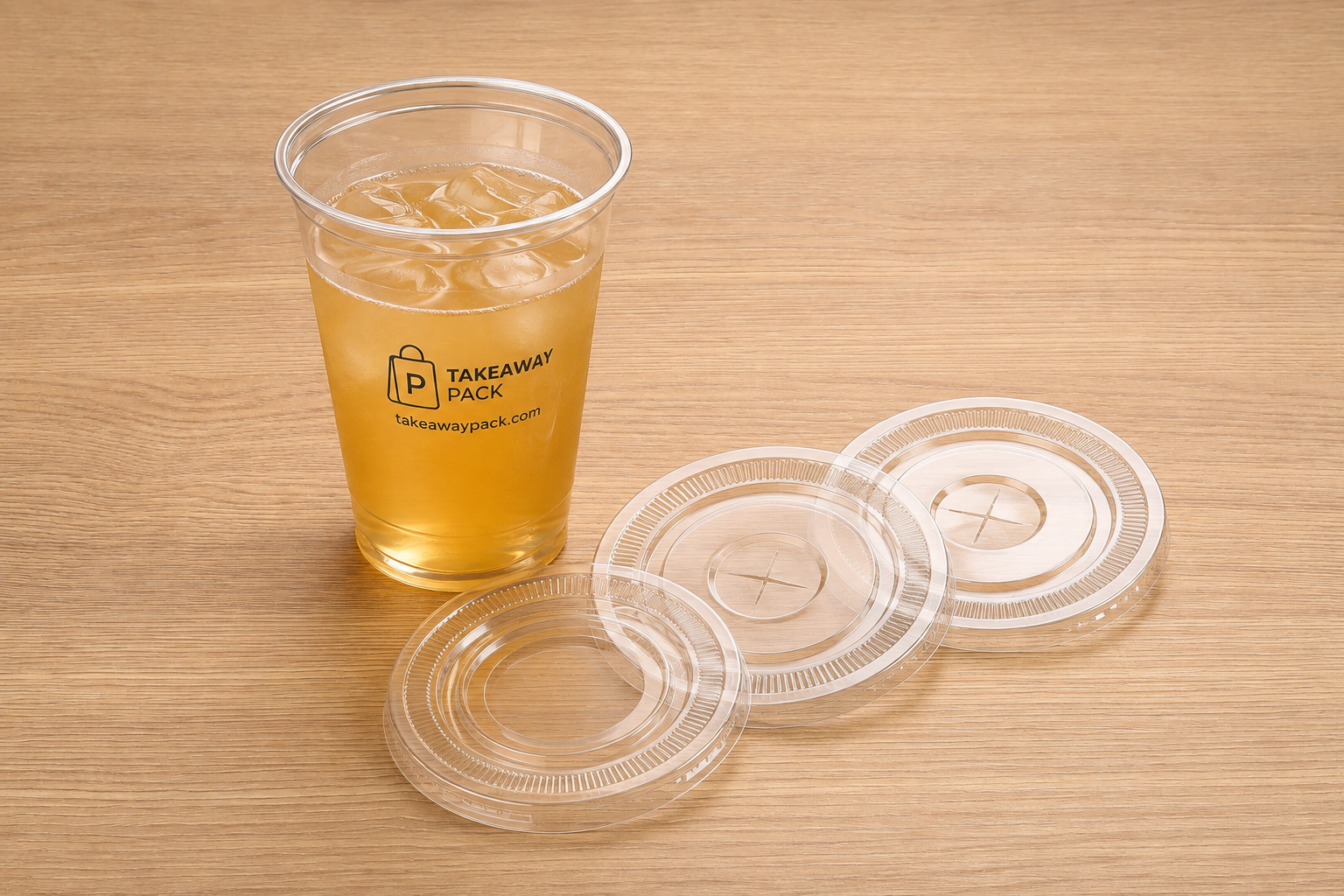
This is where a packaging supplier like TakeawayPack fits into a reuse pilot rather than competing with it. TakeawayPack is a foodservice packaging supply-chain partner with its own printing factory and multiple partner factories, so it can supply the fallback and communication stream — for example, double-wall paper cups matching the borrow program's sizes. Their 12oz (400ml) double-wall cup runs a 90mm rim on food-grade wood-pulp paper in kraft, white, or black, with 500 pieces per carton, and the same series spans 8oz to 22oz, so the paper fallback matches the reusable fleet size-for-size. Custom-printed packaging goes through a digital proof confirmed in writing before production, so return-point instructions can be printed on the fallback cups themselves. Food-contact and material documentation is confirmed per SKU, order, and destination market during the RFQ process, and flexible small-batch MOQs make it realistic to pilot printed cups for a single kiosk before committing to volume.
A 90-Day Pilot Plan
Weeks 1–2 — setup. Choose one kiosk. Map coffee journeys and place return points (kiosk, main lobby, one staff break area, one high-traffic clinical building). Finalise the deposit model. Print staff scripts and bin signage. Agree the washing route with the food-service department.
Weeks 3–12 — run and measure. Track cups issued, cups returned by location, missing cups, wash turnaround, complaints, and staff participation. Review weekly, and adjust station placement after two to four weeks based on where returns actually happen.
Exit criteria. Decide in advance what success looks like — a sustained return rate and wash turnaround that lets you hold fleet size steady — and what you will change if the numbers miss.
Common Failure Modes
- Return points only at the kiosk. In a campus, people finish drinks far from where they bought them.
- A deposit that feels like a rental contract. Apps, receipts, and account creation suppress participation more than they prevent loss.
- Washing treated as an afterthought. If washing is slow or visibly informal, both customers and infection-control will reject the program.
- Under-sized fleets. Running out of clean cups at the morning peak pushes customers back to disposables.
- No contingency for off-campus cups. Some cups will leave. Decide in advance whether you accept the loss or hold a residual deposit.
Where to Start
The Gatwick trial's real lesson is not about airports: reuse succeeds when the system is easier than the throwaway option, in an environment where people's movements are known. A hospital campus — or any closed site with daily repeat users — is arguably the most favorable setting there is. Design the return loop around your staff's daily routine, keep the borrow step frictionless, put professional washing at the center of the story, and keep a well-printed paper fallback for everyone the loop has not caught yet.
If you are planning the disposable side of a reuse pilot — matching paper cups to your reusable sizes, or printing return-instruction cups in small batches for a single site — review TakeawayPack's cup ranges and custom-printing process at takeawaypack.com, where food-contact documentation is confirmed per SKU, order, and destination market as part of the RFQ process.