Choosing the Right Food Container Size: A Menu Planning Guide
Capacity is only a starting point: test the full menu item, lid, headspace and delivery condition before standardising a food container size.
2026-07-23 - 3 min read
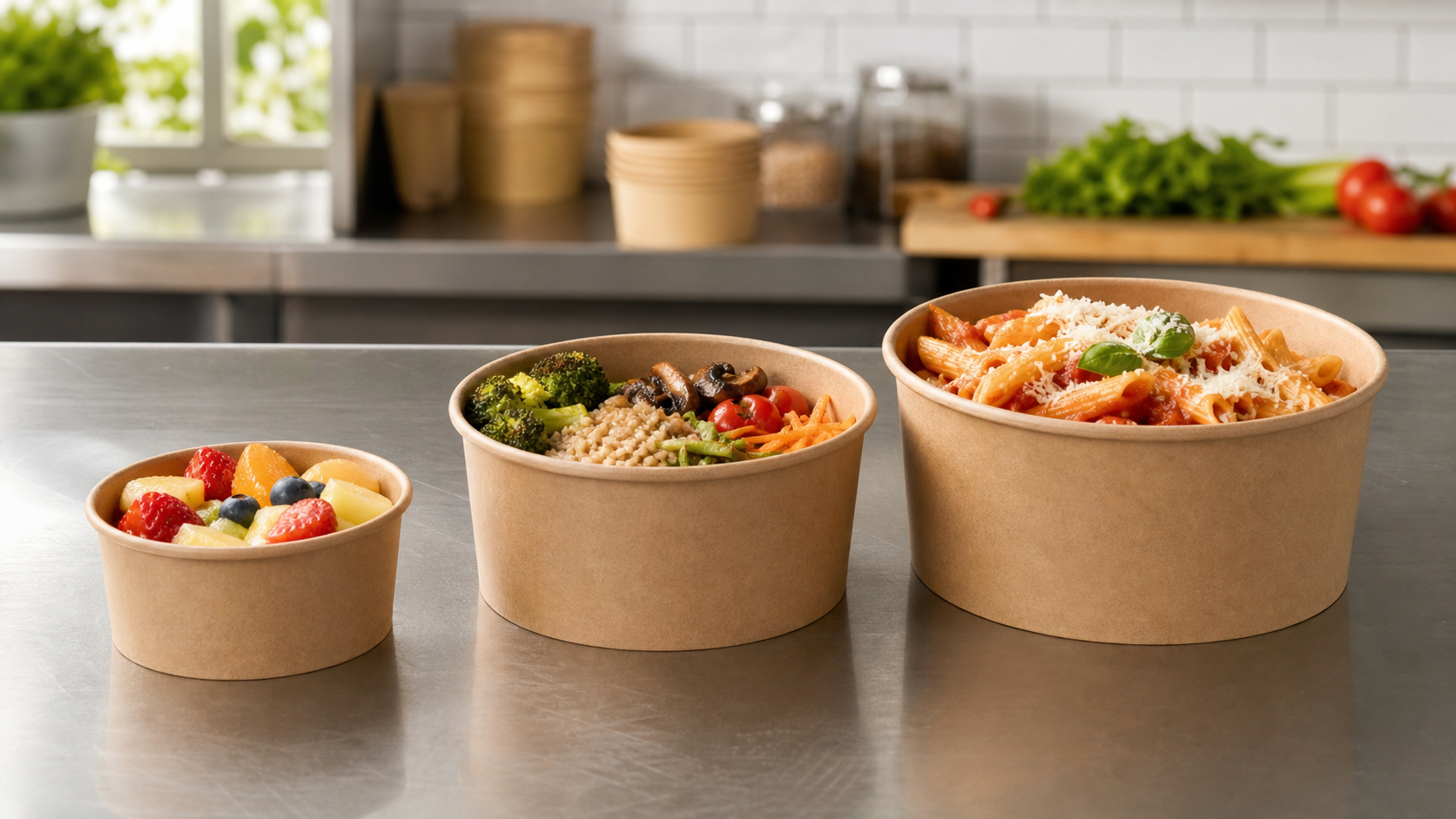
Measure the full serving, not one ingredient
Include the base, protein, sauce, toppings, sides and required headspace for closing. A container that fits the base portion may fail once the complete meal and lid are added.
| Menu question | Why it matters |
|---|---|
| Finished portion weight and volume | Helps shortlist capacity. |
| Sauce or toppings | Affects headspace and movement. |
| Separated components | May require compartments or multiple packs. |
| Immediate or delivered meal | Affects closure, stacking and appearance. |
| Portion control across locations | Requires a consistent standard. |
Leave room for closure and movement
Test the intended portion at the highest normal fill level, not only the average. An overfilled pack can prevent closure; an oversized pack can let ingredients shift.
Standardise at chain level
Define a SKU, target fill level, lid and packing instruction for each menu family so procurement and operations use the same reference.
Frequently Asked Questions
Should I size by ounces, millilitres or dimensions?
Use capacity as a starting point, then validate with the prepared menu item and selected closure.
Can one size reduce our SKU count?
Sometimes, but only if it maintains portion control, closure and presentation.
Do we need to test containers before a rollout?
Yes. Test food, full fill level, bagging and delivery condition.
Should lid choice be included in the size test?
Yes. Capacity and closure work as a system.