Clear Food Packaging Lids: How to Review Condensation Risk Before You Buy
A transparent lid or dome should be assessed under the actual food, filling, holding, and display conditions—not only when it is empty. For chilled packs, hot food, and moves between temperature zones, buyers can define the use case, ask what anti-fog approach is proposed, and request item-specific evidence before making a purchasing decision.
2026-08-19 - 4 min read
Summary
A transparent lid or dome should be assessed under the actual food, filling, holding, and display conditions—not only when it is empty. For chilled packs, hot food, and moves between temperature zones, buyers can define the use case, ask what anti-fog approach is proposed, and request item-specific evidence before making a purchasing decision.
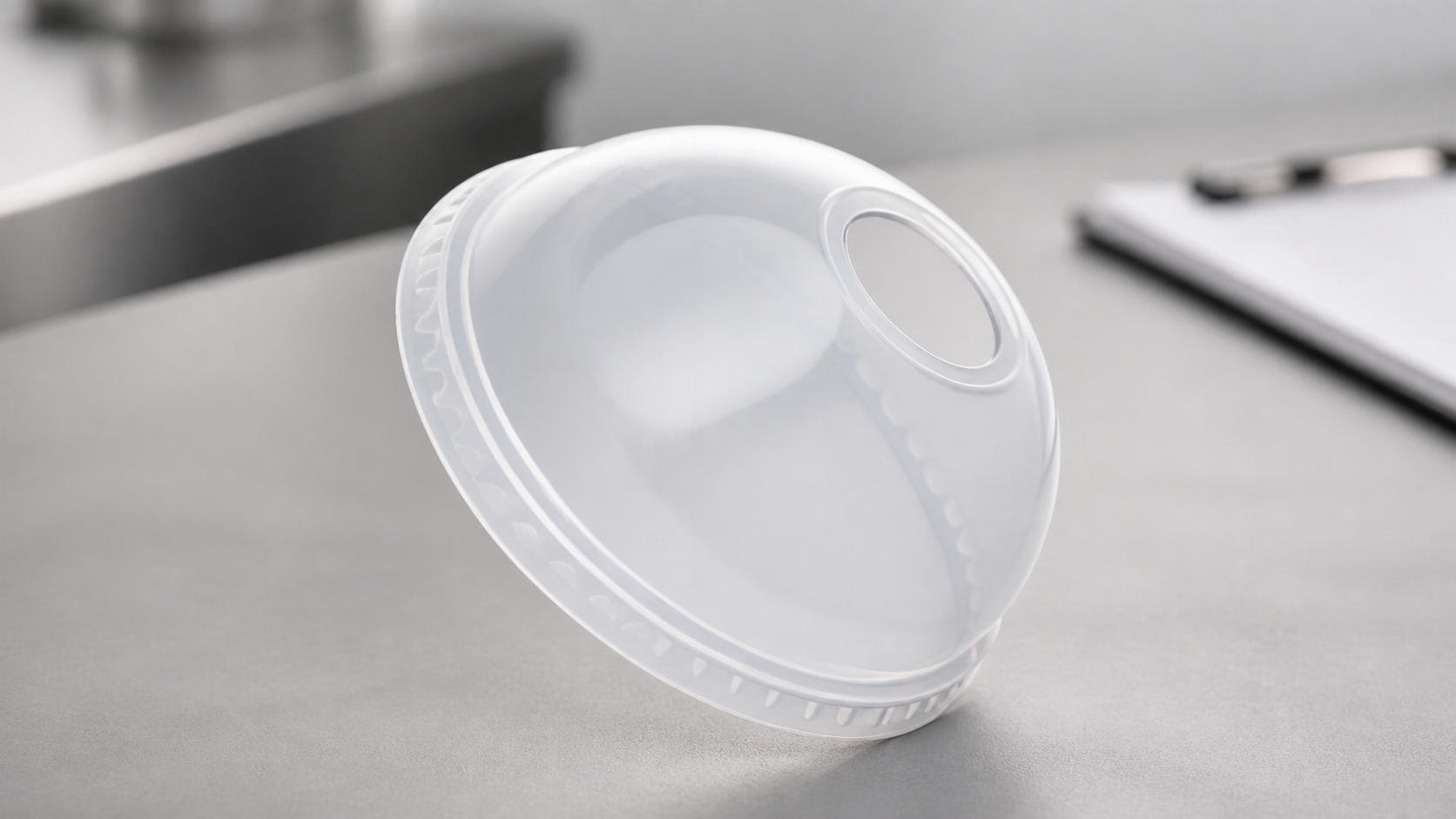
A clear lid is meant to show the food. Condensation can make that view harder to read when moisture and a temperature difference meet at the packaging surface.
The practical question is not whether a lid looks transparent on a desk. It is whether the proposed container-and-lid configuration gives the intended view during filling, holding, display, and handoff.
Why Condensation Needs a Use-Case Review
Condensation is moisture that collects as droplets on a surface. It can become a concern when warm, moist food is closed under a cooler lid, or when a chilled pack enters a warmer environment.
Small droplets can scatter light and change how the food looks through the lid. That is why a transparent-lid request should include the food and temperature journey, rather than a preference for “high clarity” alone.
Map the food journey first
Describe whether the food is chilled, hot, moist, sauced, or dry. Record the intended fill condition, the time before closure, the holding arrangement, and the display environment.
Also note any transfer between a cold cabinet, heated service area, delivery handoff, or room-temperature counter. These transitions can be more informative than a single static observation.
Turn an Anti-Fog Request into Specific Questions
An anti-fog treatment is intended to manage visible moisture on a packaging surface. It should be reviewed as a feature of a proposed material and configuration, not assumed from the word “clear.”
Ask the supplier to identify whether an anti-fog approach is proposed, which surface it applies to, and what evidence is available for the item under review. Do not extend a general material statement to every lid, food, or temperature condition.
Review the lid and container together
The lid, container, headspace, food, and closure routine work as one system. A dome or flat lid may be evaluated differently depending on the food volume and the space above the food.
Where moisture management is important, ask whether venting is part of the proposed configuration. Treat it as a design question to review, not as proof of a result for every dish.
Use a Representative Observation
An empty-pack check cannot show the moisture conditions created by real food. Use a representative food, the intended fill level, and the proposed container-and-lid pairing.
For a hot-food review, observe the pack after filling and closure. Note when visible moisture appears, where droplets collect, and whether the presentation changes during the intended holding period.
For chilled food, repeat the observation through the expected move into display or customer handling. Record the condition that the shopper or recipient is expected to see.
Keep evidence tied to the proposed item
Ask for the material description, the lid-and-container configuration, and the intended conditions considered by the supplier. If a statement concerns food contact, temperature use, or anti-fog treatment, request documentation traceable to that statement and the proposed item.
This approach avoids treating a category description as an item-specific conclusion. It also gives the buyer a clearer basis for comparing alternatives.
What to Include in a Clear-Lid Inquiry
A focused inquiry can include:
- the food type and its expected moisture condition;
- whether it is packed hot, chilled, or moved between temperature zones;
- the proposed container, lid, and fill level;
- the desired food view at display or handoff;
- whether a dome shape or venting is being considered;
- the destination country; and
- the item-specific information or documentation requested.
These details turn a broad request for a clear lid into a reviewable procurement brief.
Discussing the Requirement with Takeawaypack
Takeawaypack’s public inquiry process can collect the product category, material, size or capacity, expected quantity, customization details, and destination country. A buyer can use that route to describe the food and visibility requirement and ask to discuss structure, coating, and lid matching for the order under review.
The final choice should be confirmed against the specific item and order. Visibility under a given food and temperature profile is a question to document, not an assumed feature of every packaging option.
For foodservice packaging inquiries, visit https://takeawaypack.com