Compostable Food Containers for Hot and Oily Food: What Buyers Need to Verify
Hot and oily food requires SKU-level testing; compostability is a separate product-and-market claim to verify.
2026-07-23 - 3 min read
Separate product performance from end-of-use claims
A container must first hold the food, close properly, travel safely and provide a usable customer experience. Compostability is a separate claim requiring support and an appropriate disposal pathway.
| Verification area | Buyer question |
|---|---|
| Heat and oil | Has this SKU been assessed for our food condition? |
| Closure | Does the intended matching lid work at our fill level? |
| Delivery | What happens after expected holding and travel? |
| Claim scope | What supports the wording we intend to use? |
| Disposal | Does the destination have a relevant route? |
Test the actual menu item
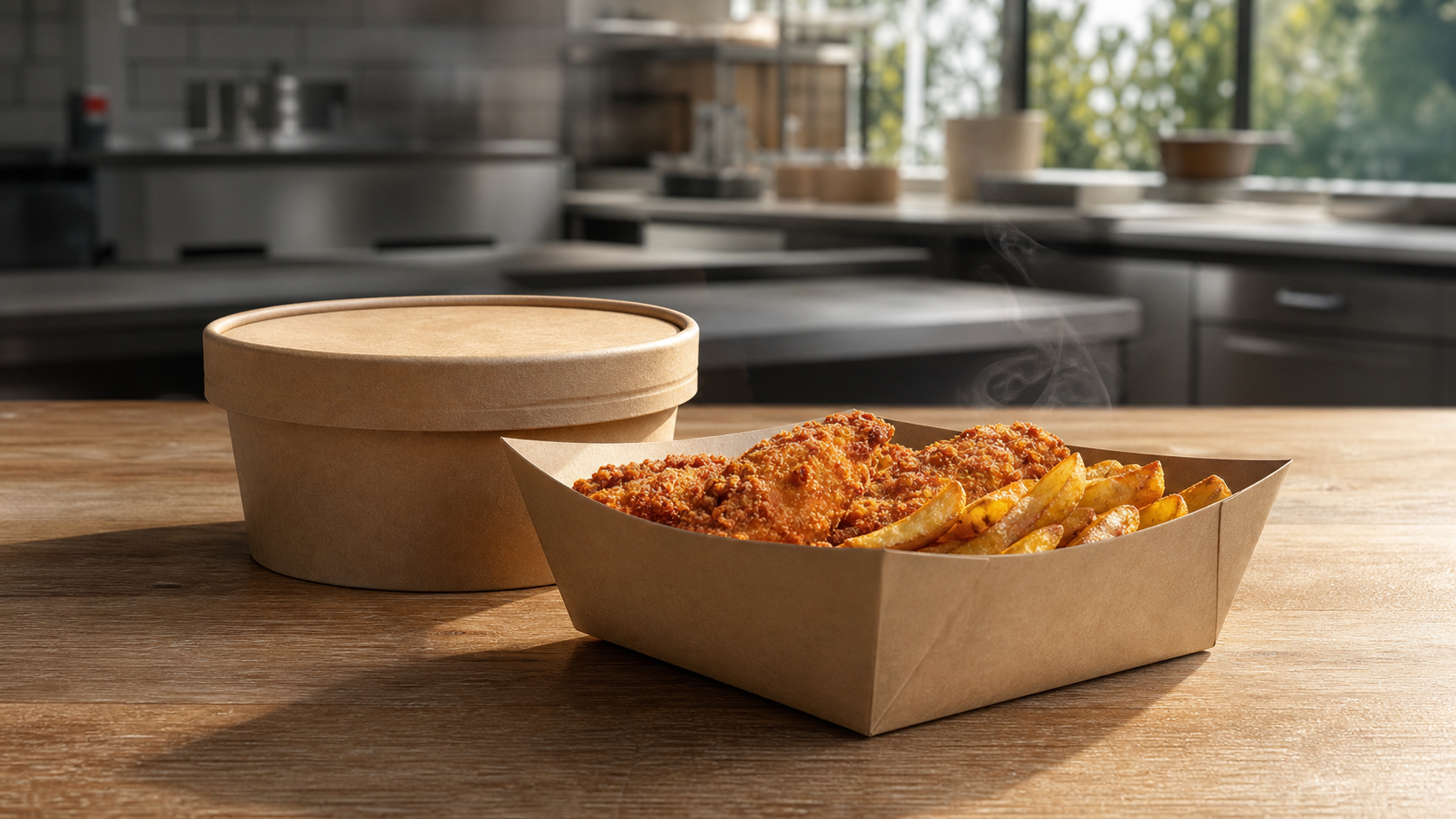
Test representative meals at normal and high fill levels, then inspect the package after the expected holding and delivery condition.
Use careful customer-facing wording
Avoid universal language such as ‘compostable everywhere’ or ‘zero-impact.’ Confirm the material, SKU, order documentation and destination conditions before making a claim.
Frequently Asked Questions
Can I use compostable containers for fried food?
Possibly, but suitability depends on the SKU, food temperature, grease, ventilation and delivery condition. Test the real item before rollout.
Does a compostable claim apply to the lid as well as the container?
Not automatically. Confirm each component and intended claim separately.
Can we make a compostability claim on any order?
Only when the relevant product and market support it.
Should we ask about disposal before selecting the item?
Yes. The end-of-use route affects whether a compostability claim is meaningful.