Can Compostable or Recycled Takeaway Packaging Improve Ratings and Repeat Orders?
Compostable or recycled-content takeaway packaging may support the delivery experience, but it cannot be assumed to raise ratings or repeat orders. Protect the food, clarify disposal, and test options against a baseline.
2026-08-13 - 7 min read
Summary
Compostable or recycled-content takeaway packaging may support a better delivery experience, but neither material choice can be assumed to raise platform ratings or repeat orders on its own. Food condition, order accuracy, delivery time, value, and service recovery all affect what customers say and do next.
Treat packaging as one controllable touchpoint. Start with the food and delivery route, make disposal information easy to understand, then test a small number of packaging options against a clear baseline. The useful question is not “Which material guarantees loyalty?” It is “Which option protects this menu item, fits local disposal conditions, communicates clearly, and makes commercial sense?”
Packaging Is Part of the Delivered Meal Experience
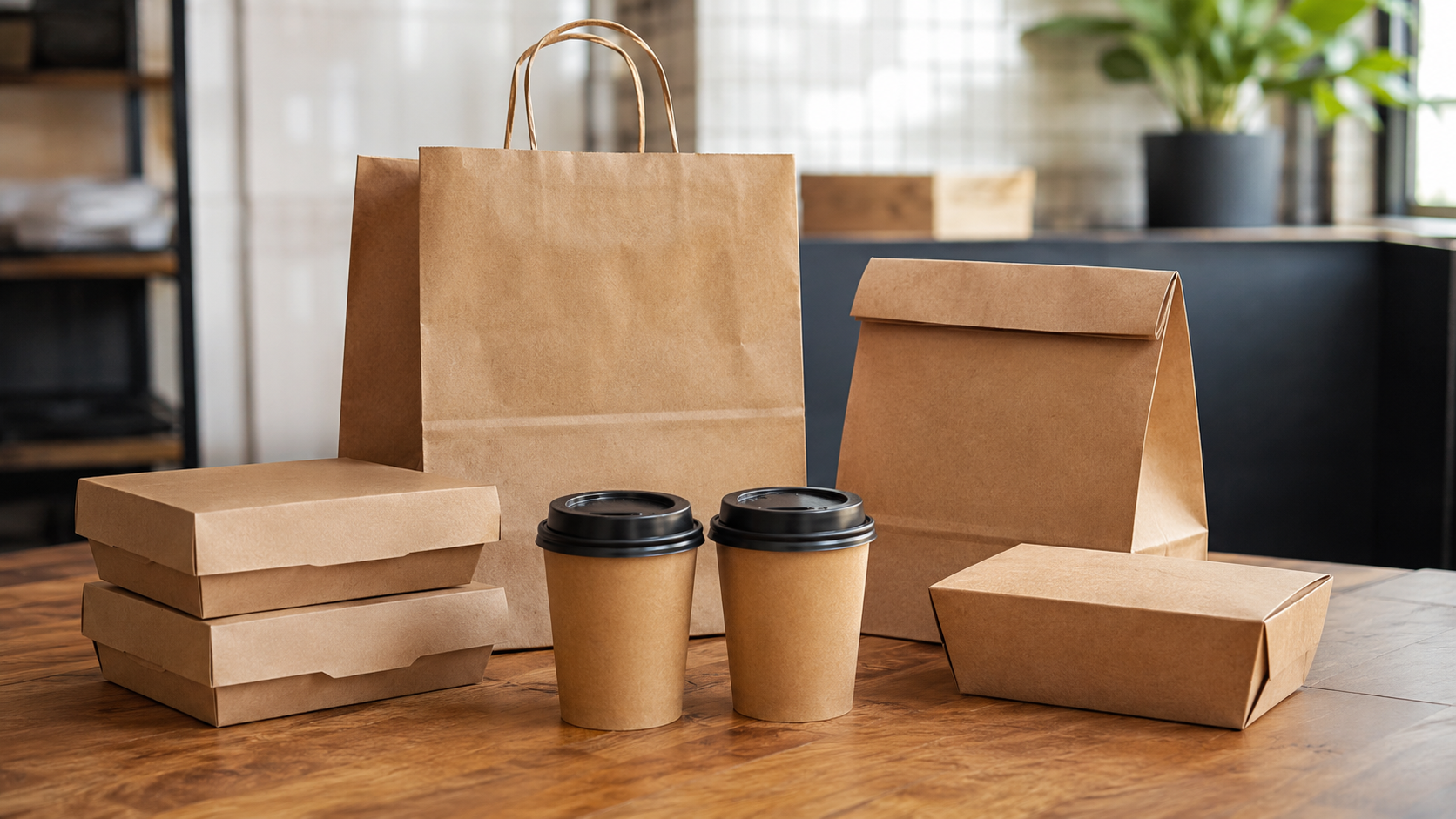
In delivery, the package does more than carry food. It is handled at handoff, opened at home or work, and discarded after the meal. A leaking bowl, a loose lid, a confusing disposal message, or an overbuilt pack can become part of the customer’s impression of the order.
That makes packaging a practical delivery touchpoint—not a stand-alone retention lever. A restaurant or platform should avoid treating a material label as proof of a better experience. Instead, it should ask whether the pack performs appropriately for the menu, route, and customer context.
Will Compostable or Recycled Packaging Increase Platform Scores?
There is no universal uplift to claim. A compostable option and a recycled-content option can be relevant to customers who care about waste, but a rating may still be shaped more strongly by food temperature, freshness, completeness, delivery handling, price, and support.
The responsible approach is to test rather than promise. If customer feedback improves during a controlled trial, examine the full experience before assigning credit to the packaging. Was the menu unchanged? Were delivery zones comparable? Did the team also change sealing, labeling, courier instructions, or service recovery? Those details matter.
Choose Functional Fit Before Environmental Positioning
Begin with the food, not the marketing statement. Map each high-volume item by temperature, moisture, oil content, portion size, lid need, expected delivery time, stacking, and whether the customer is likely to eat immediately.
Then evaluate candidate packs in normal operating conditions. Check closure security, ease of opening, portion fit, carrying convenience, and how the food presents on arrival. If a package cannot meet the operational need for a particular item, an environmental message does not solve the customer experience problem.
Make Hygiene and Tamper Concerns Visible
Customers need confidence that an order has been handled appropriately. The packaging system should make the intended closure and handoff process clear to staff and customers. Depending on the operation, that can include a fit-for-purpose lid, a sealed outer bag, or an order label that helps a customer identify the order.
Do not imply that a packaging format provides a specific safety, food-contact, or tamper-evidence outcome unless that claim is supported for the exact SKU, market, and use case. Build the process around the applicable requirements and verify it with the relevant supplier documentation.
Compostable vs. Recycled Content: Ask Different Questions
“Compostable” and “recycled content” describe different considerations. They should not be used as interchangeable shorthand for “better.”
For a compostable option, ask what collection or treatment route is actually available where the customer will discard it. For a recycled-content option, ask what the material specification means for the exact product and what end-of-use instructions are appropriate locally. In both cases, avoid broad environmental claims that customers cannot act on.
A short, specific disposal instruction is often more useful than a large generic symbol. Use wording that reflects the verified material information and the local collection context. When the correct route is uncertain, say less, not more, until the claim can be substantiated.
Keep Visual Identity Useful, Not Excessive
Branding can make a delivery feel intentional, but it should not crowd out the information customers need. Prioritize the order identifier, opening guidance where useful, disposal instructions, and a clean visual hierarchy. A simple brand element may be enough for a pilot.
Test whether customers and staff can understand the message quickly. If custom printing is being considered, separate the visual decision from the material decision so the business can see what each change adds to cost and operations.
Balance Cost and Environmental Goals With a Total-Experience View
The cheapest unit price is not always the lowest operational cost, and the most ambitious material claim is not automatically the best choice. Compare options against the complete delivery experience: pack cost, required accessories, packing time, storage space, food fit, reported packaging problems, waste guidance, and the practical ability to source the option consistently.
Use a small shortlist. One option may be the functional baseline; another may emphasize a different material or disposal pathway. Set a cost ceiling before the trial and identify which trade-offs are acceptable. For example, a modest added packaging cost might be considered only if the option meets the same functional standard and produces evidence worth acting on.
An Evidence-Based Packaging Pilot for Delivery Teams
A pilot should answer a decision, not merely collect opinions. Keep menu items, delivery areas, promotional activity, and measurement windows as comparable as practical.
1. Define the baseline
Record the current pack configuration, per-order packaging cost, packaging-related complaints, refund or remake reasons, rating distribution, and repeat-order rate for a defined period. Keep the reasons behind each metric visible; a single average can hide important problems.
2. Limit the variables
Trial one packaging change at a time where possible. If both material and design change together, document that the result cannot isolate either factor. Train staff on the packing method before the test begins.
3. Measure the delivery experience
Track packaging-specific signals alongside business outcomes:
- leakage, lid, crush, or carry complaints;
- customer comments that mention packaging, waste, or disposal;
- food-condition issues at arrival;
- ratings and review themes;
- refund, remake, and support-contact reasons;
- repeat ordering for comparable customer cohorts; and
- actual packaging cost per completed order.
Invite short feedback with a neutral question, such as: “Was the packaging easy to use and easy to understand after the meal?” Do not frame the question in a way that asks customers to validate a claim.
4. Decide with the evidence
Review both the numbers and the comments. Retain, revise, or stop the option based on the predefined scorecard. If results are mixed, consider a menu-specific rollout rather than a blanket conversion. Record what was tested, which claims were used, and which facts remain unverified.
Delivery Packaging Selection Scorecard
Score each option from 1 (weak fit) to 5 (strong fit), then add a short note with the evidence behind the score.
Use the scorecard as a decision record, not as a substitute for product validation or legal review.
| Criterion | Questions to ask | Weight |
|---|---|---|
| Food and route fit | Does it suit temperature, moisture, oil, portion, lid, and journey conditions? | 25% |
| Customer-use experience | Is it easy to carry, open, identify, and dispose of as instructed? | 15% |
| Hygiene and handoff process | Does the chosen workflow clearly support orderly packing and handoff? | 15% |
| Disposal communication | Are instructions accurate, concise, and usable for the intended market? | 15% |
| Commercial fit | What are the unit, accessory, labor, storage, and problem-resolution costs? | 15% |
| Visual identity | Does the design communicate the brand without obscuring essential information? | 10% |
| Pilot evidence | What did comparable trial data and customer comments show? | 5% |
The Practical Answer
Compostable and recycled-content packaging can be sensible options when they fit the food, operating process, and disposal context. They may help a delivery business address a customer concern, but they do not independently prove a rating or repeat-purchase outcome. Protect the meal first, communicate plainly, keep claims within verified scope, and use a measured pilot to decide what to scale.
Legal Disclaimer
This article provides general operational information, not legal, environmental, food-contact, safety, certification, or waste-management advice. Packaging claims, material suitability, disposal instructions, and applicable requirements should be verified for the exact SKU, order, use conditions, and destination market with appropriate documentation and qualified advisers.
For a sourcing conversation, TakeawayPack’s online catalog includes foodservice packaging categories such as cups, bowls, boxes, containers, trays, lids, bags, and cutlery. Its RFQ process can be used to discuss the product category, material, dimensions or capacity, expected quantity, printing or logo requirements, and destination. takeawaypack.com