How to Prepare Delivery Packaging That Protects Food Quality and Supports a Clear Handoff
Prepare delivery packaging around the meal and journey: match containers to food, label clearly, secure closures, organize components, separate drinks, hold orders correctly, and standardize the handoff routine.
2026-08-13 - 6 min read
Summary
Good delivery packaging starts with the meal: it should help preserve temperature, flavor, texture, and presentation while remaining easy to identify, carry, and hand off. A restaurant can improve consistency by matching containers to the food, labeling orders clearly, securing closures, organizing items, separating drinks, holding food appropriately before pickup, and standardizing the packing routine.
A tape or sticker can help keep a to-go package closed, but it is not evidence of a universal platform requirement or legal compliance. Requirements, if any, must be checked for the relevant platform, merchant arrangement, product, and destination.
Start With the Food and the Journey
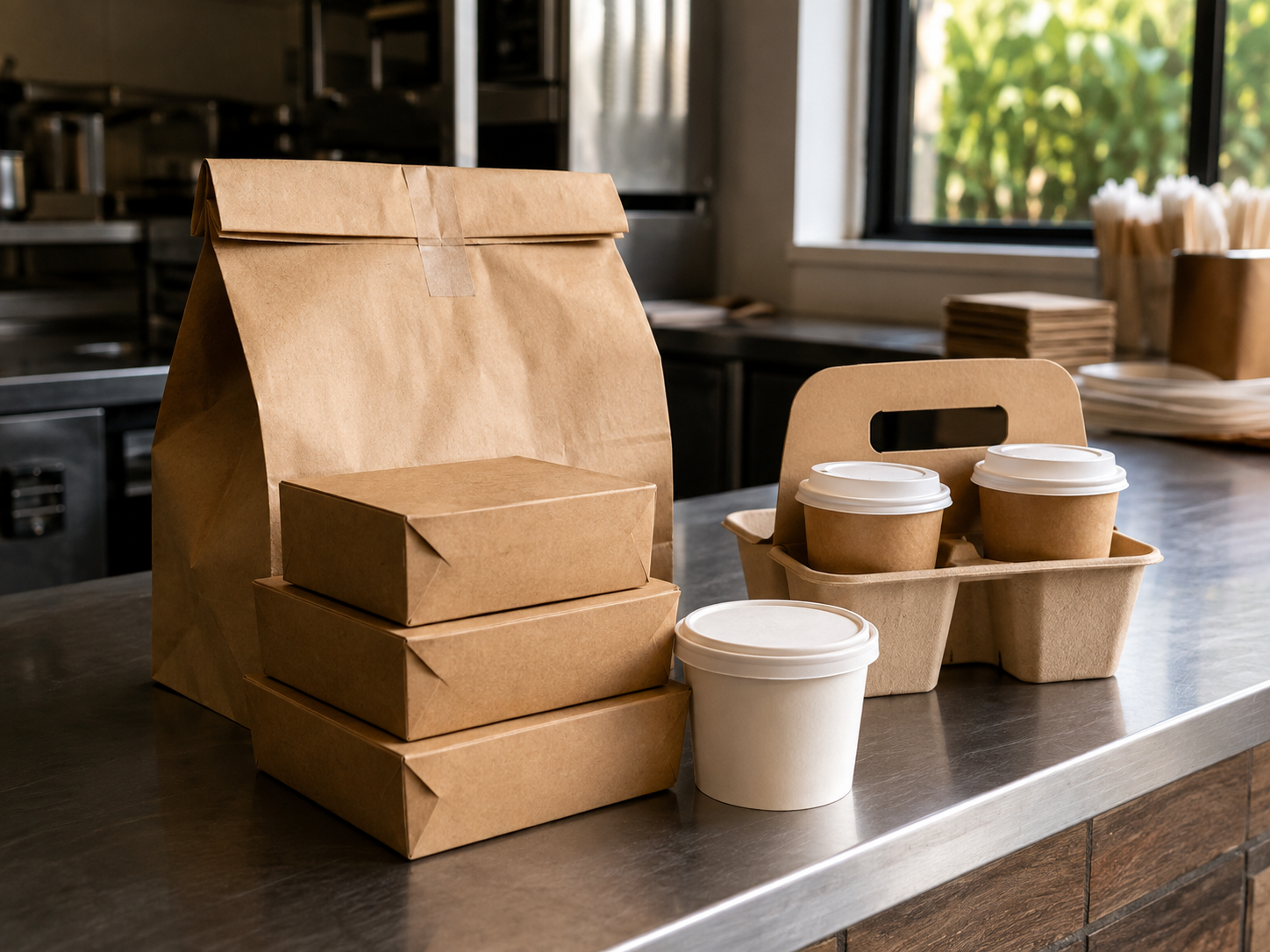
Choose packaging for the contents rather than treating every menu item the same. Hot soups and stews need a different container decision from cold salads, ice cream, or drinks. Evaluate whether the container is suitable for the food’s temperature, moisture, and handling needs.
For delivery, a practical pack should resist leaking and ripping and should remain usable during the expected journey. Heat-resistant materials may be relevant where heat could distort a container. The aim is straightforward: the food should arrive in the intended condition.
Use Containers That Keep the Order Presentable
A closed, upright container helps protect presentation. Customers compare a delivered meal with what they expected to receive, so the packing process should make it easier for the order to look orderly on arrival.
Keep cold drinks apart from hot food when possible. Use a sturdy drink tray to keep beverages upright and separate from warm dishes. This reduces the chance that a spill affects the rest of the order.
Label Every Pack Clearly
Train staff to use the intended container for each menu item, then label the package with the details needed to identify its contents. Clear labeling supports orderly pickup and helps the team assemble orders correctly.
For drinks or items that lose quality while waiting, a simple receipt or production cue can help staff remember the item at the right point in the workflow. Use the information that helps the team complete the order; do not overload the package with unnecessary messaging.
Secure the Closure, Then Check the Whole Order
Tape or stickers can be used to close to-go packaging. In an operational packing process, this can help containers remain shut and can help maintain temperature.
That is a practical closure step, not a blanket claim about tamper evidence, food safety, platform acceptance, or a jurisdiction’s law. Do not describe a closure as meeting a particular requirement unless the exact packaging configuration, use conditions, merchant terms, and destination-specific requirements have been verified.
Once individual items are closed, organize each order so that meals, condiments, and side dishes are packed with their corresponding items. A simple, repeatable arrangement makes the order easier to check before handoff.
Make Pickup Easy for Delivery Drivers
A smooth pickup protects both food quality and operations. Clearly labeled bags, boxes, or handled carriers make orders easier to identify and carry. A designated pickup area with visible signage can also reduce confusion at the handoff.
Packaging should be easy to handle. Consider the journey from kitchen to counter, driver pickup, transport, and customer opening. If a pack is awkward to carry or stack, solve that operational problem before adding decorative features.
Hold Food Correctly Until Pickup
Food can lose quality while it waits. Use suitable holding equipment, such as a hot tray or warming equipment where appropriate, to keep ready orders hot before pickup.
The packaging routine and the holding routine should work together. A well-chosen container cannot fully compensate for avoidable waiting, and fast handoff cannot compensate for a container that does not suit the food.
Standardize the Packing Routine
Write down the steps for each common order type and train staff to follow them. A basic routine can include:
- 1. Select the container that fits the item.
- 2. Label the package.
- 3. Close it using the chosen operational method.
- 4. Pair sides and condiments with the correct meal.
- 5. Separate drinks from hot food and place them in a stable tray.
- 6. Hold the order appropriately until pickup.
- 7. Check the order before handoff.
Ask kitchen staff and delivery drivers for feedback on what slows pickup or leads to mistakes. Their observations can help improve the process without guessing at the cause of a packaging issue.
Balance Cost, Quality, and Material Choices
Delivery packaging is an operating cost, so review it alongside food quality and the overall restaurant economics. The lowest-cost container is not necessarily the best fit if it creates leaks, damage, or inefficient packing. Conversely, a higher-cost option should be assessed against a clear operational benefit rather than appearance alone.
Where suitable, a restaurant may consider recyclable, reusable, or other eco-conscious materials. Any environmental statement should match verified material information and the relevant disposal context. Do not make broad environmental, food-contact, performance, or certification claims for a product without documentation for the exact SKU and use case.
Use Branding Only After the Basics Work
Branded packaging can make a delivery feel more memorable and can create space for a simple invitation to share feedback or follow the restaurant. Start only after the pack protects the food and supports the handoff.
Keep critical information easy to find. An attractive design does not replace a secure closure, clear order identification, or a package that fits the menu item.
The Practical Answer on Tamper-Evident Delivery Packaging
There is no universal conclusion here about Uber Eats, DoorDash, or any other delivery platform’s packaging requirements, and this article does not establish a rule for any state or country. A useful operational practice is to choose suitable containers, label them, close them with tape or stickers where appropriate, organize the order, and standardize the process.
Before treating a sealing method as mandatory or compliant, verify the applicable platform terms and the destination’s current requirements with authoritative documentation and qualified advisers.
Legal Disclaimer
This article provides general operational information, not legal, regulatory, food-safety, food-contact, certification, or packaging-performance advice. Confirm requirements and product suitability for the exact order, packaging configuration, use conditions, platform arrangement, and destination market.
For a sourcing discussion, TakeawayPack’s online catalog includes foodservice packaging categories such as cups, bowls, boxes, containers, trays, lids, bags, and cutlery. Its RFQ process can be used to discuss the product category, material, dimensions or capacity, expected quantity, printing or logo requirements, and destination. takeawaypack.com