Can Eco-Friendly Takeout Packaging Increase What Customers Are Willing to Pay?
Eco-friendly takeout packaging can influence willingness to pay, but it does not guarantee better ratings, repeat orders, or profit. Use a clear, supportable message and test the complete customer and cost outcome.
2026-08-13 - 7 min read
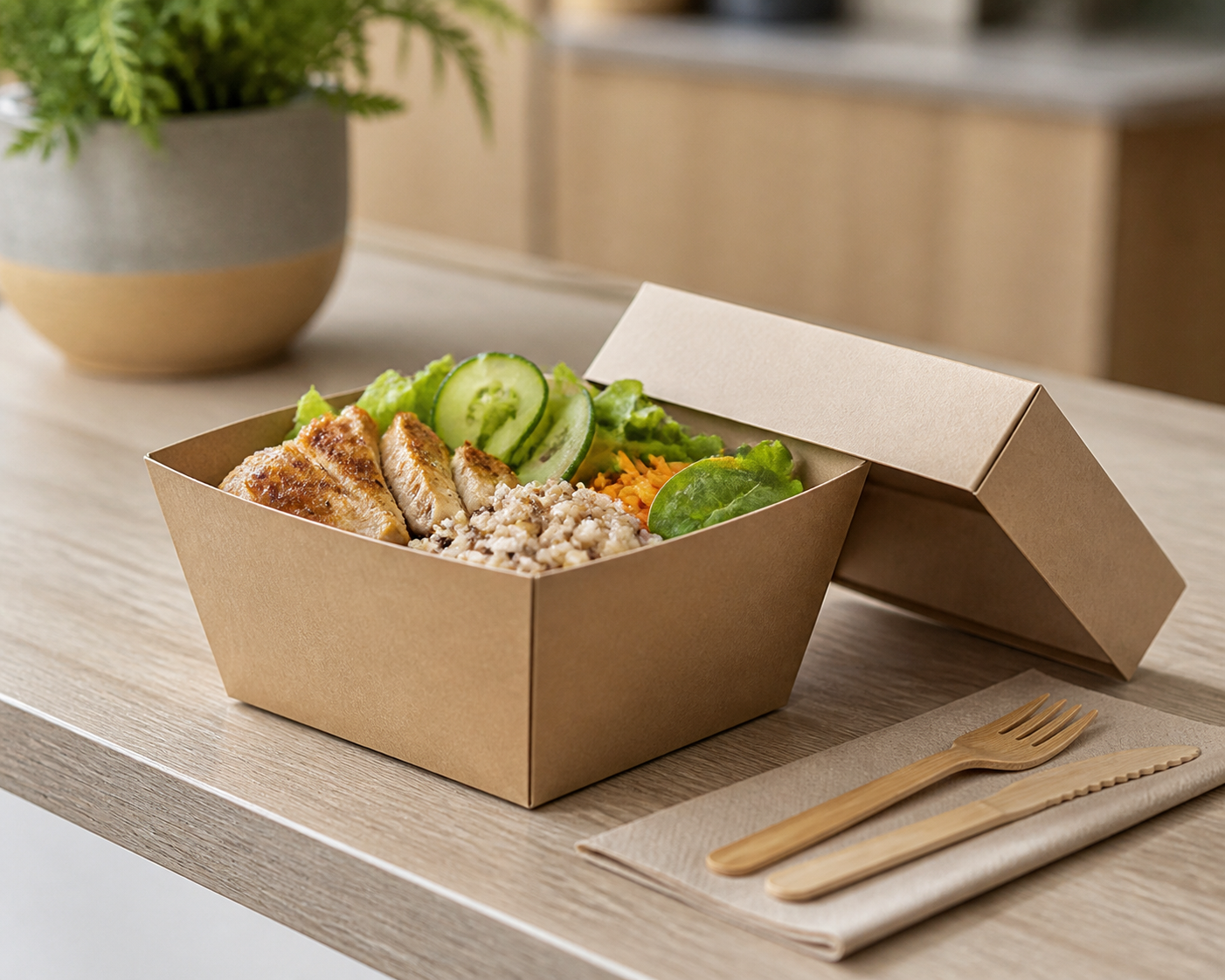
Summary: Environmentally friendly off-premises food packaging can increase customers’ willingness to pay a premium, but the effect is not automatic and should not be treated as proof of higher platform ratings or repeat purchases. The strongest practical route is to make the environmental benefit easy to understand and connect it to customers’ pro-environmental self-image and moral judgment—while choosing a packaging option whose extra cost the business can recover responsibly.
For delivery restaurants, cafés, caterers, and foodservice operators, the question is not simply whether a reusable, sustainable, compostable, or recycled-content package looks better than conventional single-use plastic. The customer must notice the difference, see it as meaningful, and feel that selecting the business is consistent with how they want to act.
What the Research Supports—and What It Does Not
Research has examined consumers’ willingness to pay a premium for environmentally friendly off-premises food packaging compared with conventional single-use plastic. It used two experiments and a stimulus-organism-response framework.
Its findings point to a useful commercial lesson: environmentally friendly packaging can influence willingness to pay both directly and indirectly. The indirect route runs through two customer responses:
- 1. Pro-environmental self-identity — the sense that choosing the option fits with being an environmentally responsible person.
- 2. Moral judgment — the sense that the choice is the right thing to do.
The second study confirmed the indirect effects. It supported the main direct effect for the reusable option, which is an important distinction: do not assume that every environmental packaging format will create the same response in every setting.
The research also found that reputation and impact legacy motives can strengthen the serial effect through self-identity and moral judgment. In plain terms, some customers respond more strongly when the choice helps them feel they are building a positive reputation or leaving a worthwhile impact.
That evidence is about willingness to pay a premium. It does not establish that a packaging switch will automatically improve delivery-platform scores, reviews, conversion rates, reorder rates, or profit for every foodservice business. Those outcomes should be measured in your own menu, market, channel, and price range.
Turn a Packaging Material Change Into a Clear Customer Choice
A silent material substitution may be less effective than a visible, credible explanation. If the business expects customers to value a packaging improvement, tell them what is changing and why—without making vague or unverified environmental promises.
A useful message should answer three questions quickly:
- What is different? Name the relevant package feature or format.
- Why does it matter? Explain the intended environmental benefit in plain language.
- What should the customer do with it? Give any necessary disposal, reuse, or local-facility instruction.
For example, a reusable-packaging program needs an easy return or reuse path. A package designed for a particular collection or composting system needs wording that accurately describes the applicable conditions. Broad phrases such as “green packaging” may create interest, but they are not a substitute for a specific, supportable explanation.
The objective is not to pressure customers with guilt. It is to make the more responsible option understandable and personally relevant at the point where the customer chooses a restaurant, selects a menu item, adds delivery, or accepts a modest premium.
Do Not Promise Platform Ratings or Repeat Orders From Packaging Alone
Packaging can affect the delivery experience, but a business should not claim that eco-friendly packaging will raise platform ratings or customer retention unless it has its own reliable evidence.
Ratings and repeat orders are influenced by many factors, including food quality, order accuracy, delivery timing, price, service recovery, app visibility, and the condition of the order on arrival. Packaging can support that experience when it protects the food and communicates the business’s values, but it is only one part of the decision.
Treat performance claims as testable business questions rather than assumptions:
Keep the test period long enough to avoid confusing a launch novelty effect with a durable customer response.
| Business question | What to compare |
|---|---|
| Will customers accept a premium? | Conversion, basket value, item uptake, and price sensitivity before and after the change |
| Does the message help? | A package-only test versus the same package with clear, accurate customer-facing explanation |
| Is the effect stronger for a segment? | Results by channel, location, order type, and available customer attributes where permitted |
| Does the package improve the delivery experience? | Complaint rate, damage or leakage reports, review themes, and order-condition feedback |
| Does it affect retention? | Reorder behavior over a defined period, compared with a suitable baseline or test group |
| Is it commercially viable? | Packaging cost, operating effort, spoilage or remake cost, and realized revenue per order |
Balance Cost, Protection, and Environmental Value
The lowest unit price is not always the lowest total cost. A packaging choice that costs more but reduces food damage, improves perceived value, or supports an accepted premium may have a different economic outcome from a cheaper package. The reverse is also possible: a higher-cost format can fail if customers do not understand it, the food arrives poorly, or the disposal route is impractical.
Build a simple decision model before scaling:
- 1. Define the use case. Hot, cold, greasy, liquid, fragile, or mixed meals create different performance requirements.
- 2. Identify the exact package configuration. Include lids, liners, labels, seals, utensils, and any secondary bag—not only the primary container.
- 3. Calculate the full cost change. Include procurement, storage, assembly time, packaging failures, replacements, delivery damage, and any customer incentive or deposit.
- 4. Decide the pricing approach. Test whether the cost is absorbed, reflected in menu price, offered as an opt-in upgrade, or supported by a reusable-program design.
- 5. Write the customer message. Keep it specific, accurate, and matched to the real package and end-of-life conditions.
- 6. Measure the outcome. Use a defined baseline and record both customer and operational results.
A reusable option deserves special operational attention. Its appeal may depend on how convenient the reuse or return process is, not simply on the word “reusable” printed on the package.
Use Legacy and Reputation Motives Responsibly
Some customers care about how their choices reflect on them and the impact they leave behind. The research indicates that reputation and impact legacy motives can strengthen the pathway from packaging to willingness to pay through pro-environmental self-identity and moral judgment.
That does not mean every message should make a grand promise. A better approach is to show customers the concrete choice they can make: select the lower-impact option where the business can substantiate that description, follow the stated reuse or disposal instructions, and understand what the package is intended to do.
Message concepts should be reviewed carefully so they do not imply benefits that the package, local infrastructure, or evidence cannot support. The best customer communication is specific enough to be trusted and simple enough to be understood in a fast delivery decision.
A Practical Rollout Checklist
- Confirm that the package protects the actual food and delivery journey.
- Define the exact environmental attribute you can support for the finished package.
- Check whether the disposal, collection, reuse, or return instructions are realistic for the markets served.
- Create a short customer message that explains the choice without using a broad unsupported claim.
- Test the packaging and message against a clear business baseline.
- Track premium acceptance, complaints, food-condition feedback, and operational cost together.
- Do not claim a rating, review, or retention lift without business-specific evidence.
- Scale only after the customer response and total economics support the decision.
The Bottom Line
Environmentally friendly off-premises food packaging can help customers accept a premium when the choice feels understandable, personally meaningful, and operationally credible. The evidence supports a pathway through pro-environmental self-identity and moral judgment, with stronger effects for customers motivated by reputation or impact legacy. It does not justify a blanket promise of better ratings, repeat purchases, or profitability.
Start with packaging that works for the food, communicate the supported benefit clearly, test the price and message in the real ordering journey, and measure the complete result before expanding the program.
Legal disclaimer: This article provides general information, not legal, environmental, or financial advice. Packaging claims, disposal instructions, and marketing language should be reviewed against the actual package, supporting evidence, and applicable requirements before use.
For packaging sourcing conversations, begin at takeawaypack.com