How Environmentally Friendly Food Delivery Packaging Can Shape Customer Trust and Support
Environmentally friendly delivery packaging can shape customer perceptions, satisfaction, and trust, but it does not guarantee loyalty. Functional design, accurate claims, and usable disposal instructions must work together.
2026-08-13 - 4 min read
Summary
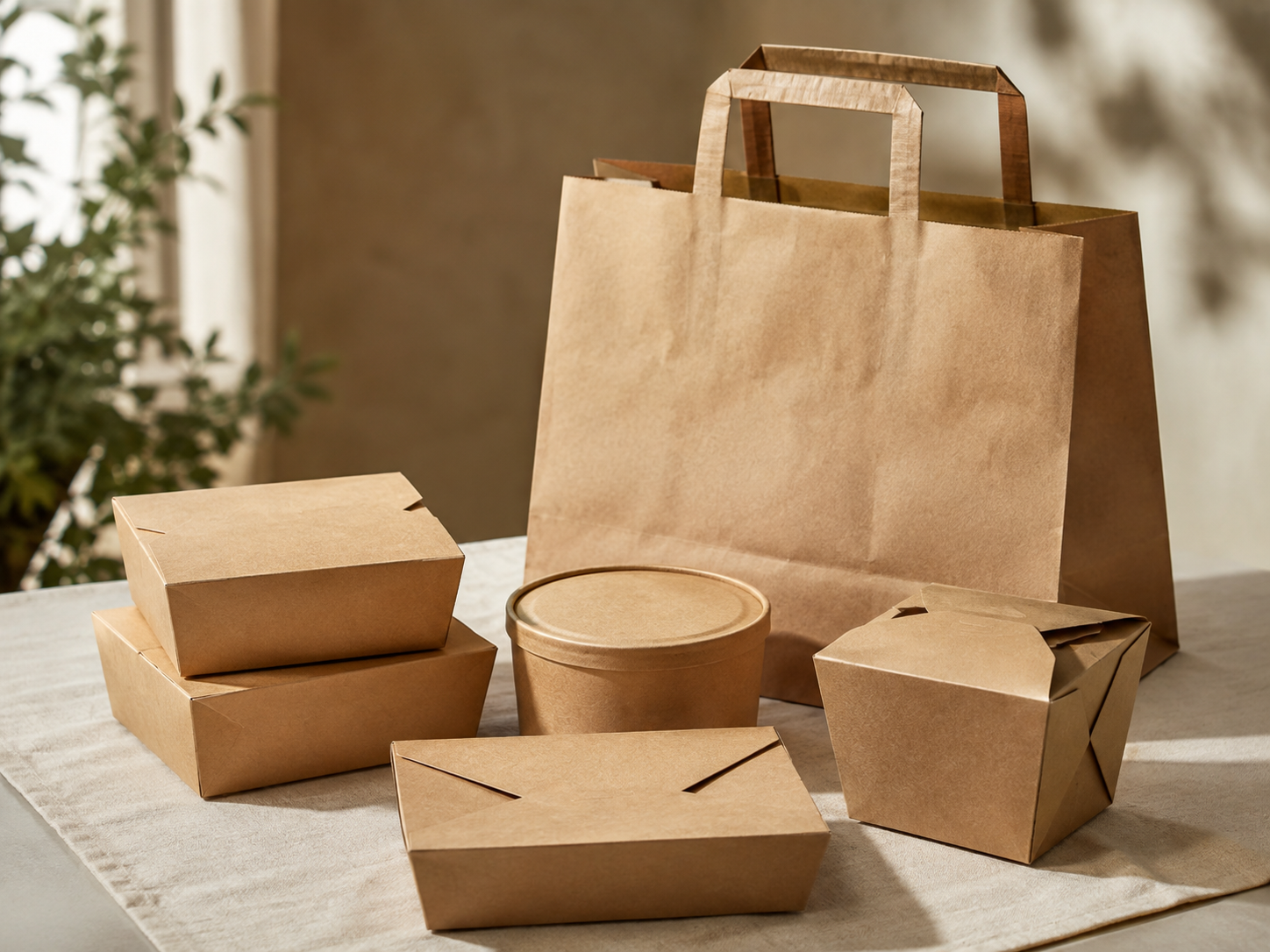
Environmentally friendly food-delivery packaging can influence sustainable customer behaviour because customers respond not only to the meal, but also to the package experience. Research on U.S. food-delivery customers found that perceived environmental friendliness of food packages was associated with customer satisfaction and trust; those responses, in turn, affected environmental support and patronage behaviour.
The practical implication is not that a green-looking package guarantees loyalty. It is that restaurants and delivery brands should make packaging choices and environmental messages that customers can understand, experience, and trust. A credible package experience needs functional design, accurate claims, and disposal information that matches the real package and local route.
What the Research Examined
The research examined how environment-related attributes of food-delivery services relate to customer behaviour. It used a stimulus–organism–response framework: environmentally friendly food packages were considered part of the customer’s service experience; satisfaction and trust were the customer responses; environmental support and patronage behaviour were the outcomes studied.
The researchers collected data from food-delivery-service customers in the United States and tested the proposed relationships using partial least squares structural equation modelling. The findings concern customer perceptions and relationships observed in the study; they should not be read as a promise that every packaging change will produce the same commercial result.
The Customer Path: Package Perception, Satisfaction, and Trust
A delivered meal package is handled at several moments: when the customer receives the order, opens it, stores leftovers, and decides how to discard it. At each point, the customer forms an impression of whether the package is considered, useful, and consistent with the business’s environmental message.
The research found that perceptions of environmental friendliness influenced satisfaction and trust. It also found that satisfaction and trust mediated the relationship between the food-consumption experience and the measured outcomes. In practical terms, a sustainability message is more credible when it is connected to an experience that works for the customer.
Turn Packaging Choices Into a Clear Customer Experience
Avoid vague labels that leave the customer to guess what “eco-friendly” means. State the specific attribute that the available evidence supports, such as the component covered, the material claim, or the disposal instruction.
A clear message should match the package in the customer’s hand. If a claim applies to only one component, identify that component. If correct disposal depends on local acceptance or a commercial facility, say so near the instruction.
Protect the core delivery function
Environmental considerations should be assessed alongside the package’s role in delivery. A claim cannot make up for a package that creates a poor food-consumption experience. Test the chosen construction for the actual meal, temperature, travel time, portion, closure, and intended use before describing it as an improvement.
This is a decision discipline, not a claim about any particular material or product. The evidence for the environmental statement and the evidence for functional suitability should each be reviewed for the exact SKU and order scope.
Earn trust with matched evidence and communication
Trust is weakened when a headline, icon, or marketing phrase suggests more than the package documentation proves. Keep a controlled claim record that contains the exact wording, product specification, supporting documents, destination scope, approved artwork, and review date.
When the material, coating, label, supplier, format, or destination changes, revisit the claim. A statement that was supportable for an earlier configuration may not be supportable for the revised one.
A Practical Checklist for Delivery Brands
Before presenting a packaging choice as environmentally friendly, ask:
- What exact component, SKU, and attribute are we describing?
- Does the claim use evidence that matches the current product and destination?
- Can the customer understand the disposal instruction without making an unsupported assumption?
- Has the package been evaluated for the actual delivery and food-consumption experience?
- Do the product page, delivery-app listing, menu, packaging artwork, and customer-service guidance use the same approved wording?
- Is there a review trigger for material, supplier, design, or market changes?
These checks do not promise a particular loyalty outcome. They help make the environmental aspect of the delivery experience clear enough for a customer to evaluate and trust.
Legal Disclaimer
This article provides general information about food-delivery packaging communication and is not legal, regulatory, environmental, certification, or technical advice. Environmental claims and disposal instructions should be reviewed against current, product-specific evidence and the relevant destination market before publication.
For a food-service packaging enquiry, a TakeawayPack RFQ can capture the product category, material, size or capacity, expected quantity, printing or logo requirements, and destination details. Documentation scope can be discussed by SKU, quantity, destination market, and claim category; that discussion is not proof that any particular item has an environmental attribute, certification, disposal outcome, or customer-behaviour effect. Start the evidence conversation at takeawaypack.com