Choosing Food Packaging for Hot and Greasy Food: A Delivery Guide
Evaluate heat, oil exposure, travel time, ventilation, fill level, and handling together—then test the selected format with the actual menu item.
2026-07-23 - 3 min read
Start with the food condition, not the material label
Evaluate packaging for hot and greasy food around heat, oil exposure, travel time, ventilation, fill level, and how the customer will handle the meal. The selected format should be tested with the actual food and delivery conditions rather than chosen from a material label alone.
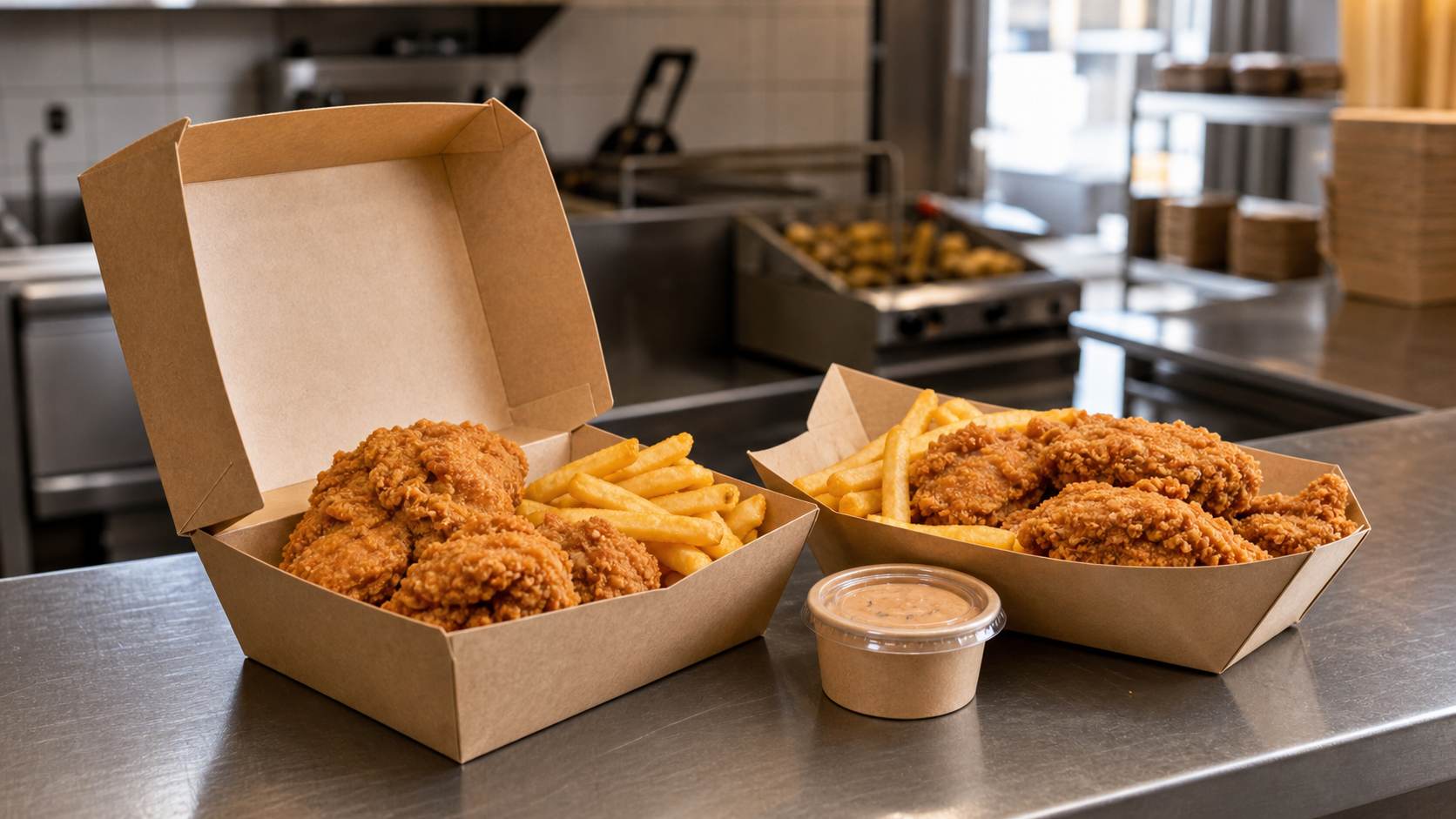
Two dishes that look similar can need different packaging. Fried food may need ventilation to manage trapped steam; saucy food may need a container-and-lid combination suited to the fill level and journey; a hot meal with several components may need separation and stable stacking.
| Food condition | Packaging question |
|---|---|
| Fried or crisp | Is controlled ventilation worth evaluating to manage trapped steam? |
| Oily | Is the selected SKU and construction appropriate to test with the expected oil exposure? |
| Saucy | Does the container-and-lid combination suit the intended fill level and journey? |
| Hot and heavy | Can the packed meal be handled and stacked as planned during the delivery journey? |
| Mixed meal | Should components be separated to help preserve their intended texture? |
Test the delivery journey
Pack a representative portion, close the pack as staff would, place it in the intended bag, and simulate the expected delivery time. Record what happens with the selected SKU: leakage, softening, steam build-up, stacking, and opening can all change the customer experience.
Do not rely only on an empty-container test. Fill level, food temperature, oil, sauces, bag position, and time can change the result. Confirm a product's suitability for the actual menu and delivery conditions with the supplier before ordering.
Build a menu-to-packaging matrix
List each menu family, portion size, serving temperature, likely travel time, and the pack selected for testing. Restaurant groups can use the matrix to keep location decisions consistent; distributors can use it to compare formats with customers.
A menu-to-packaging matrix gives each SKU a clear use-case record instead of selecting containers by appearance alone. Update the record when a recipe, portion, bagging method, or delivery pattern changes.
Frequently Asked Questions
Does ventilation always improve fried food delivery?
No. It may help manage trapped steam in some uses, but the suitable design depends on the food, travel time, and the need to retain heat. Test the actual menu item.
How can I reduce grease transfer?
Select a SKU to test with the expected food condition, avoid overfilling, and test the packed meal under realistic delivery conditions. Confirm the selected SKU with the supplier.
Is one container suitable for every hot menu item?
Usually not. Different foods create different heat, moisture, oil, portion, and handling conditions.
Should we test with a delivery bag as well as the container?
Yes. Bag position, stacking, and travel time can affect the complete packaging system, so test them together.
Match packaging to your menu
Prepare a product brief describing the food, portion, delivery condition, and destination market, then contact TakeawayPack to discuss suitable packaging formats. For a broader product-selection checklist, read How to Choose Disposable Take-Out Containers.