Fried Chicken Delivery Boxes With Vented Lids: How to Keep Chicken Crisp for 30–45 Minutes
Fried chicken can lose its crisp coating quickly when steam is trapped inside a closed takeaway box. For delivery journeys of around 30–45 minutes, the packaging should balance three needs: enough ventilation to let moisture escape, enough structure to protect the food, and a size that does not leave the chicken sliding around. A vented paper box or lidded container can help, but no box can guarantee the same texture as food served immediately from the fryer. The best choice depends on portion size, side dishes, stacking, and the real delivery route.
2026-08-11 - 6 min read
Summary
Fried chicken can lose its crisp coating quickly when steam is trapped inside a closed takeaway box. For delivery journeys of around 30–45 minutes, the packaging should balance three needs: enough ventilation to let moisture escape, enough structure to protect the food, and a size that does not leave the chicken sliding around. A vented paper box or lidded container can help, but no box can guarantee the same texture as food served immediately from the fryer. The best choice depends on portion size, side dishes, stacking, and the real delivery route.
Why fried chicken softens during delivery
Freshly fried chicken gives off heat and water vapour. When that vapour meets a cool, closed lid, it can condense and settle back onto the coating. The result is a softer crust, especially when a box is tightly packed or when hot chicken is held for a long time before dispatch.
The packaging task is therefore not simply to keep heat in. It is to manage steam without leaving the food exposed. A container that seals too tightly may hold warmth but trap moisture. A package that is too open may release heat too quickly and offer less protection during transit.
For a 30–45 minute delivery window, the practical goal is usually to preserve a good eating experience rather than promise fryer-fresh crispness. The restaurant should test the full order as it is actually packed, queued, carried, and delivered.
Choose a box with controlled ventilation
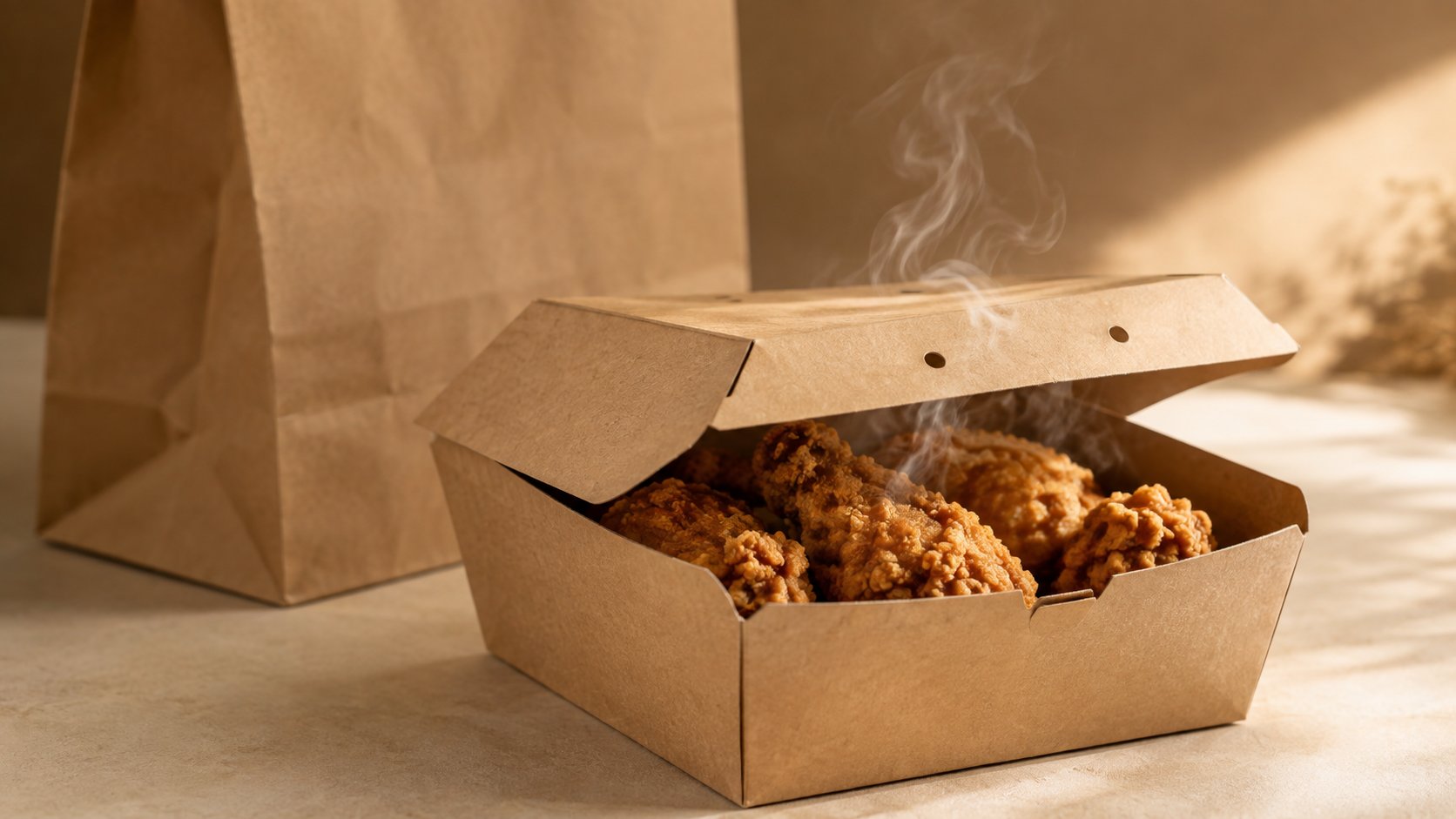
A fried chicken box with purposeful vents is often a sensible starting point for hot, crisp foods. Small openings in the lid or upper side walls give steam a route out while the box remains closed enough for transport.
Vent placement matters. Openings near the top can help steam rise away from the food. They should not be so large that crumbs, sauce, or heat escape freely. The lid also needs to close securely so that the box does not open when riders turn, brake, or stack orders.
Avoid treating ventilation as a universal answer. The right amount of airflow varies with portion temperature, chicken quantity, coating, sauce, ambient weather, and delivery time. A useful buying brief describes the actual delivery conditions and asks for a prototype or sample to test.
Match the box structure to the order
Different chicken orders need different structures. A small wings order may work in a compact folding box. A larger mixed order may need a deeper box or a handled format for easier carrying. A family portion may need a more reinforced structure that remains stable when stacked.
The internal fit is important. When there is too much empty space, chicken and sides can move during the ride. When the box is overfilled, food can press against the lid and block airflow. Select a size around the normal serving volume, then test it with the final food arrangement.
If fries are included, consider whether they should share the same package. Fries and chicken both release heat, and a crowded shared box can increase moisture around the food. Separate compartments or separate packs may make the order easier to organise, but the best setup should be confirmed in a live delivery trial.
Consider grease resistance and a stable base
Fried food packaging should be selected for contact with hot, oily food. A grease-resistant surface can help the outside of the pack stay cleaner and can improve handling and presentation. It should also be paired with a structure that stays upright during packing, carrying, and stacking.
The closure, folds, and base are just as important as the paper surface. A box that opens easily or bows under the weight of a large portion can create spills and a poor customer experience. For delivery, test the box after it has held the food for the intended route time, not only when it is empty on a worktable.
Use the right packaging workflow in the kitchen
Even a well-chosen vented box can perform poorly if it is packed too early. Where service flow allows, pack close to dispatch so the chicken spends less time releasing steam inside the container.
Do not cover vents with stickers, tape, or tightly wrapped bags. If a carry bag is required, leave enough room around the food pack and avoid compressing it under heavy items. Keep sauces in suitable separate containers where possible; loose sauce can soften the coating and complicate delivery handling.
A simple test can reveal useful issues. Pack a representative order, hold it for the expected delivery time, then check crispness, heat, condensation, grease marks, closure performance, and how the food looks when opened. Repeat the test with the delivery bag and the same stacking pattern used in service.
What to include in a fried chicken box RFQ
A clear request for quotation helps a packaging supplier recommend a more suitable option. Include:
- the chicken format and portion weight;
- whether fries, sides, or sauces share the pack;
- the target delivery time and typical travel conditions;
- the preferred box style, lid, and ventilation requirement;
- the required material, size or capacity, and expected quantity;
- printing, colour, and logo requirements; and
- the destination country or port for the project.
This information makes it easier to compare structures, discuss coatings and lid matching, and request samples or drawings before committing to a bulk order.
Work with TakeawayPack on the packaging brief
TakeawayPack coordinates food-service packaging projects with multiple packaging manufacturing partners. For a fried chicken delivery project, its enquiry process can cover the product category, material, size or capacity, expected quantity, printing requirements, and destination country or port. During project discussions, TakeawayPack can also discuss structure, coating, capacity, printing, lid matching, and carton packing.
For custom printing, TakeawayPack prepares a digital proof from the customer’s files and proceeds to production only after written confirmation. Samples, drawings, or print-file alignment can also be discussed during the enquiry stage. Custom minimum order quantities depend on the product and production method, while some stock items may support trial orders.
To start with the details that affect crispness and delivery handling, visit https://takeawaypack.com and submit an RFQ with your menu format, delivery window, pack size, and branding needs.