Fried Food Takeout Containers That Help Keep Fries and Chicken Crisp
Fried foods stay more appealing in delivery when the package manages steam, limits wet contact under the food, and protects the order from crushing. Choose the container around the menu item, portion, holding time, and delivery route, then confirm the choice with a real packing test. Estimated…
2026-09-15 - 6 min read
Summary
Fried foods stay more appealing in delivery when the package manages steam, limits wet contact under the food, and protects the order from crushing. Choose the container around the menu item, portion, holding time, and delivery route, then confirm the choice with a real packing test. Estimated reading time: 3 minutes
Start with steam and surface contact
A fried coating starts to soften when hot food gives off steam inside a closed pack. As the air cools, that steam can collect on the container and return to the food as condensation.
The bottom of the portion matters too. Fries, wings, and breaded fillets can sit in moisture or oil when they are pressed against a flat, enclosed base. The problem becomes more noticeable when a hot order is packed tightly, stacked, and held before handoff.
No single container guarantees a crisp result. The useful goal is to let excess steam leave without making the food hard to carry, easy to crush, or exposed during delivery.
Translate the menu into packaging requirements
Before selecting a format, separate the items that behave differently in transit. Thin fries need room for air between pieces. Larger fried chicken or fish portions need headspace and protection from pressure. Mixed orders need separation so that hot sides do not steam against the main item.
Then map the actual journey: how long food waits after frying, whether sauces travel in the same pack, whether the order goes in an insulated bag, and how many packages are stacked. These details affect the useful balance between ventilation, structure, and portion fit.
A practical test is better than a catalogue assumption. Pack the normal portion immediately after cooking, hold it for the expected delivery time, and inspect both the top and bottom of the food before approving a format.
Five container approaches for fried food delivery
1. Open fry boxes and paper boat trays
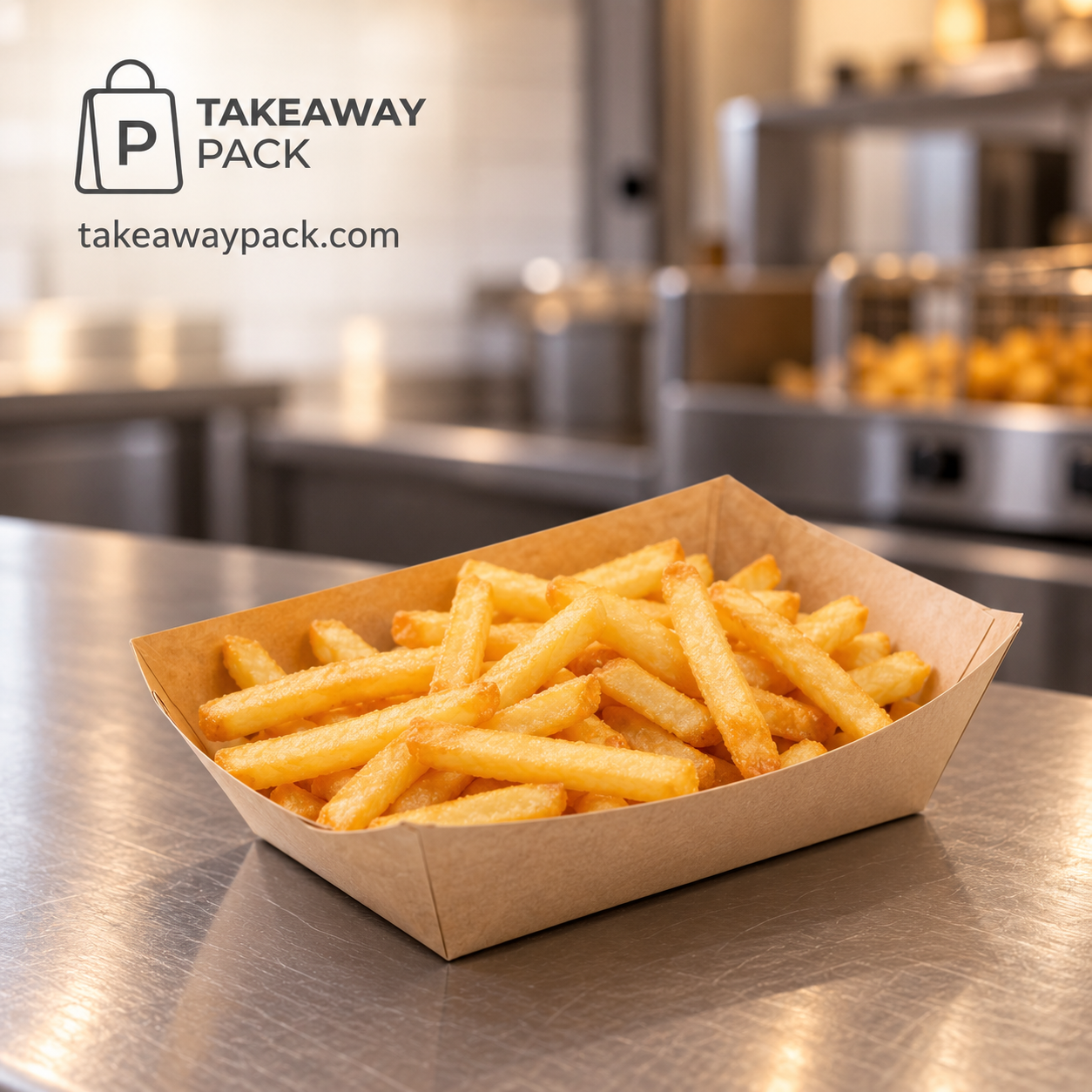
An open-top fry box or boat tray gives steam a direct route out. It can suit fries, onion rings, and smaller fried snacks when the delivery window is short and the food does not need a tight closure.
The tray should fit inside the carrying bag without being compressed. Leave room above the food rather than packing fries into a dense, flat layer. If a secondary outer pack is needed, check that it does not close off the airflow that the inner tray provides.
2. Hinged containers with deliberate venting
A hinged container can protect larger portions while still allowing steam to escape when the design includes vents or a controlled opening. This approach is useful for fried chicken, fish, and combination meals that need more protection than an open tray.
Vent placement and size should match the menu, not just the appearance of the container. A design that is too closed can hold humidity; a design that is too open can sacrifice heat retention or spill protection. Test the intended lid, portion, and route together.
3. Rigid paperboard or corrugated packs with vents
For heavier portions and multi-item orders, a more rigid paper-based pack can help preserve shape during stacking. Venting remains important: structural strength alone does not remove moisture.
Look for a layout that keeps the food from being pressed against the lid and that offers a defined route for steam to leave. This type of pack is often considered for fried seafood, larger chicken portions, or meals that combine several fried items, but the exact food load and closure still need testing.
4. Containers with a raised or textured base
A raised, ribbed, or textured base can reduce the amount of food surface touching the lowest point of the pack. The purpose is to create small channels where moisture is less likely to sit directly under a breaded coating.
The pattern must support the food without tearing or concentrating pressure on delicate pieces. Heavier foods may need a more pronounced support pattern, while lighter items may only need modest separation from the base.
5. Perforated inner trays paired with an outer pack
A micro-perforated paperboard tray can be used as an inner layer for smaller fried items. The outer pack supplies carrying protection while the inner tray is selected for controlled airflow.
This combination needs careful validation. The outer pack must not block the tray's openings, and sauces, liners, or side dishes should not introduce moisture into the same space. It is most useful when the menu needs both a protected handoff and a separate path for steam.
Make the packing routine support the container
Packaging works with the kitchen process, not in isolation. Avoid sealing food immediately under a lid if the menu and chosen design need a brief steam-release step. Keep sauces separate when their placement would wet the fried food, and do not overload a pack just because it physically closes.
Train the packing team on the approved portion, orientation, liner choice, and closure method. A container that performs well in a controlled test can still disappoint if it is packed differently during a busy service.
Use a buying checklist before you standardize
Ask these questions for every fried-food format:
- What item, portion weight, and number of pieces will go into the package?
- Where can steam leave after the food is closed or placed in a delivery bag?
- Does the base keep food away from pooled moisture, or is a different structure needed?
- Can the pack resist the expected stacking and handling without crushing the food?
- Are sauces, sides, liners, and utensils changing the moisture or space inside the pack?
- Has the full packed order been tested over the real holding and delivery window?
The answers should be written into the purchasing specification. A product name alone is not enough; the decision needs the item, material, dimensions, closure, and use case to be clear.
Discuss the specification with Takeawaypack
Takeawaypack's official product range includes foodservice cups, containers, bags, trays, and branded packaging. Its buyer process emphasizes clear product specifications before quotation, which is useful when a fried-food format must be matched to a specific portion and delivery setup.
Need a container specification for your fried-food menu?Talk to Takeawaypack.