Ghost Kitchen Pack-Out Design for Multi-Brand Delivery Operations
A delivery-only kitchen should design its pack-out area as a working part of production, not as a final counter added after the cooking line is planned. Start with the menu and packing sequence, give every virtual brand a controlled packaging record, separate brand-specific materials at the dispatch bench, and use one final order check before handoff. This approach helps a shared kitchen make its own workflow clearer without assuming that any packaging configuration is suitable for every menu, route, or requirement.
2026-08-19 - 5 min read
Summary
A delivery-only kitchen should design its pack-out area as a working part of production, not as a final counter added after the cooking line is planned. Start with the menu and packing sequence, give every virtual brand a controlled packaging record, separate brand-specific materials at the dispatch bench, and use one final order check before handoff. This approach helps a shared kitchen make its own workflow clearer without assuming that any packaging configuration is suitable for every menu, route, or requirement.
Design the Kitchen Around the Delivery Handoff
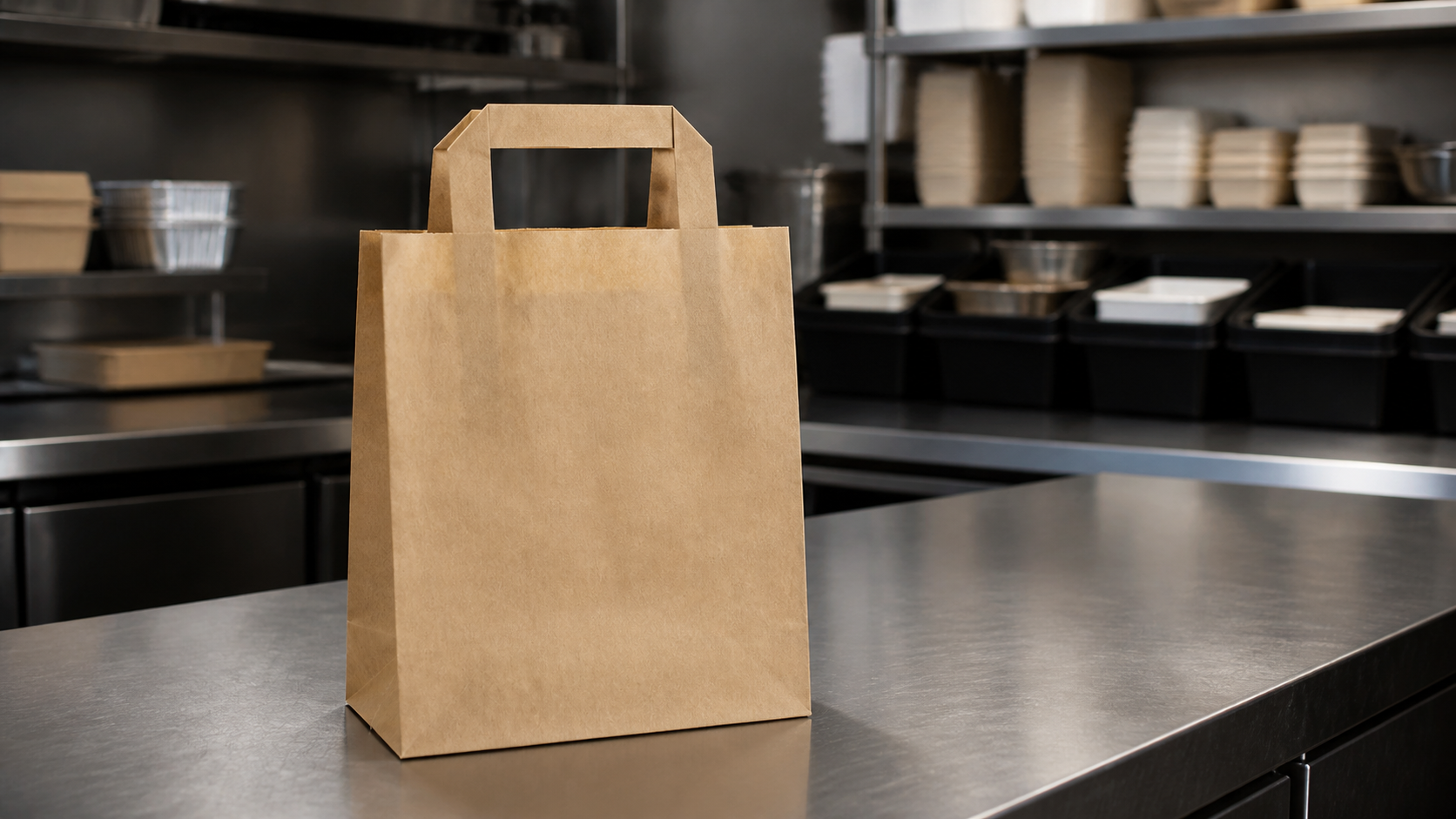
A ghost kitchen has no dining room to absorb mistakes or explain an order in person. The dispatch bench is where the prepared food, brand identity, order record, and delivery handoff meet.
Plan that area at the same time as the cooking and prep zones. Give it defined space for packing, completed-order staging, brand materials, and the people who perform the final check.
A separate location does not need to be elaborate. It needs a repeatable sequence that staff can follow when several orders are being finished at once.
Start With the Menu, Then Map the Pack-Out
List each menu item with its components and the order in which they are packed. Note which components share a container, which need a separate labelled item, and which brand materials the packer needs to reach.
Use the map to identify decisions that still need review. A category name or a similar-looking pack does not establish that two configurations are interchangeable.
Keep the record focused on the actual configuration being considered. This is an operational control, not a statement about product performance or suitability.
Build a Zone-Based Multi-Brand Workflow
Multi-brand kitchens can share parts of the cooking operation while keeping brand-specific work easy to identify. The same principle can apply at the pack-out bench.
Give each virtual brand a clear location for its current packaging materials, artwork references, labels, and order markers. The purpose is to reduce interpretation at a busy moment, not to rely on staff memory.
Share the Core, Separate the Brand Materials
A kitchen may share central prep and cooking resources across complementary concepts. At dispatch, however, brand-specific containers, bags, labels, and inserts should be organised so the packer can identify the intended brand before closing the order.
Create a short pack-out sheet for each brand. It can show the brand name, the controlled packaging description, the approved artwork version where relevant, and the packing sequence for the menu items covered by that sheet.
If a packaging item, artwork file, or component pairing changes, issue a revised sheet. Do not treat a prior reference as approval for a changed configuration.
Separate Brand Identity From Order Identity
A brand marker identifies the virtual concept. An order reference identifies the specific customer order and its contents. These are different checks, and both can be useful at the dispatch bench.
Before handoff, compare the brand marker, order reference, item count, and any current packing instruction with the order record. When something is unclear, stop for clarification rather than inferring the intended item from a similar pack.
Make Dispatch a Controlled Final Step
Cooking capacity matters in a delivery-only operation, but completed orders also need an orderly place to wait for handoff. Define where finished orders are staged and who may move them from packing to pickup.
Keep the staging rule simple. For example, the packer can complete the pack-out check, place the order in its assigned pickup location, and record an exception when the expected identity or contents cannot be confirmed.
This produces a usable internal trail without claiming that the process prevents every mistake or determines any external outcome.
Use Technology as a Record, Not a Substitute for Review
An order display or other internal order record can help the kitchen route work to the right station and show the current order details. The final pack-out still needs a person to compare the physical order with that record.
Use one shared format for brand names, order references, and exceptions. Consistent wording reduces the need to interpret a different system for each concept.
Keep the System Ready for Change
Virtual-brand menus and packaging artwork can change quickly. Review the pack-out record whenever a brand, menu item, artwork revision, packing sequence, or component arrangement changes.
Retain the current version at the work area and remove superseded examples. That makes it easier for a shift team to use the same reference rather than reconstructing a decision from memory.
Collect observations by brand and menu item. A recurring question can trigger a review of the station guide, but it does not by itself establish the cause of a problem or the suitability of a packaging item.
Prepare a Clear Packaging Inquiry for a Multi-Brand Project
A well-scoped inquiry starts with the project facts: the packaging category, material, size or capacity, expected quantity, print or logo customisation, and destination. For a multi-brand project, attach the current brand-packaging sheets so the discussion starts from the correct versions.
Keep configuration-specific questions open for confirmation. Structure, coating, capacity, printing, lid matching, carton packing, samples, drawings, and print-file alignment can each need separate review for the item under discussion.
Where TakeawayPack Fits In
TakeawayPack is a foodservice-packaging brand and procurement coordinator that works with multiple packaging manufacturers. Its online catalogue covers foodservice packaging categories including cups, bowls, boxes, containers, trays, lids, bags, and cutlery.
For a multi-brand packaging inquiry, TakeawayPack can collect the product or category, material, size or capacity, expected quantity, print, colour or logo customisation, and destination details. The project discussion can then keep configuration-specific questions explicit rather than assuming that a category establishes a particular specification.
Start a defined discussion for your ghost-kitchen pack-out project at TakeawayPack.
https://takeawaypack.com