Grab-and-Go Food Packaging: How to Build a Practical Format System Across Your Menu
Grab-and-go packaging should be selected around the food, its holding conditions, and the way customers encounter it in display. A small format system can reduce unnecessary complexity, but one universal tray or box should not be assumed to suit hot, cold, dry, sauced, and liquid menu items equally well.
2026-08-19 - 4 min read
Summary
Grab-and-go packaging should be selected around the food, its holding conditions, and the way customers encounter it in display. A small format system can reduce unnecessary complexity, but one universal tray or box should not be assumed to suit hot, cold, dry, sauced, and liquid menu items equally well.
The practical approach is to define a few use groups, test each format with the real menu and display environment, and only then decide which formats can be shared.
Start With the Service Model, Not the Package
Grab-and-go food is prepared and packed before a customer chooses it. The package therefore has two jobs: protect the food during holding and help the customer identify, handle, and select it.
A useful brief records whether the item is chilled or hot, how long it will be held, whether it contains oil, sauce, or free liquid, and how it will be displayed. It should also note whether food visibility, stacking, or a label area matters to the sale.
This prevents a format from being chosen only because it looks versatile on a shelf.
Build Use Groups Before Reducing Packaging Formats
Group Foods by Their Packaging Demands
A menu can often be organised into a few practical groups instead of treating every dish as a separate packaging project.
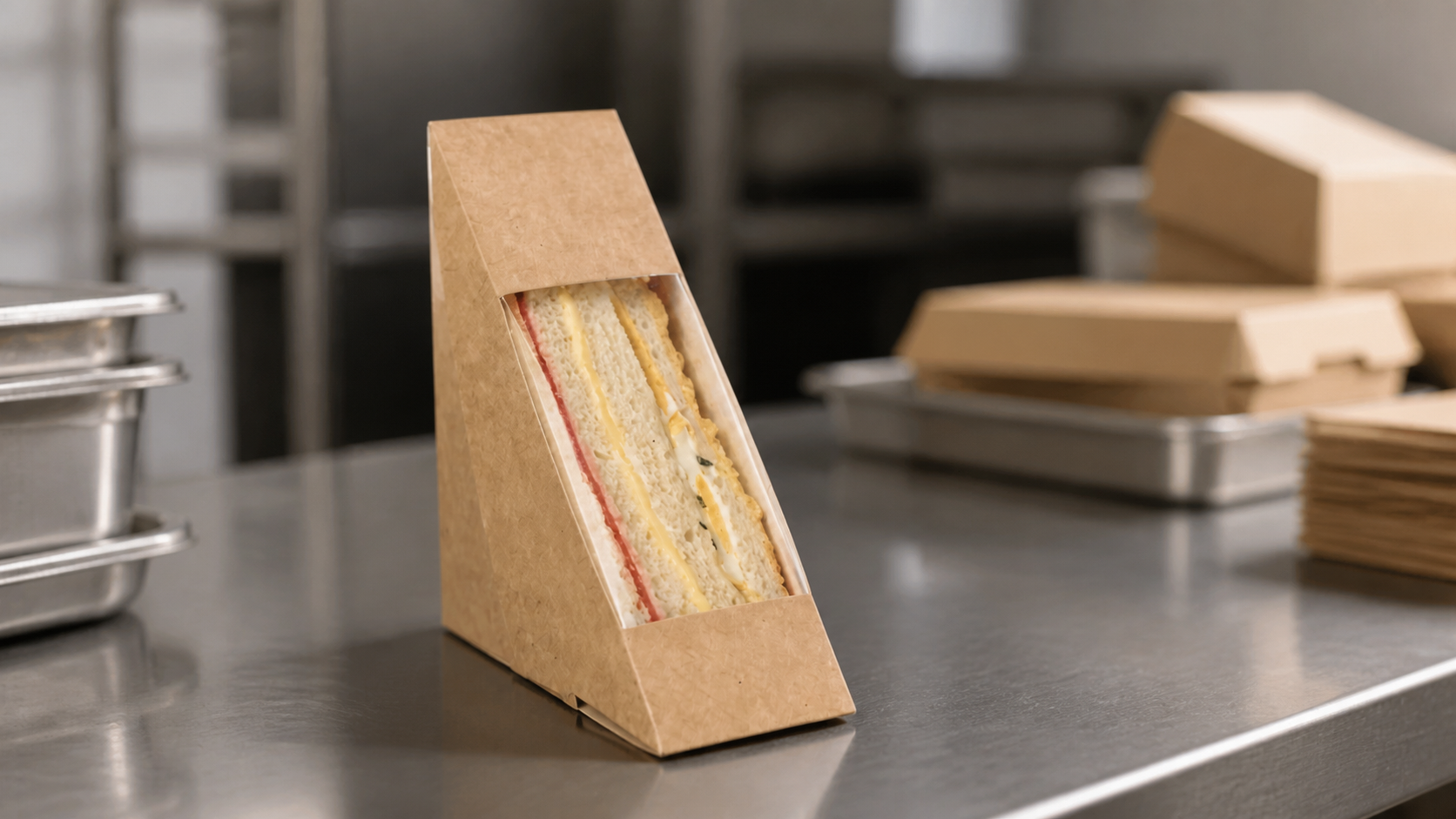
For example, dry bakery items and sandwiches may need light structural protection and easy visibility. Chilled salads and prepared meals may place more weight on product visibility and moisture management. Hot bowls, curries, soups, and noodles require their own review because heat, steam, sauce, and handling can change the packaging decision.
The goal is not to force every item into one package. It is to identify where the same functional requirements genuinely overlap.
Use a Core Format Plus Exceptions
A core format can be useful when several menu items share the same food state, portion profile, holding conditions, and display needs. Exceptions should remain available for items with a different risk profile, such as a liquid dish, a steam-sensitive hot meal, or a food that needs a different presentation.
This structure gives teams a simple operating system without pretending that every item behaves the same way.
Match Functional Features to the Menu
Visibility and Shelf Presentation
Clear lids, windows, or transparent containers can help customers recognise a product without opening it. They are most relevant when the appearance of a salad, sandwich, fruit portion, bakery item, or prepared meal is part of the purchasing decision.
Visibility should still be checked under the actual display conditions. Condensation or an unsuitable lid can change the result, particularly where hot food or chilled storage is involved.
Stackability and Replenishment
A consistent footprint can make a display easier to organise and replenish. Before standardising, test the intended formats in the real cabinet, counter, or shelf.
Check that the package remains stable, is easy for a customer to pick up, and still leaves enough room for the required product information. A taller, domed, or irregular format may be the better choice when presentation needs outweigh display density.
Moisture, Grease, and Liquids
Food with sauce, oil, broth, or extended holding time needs a separate practical check. A material or closure that works for one menu item should not be treated as evidence that it works for another.
Test filled packages through the intended holding and handoff conditions. Review the lid fit, the package structure, visible condensation, and the customer-facing presentation before expanding use across the menu.
A Simple Test Plan for a Smaller Packaging System
Start with the proposed core formats and list the menu items that would use each one. Include the food temperature, expected holding conditions, moisture level, closure needs, display method, and label placement for every item.
Run a small in-operation trial rather than judging an empty sample. Observe packing, stacking, display, customer pickup, and the package condition at handoff.
Keep the formats that meet the defined use group. Move foods with different conditions into an exception format. The result is a packaging system based on observed use, not an assumption that a single tray or box can cover every category.
How TakeawayPack Can Support the Format Brief
TakeawayPack’s catalog covers foodservice packaging categories including cups, bowls, boxes, containers, trays, lids, bags, and cutlery. That category range can be a practical starting point when building a core-format and exception-format brief.
For a category-level enquiry, provide the product type, material preference, size or capacity, expected quantity, any printing or logo needs, and destination. Discussing the intended food and operating conditions alongside those details makes it easier to assess the relevant options without assuming a particular format is suitable before review.
Explore the catalog and prepare an enquiry.
https://takeawaypack.com