
Hot Food Delivery Packaging: Choose Insulation, Venting, and Separation by Delivery Time
A single takeaway box cannot protect every dish during a 15–45 minute delivery. Hot rice and saucy dishes need containment and heat retention. Fried foods need a controlled way for steam to leave. Cold components need distance from heat and condensation. The practical answer is a small, menu-based packaging system: choose a primary container and lid for each food behavior, then add insulation and separation as the delivery window grows. Start with the food, not the name of the box. Ask four questions for every menu component: Is it wet or dry? Does it need to stay hot, cold, crisp, or spill-free? Will steam improve or damage its texture? Will it travel with a conflicting component, such as fries beside curry or a salad beside hot rice? The answers create a workable pack-out standard for each route length.
2026-09-01 - 9 min read
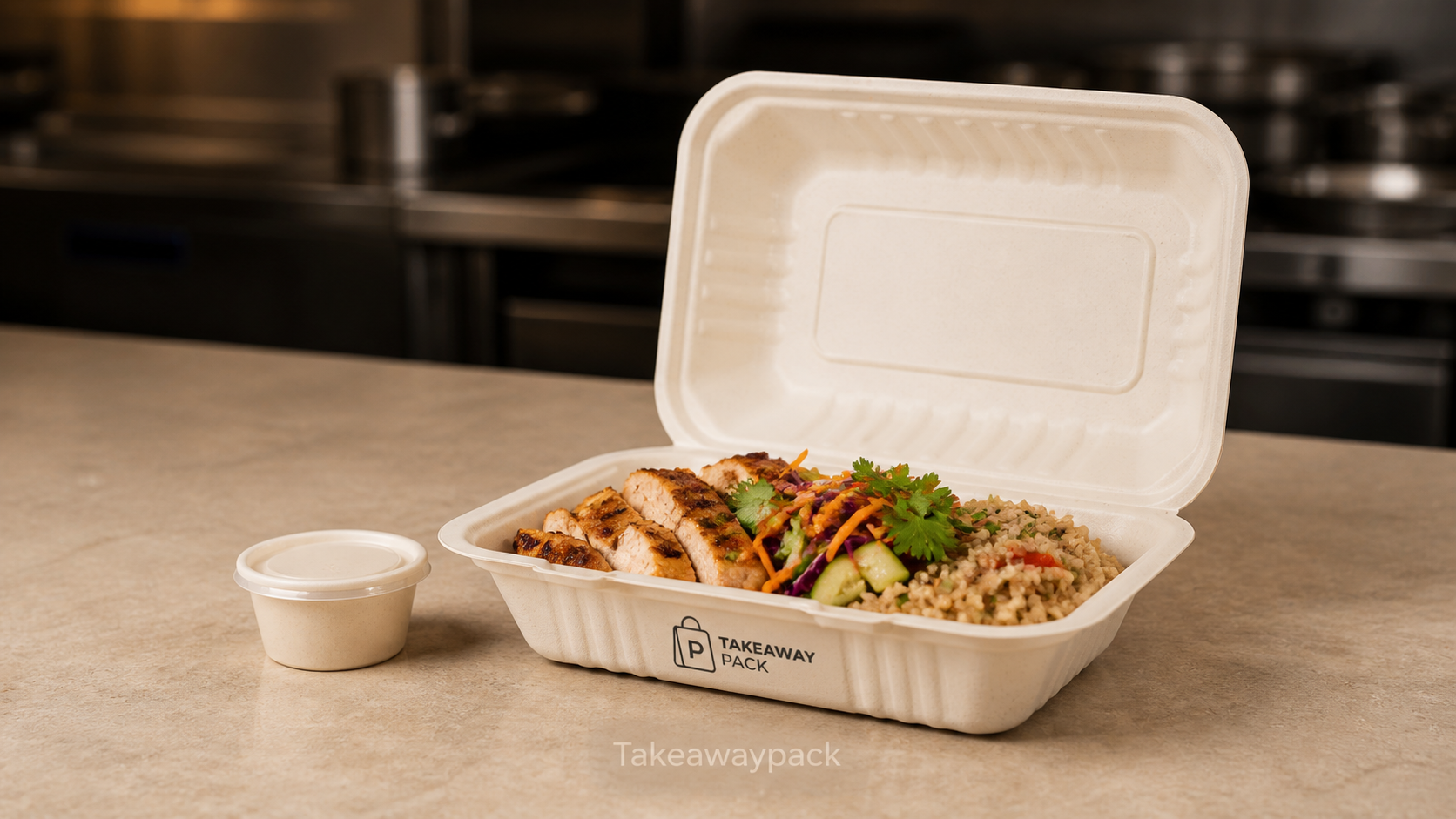
Summary
A single takeaway box cannot protect every dish during a 15–45 minute delivery. Hot rice and saucy dishes need containment and heat retention. Fried foods need a controlled way for steam to leave. Cold components need distance from heat and condensation. The practical answer is a small, menu-based packaging system: choose a primary container and lid for each food behavior, then add insulation and separation as the delivery window grows.
Start with the food, not the name of the box. Ask four questions for every menu component:
- Is it wet or dry?
- Does it need to stay hot, cold, crisp, or spill-free?
- Will steam improve or damage its texture?
- Will it travel with a conflicting component, such as fries beside curry or a salad beside hot rice?
The answers create a workable pack-out standard for each route length.
Why One Box Fails Across a Delivery Menu
A container is not just a vessel. Once food is packed, it becomes a small environment where heat, vapor, liquid, headspace, lid fit, stacking, and courier movement interact.
A sealed container can be the right choice for soup, curry, braised dishes, or a saucy rice bowl because it prioritizes containment. The same closure can be a poor choice for fried chicken or fries: steam stays inside, condenses on the lid, and returns to the crisp surface as moisture.
The opposite mismatch also causes problems. A heavily vented box may help a dry, hot item release vapor, but it is not a substitute for a secure lid on a liquid-heavy dish. Cold food has a third set of needs: it should not share a warm, humid enclosure with a steaming meal.
For mixed orders, separation is often more valuable than searching for a “better universal box.”
Build Four Packaging Families
A restaurant does not need a different SKU for every menu item. It needs a short, clearly named library that staff can apply consistently.
1. Hot, moist, or saucy foods
**Examples:** rice bowls, noodles with sauce, curries, stews, braised dishes, gravies, soups.
**Primary risk:** leakage, rim contamination, loss of moisture, and movement inside the bag.
**Packaging direction:** use a container and matching lid intended to stay closed at the normal fill level. Leave practical headspace rather than filling into the closure area. Treat the lid as part of the specification, not an interchangeable add-on.
**Separation rule:** keep sauces, crunchy toppings, herbs, and dry garnishes in dedicated cups or separate sections when they would lose quality in the main container.
For liquid-heavy dishes, prioritize a secure sealed configuration and test it with the actual hot portion. For a rice dish with only a modest sauce load, compare a more moisture-retentive setup with a controlled-vapor option; the dish and route should decide which performs better.
2. Hot, crisp foods
**Examples:** fried chicken, fries, tempura, breaded seafood, egg rolls, toasted sandwiches, roasted potatoes.
**Primary risk:** trapped vapor softens the exterior before the customer opens the order.
**Packaging direction:** use a rigid format with enough room above the food and a controlled vent path where testing supports it. Add a grease-resistant liner when it helps keep the food out of surface oil. Pack hot sauces separately.
**Avoid:** placing fries beneath a steaming entrée, sealing crisp food in the same humid space as a wet component, or overfilling the box so the food touches the lid.
Venting is not a reason to leave the food exposed. It is a way to reduce avoidable condensation. The correct venting level depends on the portion, food temperature, fill level, bag setup, and travel time.
3. Mixed meals with conflicting textures
**Examples:** rice with fried protein and vegetables; curry with a crisp side; a hot entrée with salad; a meal with separate sauce or dressing.
**Primary risk:** moisture and heat migrate from one component to another.
**Packaging direction:** create zones. Use a sealed or moisture-retentive pack for the wet hot component, a vented pack for the crisp component, and a separate cold container when needed. Use compartments only when their divider depth, lid fit, and carrying orientation have been tested with the actual meal.
A divider does not automatically stop vapor, sauces, odors, or movement. When quality is critical, separate containers are often the more reliable choice.
4. Cold dishes and desserts
**Examples:** salads, chilled sides, cold sauces, sushi-style items, desserts.
**Primary risk:** heat transfer and condensation from nearby hot food.
**Packaging direction:** use a matched lid suitable for the item and keep the cold component physically separate from hot packs. For longer routes, use a dedicated cold compartment or separate bag strategy that fits the restaurant’s food-safety process.
Do not put a cold salad in the same enclosed hot zone as steaming rice or soup and expect a lid alone to solve the problem.
Match the Pack-Out to a 15–45 Minute Delivery Window
15–20 minutes: establish the right basic environment
At short range, the first priority is still a correct food-to-container match.
- **Hot rice and saucy dishes:** use the specified container-and-lid pair, keep liquids upright, and do not overfill.
- **Fried foods:** use the validated vented format and keep sauces separate.
- **Mixed meals:** keep wet, dry, hot, and cold components from sharing one cavity where possible.
- **Cold dishes:** keep them away from hot packs from the moment of bagging.
Short delivery time does not make a poor pack-out harmless. The first few minutes after packing can be the highest-steam period.
20–35 minutes: protect the weakest component
As travel time grows, choose the configuration around the component most likely to disappoint the customer.
- Add an insulated outer carrier for hot items when the route and operating process support it.
- Use physical separation before adding more material. A separate fry box or sauce cup can prevent more quality loss than a thicker universal container.
- Check whether the lid stays seated after stacking and whether cups remain upright.
- Keep crisp items out of the hottest, most humid zone of the order.
For a mixed meal, do not assume the rice must travel beside the fries simply because they were plated together. The delivery pack-out can separate them while preserving the intended meal experience.
35–45 minutes: design for the worst realistic route
Longer routes require the complete system to work: food, container, lid, cup, bag, stacking pattern, and courier handling.
- **Wet or liquid-heavy dishes:** use the most secure tested container-and-lid combination, preserve practical headspace, and protect it from compression.
- **Crisp food:** use the most stable validated vented configuration; separate sauces and keep the item away from steam sources.
- **Cold components:** use a dedicated cold zone or separate bag process rather than placing them beside hot food.
- **Mixed meals:** split the order into component-specific packs if a shared tray cannot maintain texture and containment.
Do not promise a particular box will work for every 45-minute route. The right standard is the one that performs with your actual recipe, portions, dispatch temperature, bag, stacking, and handling conditions.
A Simple Packaging Matrix for Staff
| Food behavior | Container and lid direction | Add-ons to test | Keep separate from |
|---|---|---|---|
| Hot rice, noodles, curry, stew | Matched secure closure; select for moisture and containment | Insulated outer carrier; separate toppings | Crisp fried foods and cold dishes |
| Soup, gravy, or high-liquid dish | Secure tested container-and-lid pair with practical headspace | Upright bag position; compression protection | Dry sides and loose sauces |
| Fried or toasted food | Rigid format with controlled vapor release | Grease-resistant liner; separate dip cup | Steam, wet sides, and sealed hot-liquid packs |
| Cold salad or dessert | Matched cold-item closure | Dedicated cold zone or separate bag process | Steaming hot food |
| Mixed meal | Component-specific containers or a proven zoned tray | Sauce cups; bag divider; clear packing sequence | Any incompatible moisture or temperature zone |
Give each setup a simple internal name—such as **Hot Moist**, **Hot Crisp**, **Mixed Meal**, and **Cold Fresh**—and map menu items to one of them. This makes the process easier to train, stock, and audit than asking every packer to make a new decision during a rush.
Test the Complete Delivery System Before Standardizing
A sample container on a counter does not prove delivery performance. Test a normal order at the route windows you actually serve: 15, 30, and 45 minutes where relevant.
For each test, record:
- food temperature and visible condensation;
- crispness, moisture, and presentation at opening;
- leaks around the rim, lid, and sauce cups;
- lid engagement after stacking and movement;
- container stability and bag orientation;
- packing time and whether staff can repeat the method during a busy service.
Change one variable at a time where possible: venting, fill level, lid pair, liner, component separation, or bag position. A route test should use real food and a fully packed order, not an empty container. The result is a defensible operating standard instead of a material assumption.
Turn the Results Into a Menu Pack-Out Sheet
For every delivery SKU, document the portion, normal packing temperature, chosen base and lid, acceptable fill level, sauce cup, venting instruction, bag position, and maximum intended delivery window. Add photos or short packing instructions for store teams.
Review the sheet when a recipe, portion, courier bag, or delivery radius changes. Those changes can alter steam, movement, and fill behavior enough to make a previously reliable pack-out fail.
Build a Testable Shortlist With Takeawaypack
If you are comparing options for a delivery menu, bring the menu components, portion sizes, expected order quantity, branding needs, destination, and target delivery window to the discussion. Takeawaypack’s online catalog covers foodservice packaging categories including cups, bowls, boxes, containers, trays, lids, bags, and cutlery. Its RFQ process can help organize requirements such as material, capacity, lid matching, printing, and carton packing for order-specific review.
The useful goal is not a universal container. It is a small, testable system that seals where containment matters, vents where texture needs protection, and separates components that should not share the same delivery environment. Start your packaging shortlist at Takeawaypack.