Hot Food Takeaway Bowl Shortlists Should Assess the Bowl and Lid as One Product System
Hot food takeaway bowl shortlists should assess the selected bowl and lid as one product system, not as separate catalogue items. This applies when the proposed pack will contain hot food and the lid is expected to be used during holding, collection or delivery. Buyers should require the supplier to identify the intended bowl-and-lid configuration before comparing product information or food-contact documentation. Without a confirmed pairing and configuration-specific evidence, no conclusion can be made about fit, sealing, leakage control, food-contact suitability or performance in delivery.
2026-07-30 - 4 min read
The Purchased Item Is the Configuration, Not the Bowl Alone
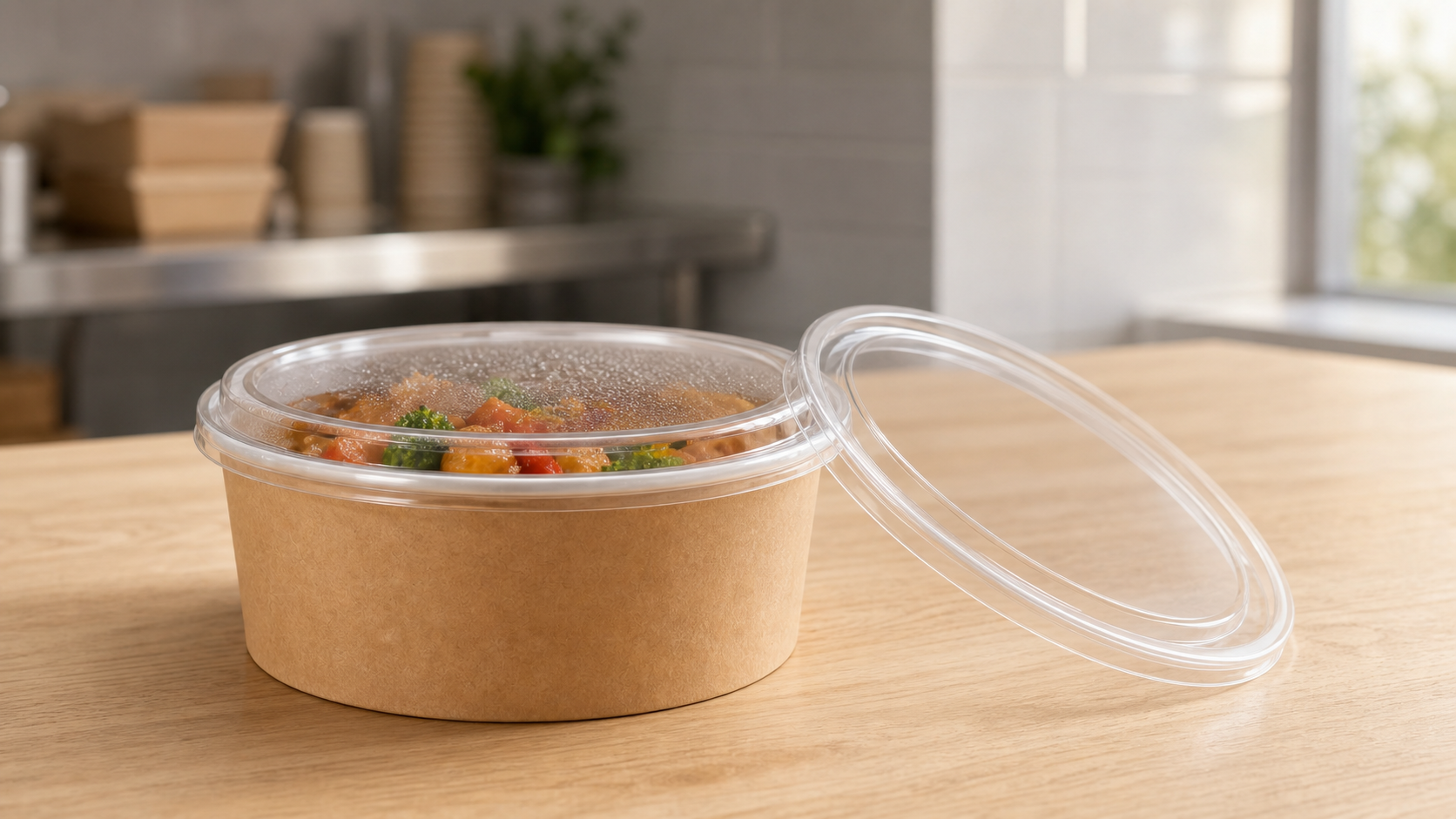
A bowl may be shown with several lids, and a lid may appear alongside several bowls. That presentation does not establish that every combination is the intended configuration for a particular project. For shortlist purposes, the relevant item is the combination the buyer plans to purchase: the identified bowl, the identified lid where required, and the intended food and delivery conditions.
This distinction matters because a review based only on the bowl can leave an important part of the food-contact system undefined. It also makes it harder to relate a quotation, image, drawing, specification or document to the same proposed pack. The first screening question should therefore be whether the supplier has clearly identified the actual bowl-and-lid arrangement under consideration.
Use One Review Scope for Both Components
The review scope should list the bowl and lid together, along with the intended food, filling temperature, sauce or liquid exposure, holding period, delivery conditions and destination. If the lid is optional for some uses, state when it is required. If different lids are being considered for the same bowl, treat each proposed configuration as a separate review item until the pairing is confirmed.
A single scope prevents the team from comparing a bowl specification from one configuration with a lid document from another. It also gives suppliers a clear request: identify the components, explain their intended pairing, and provide information that can be related to the configuration being quoted.
Apply Clear Shortlist Criteria
A candidate can move through initial screening when the proposed bowl and lid are identified well enough to assess the system against the project requirements. The buyer should be able to connect the quoted configuration to product images, drawings, specifications or other supplier records. The records should make it possible to tell which bowl and which lid are included in the review.
The comparison should not assume that a lid supplied by the same company is necessarily the lid intended for the selected bowl. Nor should it assume that a visually similar lid is interchangeable. The procurement decision is narrower: whether the supplier has supplied enough configuration-specific information to evaluate the proposed system for the stated use.
Request Evidence That Follows the Configuration
Ask for a quotation or product list that names the reviewed bowl and lid, plus available product images, drawings or specifications that identify them. Where food-contact documentation is supplied, ask what component or configuration it concerns and what intended-use and destination scope it addresses. This does not require a buyer to make a regulatory determination; it requires the buyer to verify that the evidence can be traced to the items under review.
When the bowl and lid have different relevant materials or product identifiers, the evidence request should not collapse them into a single generic description. Clarify whether the documentation addresses the relevant food-contact components and whether it can be connected to the specific configuration selected for the project.
Pause the Review When the System Cannot Be Identified
Do not shortlist a supplier on the basis of a bowl alone when a lid is required for the intended use and the proposed lid is not identified. Pause when the supplier cannot confirm the intended pairing, when the quote and product records point to different configurations, or when documentation cannot be connected to the components being reviewed. These gaps do not prove that the products are unsuitable; they mean the evidence cannot yet support the selection decision.
Buyers should also avoid turning a general claim about a product range into a claim about a selected bowl-and-lid system. Performance, compatibility and food-contact conclusions require the relevant configuration and supporting information.
Information Basis and Next Step
Send each candidate a configuration request that names the proposed bowl, proposed lid, intended food conditions, delivery conditions and destination. Ask the supplier to confirm the intended pairing and to provide product records and documentation that can be linked to both relevant components. Compare responses only after each candidate has answered against the same scope.
This article describes a procurement review method. It does not confirm that any particular bowl and lid are paired, fit together, resist leakage or meet food-contact requirements; those are configuration-specific matters that need supporting information.