Hot Food Takeaway Bowl Supplier Reviews Should Include All Relevant Food-Contact Components
Hot food takeaway bowl supplier reviews should include every relevant food-contact component in the selected configuration. This applies when the pack includes a bowl, a lid or other components that are intended to contact the food under the proposed use. Buyers should create a component map and request evidence against that defined scope before comparing suppliers. No product-level food-contact conclusion can be made where the selected configuration, its relevant components or the scope of supporting information has not been identified.
2026-07-30 - 4 min read
Define What Is Being Reviewed
The starting point is a named product configuration, not a broad category such as “takeaway bowls.” List the bowl and any lid used with it, then identify any other part of the proposed pack that is intended to contact the food. The list should follow the configuration being quoted and should be retained with the intended food, filling conditions, holding and delivery conditions, and destination.
This is a procurement control rather than a claim about product performance. It gives the buyer a defined review scope and gives the supplier a clear basis for identifying what its product records and documents concern. When a component is optional, substituted or still undecided, mark it as such rather than assuming it is covered by information supplied for another item.
Why Component Scope Changes the Shortlist Decision
A supplier may provide material information, a general food-contact statement or a document related to one part of a packaging range. That information cannot automatically be extended to every component in a selected system. A bowl and lid may have different product identifiers or relevant material information, and the buyer needs to know which component or configuration the supplied evidence addresses.
The direct decision is whether the evidence is sufficiently connected to the complete food-contact scope of the proposed pack to continue supplier review. An incomplete component list creates an incomplete evidence comparison. It does not show that a product is unacceptable, but it does mean the team cannot responsibly treat the documentation as applying to the full configuration.
Build a Component Map Before Requesting Documents
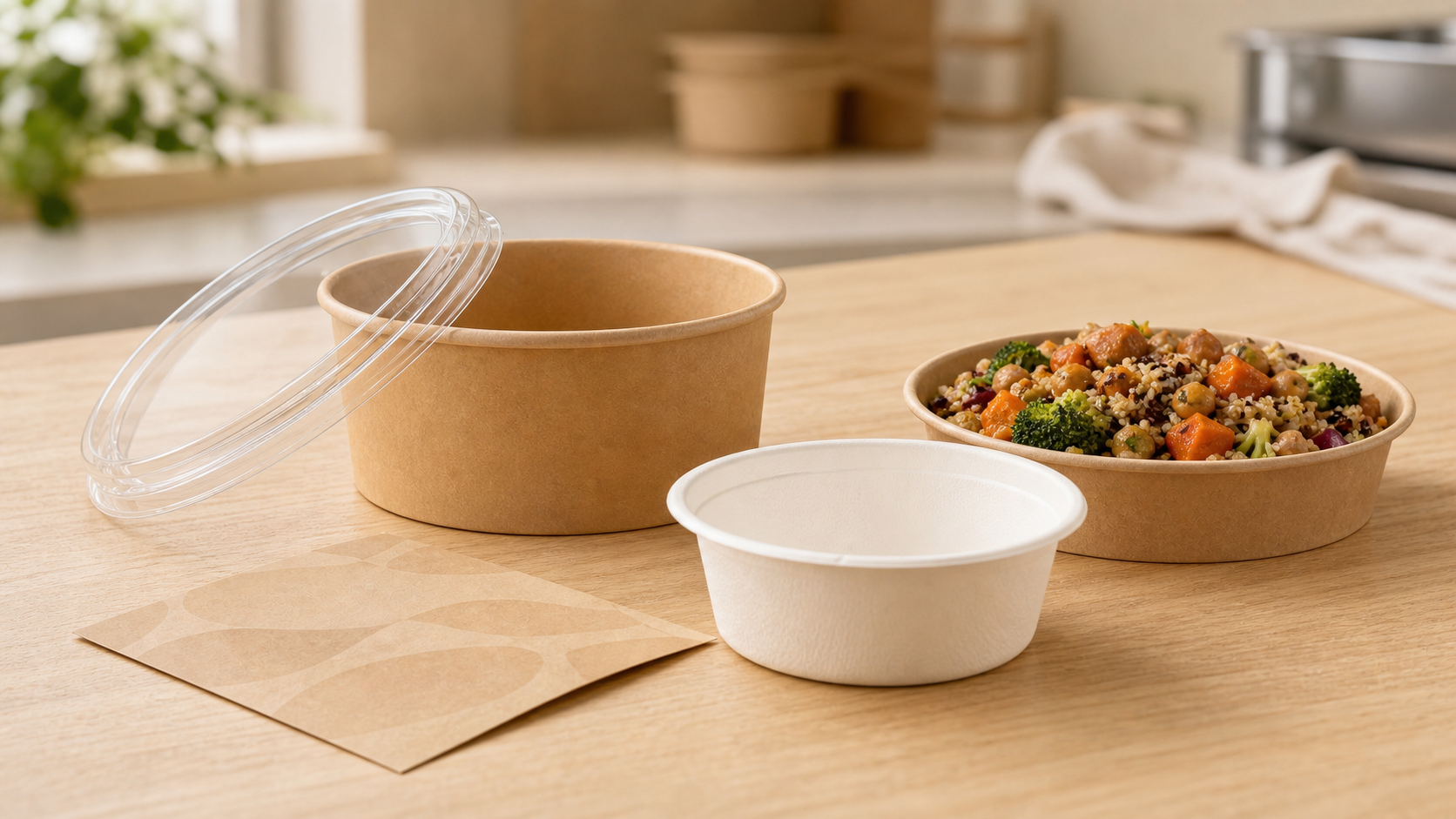
A simple component map should name each relevant item, show its role in the proposed configuration, and link it to the supplier’s product identifier where available. The map should also record whether the item is intended to contact food and whether it is part of the quoted package. For a bowl-and-lid pack, the map should make clear whether the lid is included, optional or supplied separately.
Use the same map for every candidate supplier. That makes the comparison more reliable because each supplier is asked to respond to the same components and the same intended use. It also helps prevent a product image, quotation, specification and document from being reviewed as though they describe the same item when they do not.
Request Traceable Product and Documentation Information
For each relevant food-contact component, ask the supplier to identify the product or component covered by the submitted information. Request available product images, drawings, specifications, quotation references or other records that connect the evidence to the configuration under consideration. Ask for the stated intended-use and destination scope of any food-contact documentation rather than assuming that it applies to every product in a catalogue.
The objective is traceability, not a blanket declaration. A useful response lets the buyer see what was reviewed, what component the supplier information addresses, and what remains to be clarified. If the project concerns the United States and Canada, the request should also state the intended destination so the supplier can address the applicable project scope.
Set Conditions That Pause the Review
Pause the supplier review when a relevant food-contact component is unidentified, omitted from the evidence request, or not clearly connected to the submitted product information. Also pause when the quote, product records and documentation appear to describe different configurations, or when the intended food use and destination are not stated. These are reasons to request clarification, not grounds to invent an outcome.
Do not convert supplier-level or range-level language into a finding about the selected pack. Nor should a buyer assume that documentation for the bowl alone covers an included lid or another relevant food-contact component. The review can proceed only when the scope of the evidence can be assessed against the scope of the configuration.
Information Basis and Next Step
Prepare a component map for the proposed pack, then send it with the intended food conditions, delivery conditions and destination to every candidate. Request each supplier to identify the relevant components, product records and the scope of its food-contact documentation. Compare candidates only after gaps and mismatches have been clarified.
This article provides a review method, not a test result, regulatory opinion or compliance statement for any supplier, bowl, lid or other component. Product-specific conclusions require the selected configuration and supporting information that can be traced to it.