How Much Does Packaging Cost in 2026?
Packaging cost varies widely depending on the format, material, order quantity, and whether you need custom printing. Prices range from simple, low-cost stock items to premium rigid packaging at the top end, and for most foodservice and e-commerce operators the realistic working range sits in between.
2026-08-12 - 6 min read
The Biggest Cost Drivers in Packaging
Format and Material
The format you choose has the largest effect on unit cost. A simple stock item uses far less material and labour than a rigid or heavily structured product. Material type is the second big driver: standard paperboard and kraft are flexible and economical, while special materials such as food-grade, aluminum-foil composites, and biodegradable options sit in a higher price tier because they are sourced as whole rolls or set batches.
Order Quantity
Order quantity has a steeper impact on unit cost than most buyers expect. Setup costs, plate fees, and material minimums are fixed no matter how many units you order. Spreading those fixed costs across more units is the fastest way to lower the cost per piece. Orders at the low end carry a visibly higher per-unit cost, while large runs spread the setup across enough units to bring the price down meaningfully.
One-Time Setup and Tooling
Custom packaging nearly always involves a one-time plate or tooling fee. Custom structures may need new molds or dies, and printed items need printing plates. These are fixed charges that start at a modest level and can go higher depending on the complexity. They are normally spread across your first order, which is why the first run can look more expensive per unit than a repeat order.
How Packaging Cost Varies by Type
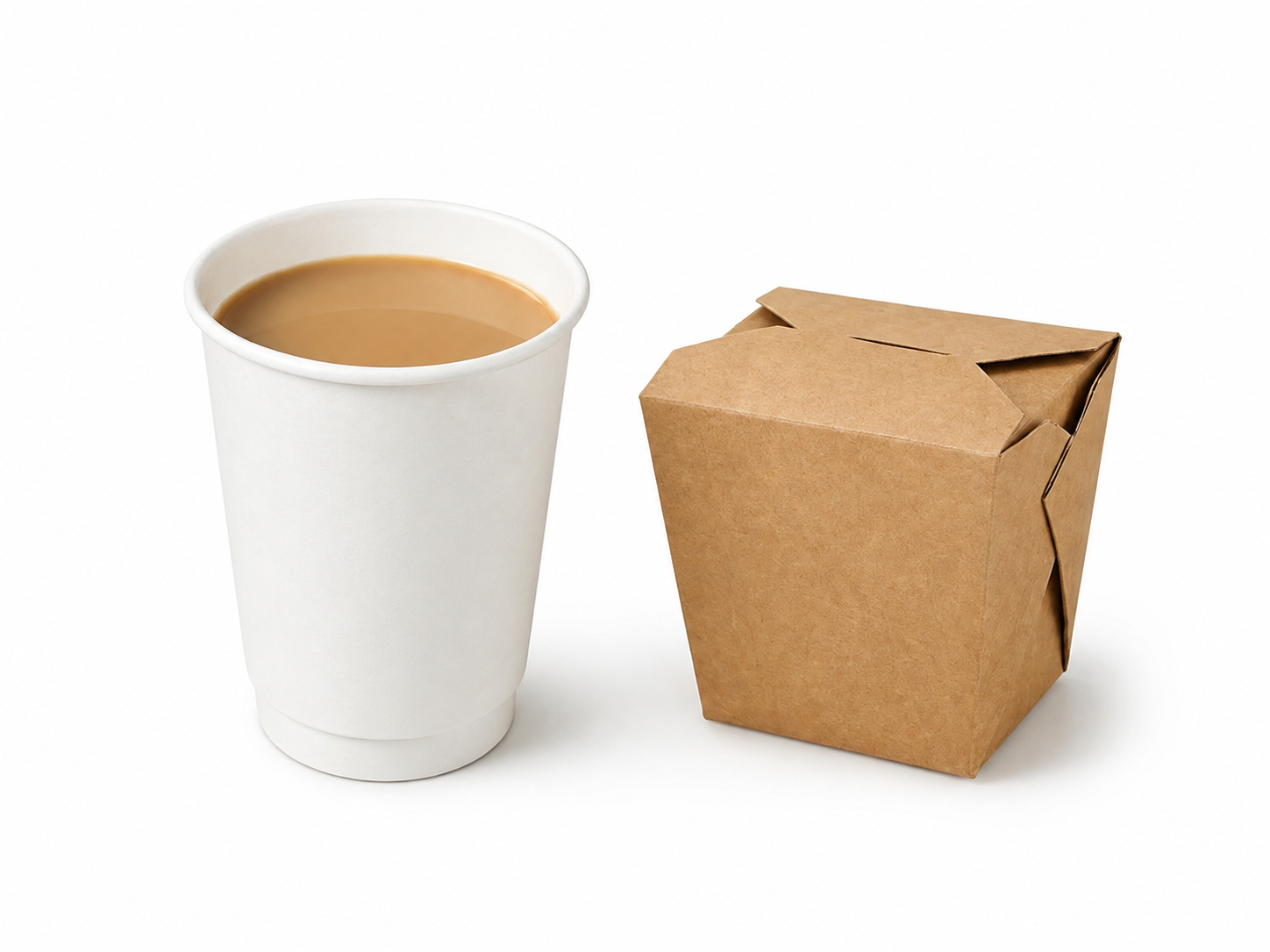
Different formats sit at different points on the cost spectrum. At the low end are simple stock items such as plain boxes, trays, and bags. Cups, bowls, containers, and folding cartons sit in the middle, with the cost driven more by board grade and print complexity than by size alone. At the top are rigid or premium structured products that require more material and hand assembly.
A one-color kraft item with no print sits firmly at the low end. A full-color coated board item with custom branding and a specialty finish sits higher. The same principle applies across every category: simpler material, simpler print, and standard sizes keep cost down.
How Custom Printing Affects Cost
Custom printing adds cost depending on how many colors you print, whether you print one or both sides, and your order quantity. A single-color logo on one side is the most economical entry point for branded packaging. Each additional color raises the cost, and full-color or two-sided printing sits at the top of the print range. A one-time plate fee applies on top of the per-unit print charge for most printed work.
Digital printing changes this picture. Because it does not require physical plates, it removes the plate setup cost and makes small runs more practical. The trade-off is that there is usually no setup charge, but the per-unit cost can be higher at very low volumes.
Shipping, Duties, and Compliance Costs
The price of packaging is not just the manufacturing cost. Shipping and freight make up a real share of the landed cost, especially for international orders. Larger or heavier packaging raises freight cost per unit, which is why many buyers right-size their packaging.
Duties and customs charges apply depending on the destination, and compliance costs can add a small amount where recycling or extended producer responsibility (EPR) rules apply. These vary by market and material, so they are best confirmed with the supplier for your specific destination port and product.
Why Ballpark Numbers Fail for Custom Packaging
Generic cost ranges are useful for budgeting, but they fall apart for a custom project. The number depends on the exact combination of category, material, dimensions, capacity, quantity, print, and destination port. Without real specifications, no one can give you a reliable figure. A quote based on your actual specs is the only way to know what your packaging really costs.
Frequently Asked Questions
What is the most affordable way to buy packaging?
The most affordable approach is to choose standard sizes and materials, keep the print simple or use stock items, and order enough units to spread the fixed setup costs. A one-color stock item in a common board grade ordered at a decent volume will sit at the low end of the range.
Why does the cost per unit drop so much with larger orders?
Packaging production has fixed costs such as plates, tooling, and machine setup that stay the same regardless of quantity. When you order more units, those fixed costs are spread across more pieces, so the cost per unit falls. This is the single most effective lever on unit price.
Does custom printing always cost extra?
Custom printing adds cost relative to plain stock, but the amount depends on color count, coverage, and order quantity. A single-color logo on one side is the most economical option, while full-color or two-sided printing costs more. Digital printing can also make small custom runs more practical because it removes plate setup costs.
How much does a one-time setup fee cost?
One-time plate and tooling fees vary by complexity. They start at a modest level for simple print plates and can be higher for custom structures that need new molds or dies. These fees are typically spread across your first order, so the actual impact per unit depends on your quantity.
Do duties and compliance fees affect packaging cost?
Yes. Shipping and freight, customs duties, and compliance costs such as recycling or extended producer responsibility (EPR) charges can add to the landed cost. They vary by market, material, and destination, so the supplier can give you an accurate figure once your destination port is known.
Get an Accurate Packaging Quote
Packaging cost is driven mainly by format, material, order quantity, and custom printing. One-time setup fees, shipping, duties, and compliance costs add on top. The only way to know your real number is to get a quote built on your actual specifications.
TakeawayPack is a foodservice packaging brand and procurement coordinator that works with multiple packaging manufacturers across categories including Cups, Bowls, Boxes, Containers, Trays, Lids, Bags, and Cutlery. When you request a quotation, the team collects your category, materials, sizes, quantities, custom print needs, and destination port, so you can receive a precise quote rather than a guess. Custom printing follows your files and is confirmed with a digital proof before production.
To request an RFQ and get an accurate packaging cost, visit https://takeawaypack.com and include your target category, materials, sizes, quantities, custom print needs, and destination port.