How to Choose Cups, Lids, and Straw Openings for Iced Coffee Delivery
For iced coffee and other cold drinks that may sit in a car for 20–30 minutes, choose the cup, lid, and straw opening as one tested configuration. Start with the actual drink, ice level, fill level, and delivery route—not a generic claim about a cup material. Then test the exact sample under the handling conditions that staff and customers will use.
2026-08-20 - 3 min read
Summary
For iced coffee and other cold drinks that may sit in a car for 20–30 minutes, choose the cup, lid, and straw opening as one tested configuration. Start with the actual drink, ice level, fill level, and delivery route—not a generic claim about a cup material. Then test the exact sample under the handling conditions that staff and customers will use.
Start with the drink and the journey
An iced latte, cold brew, smoothie, and topped frappe do not put the same demands on a package. Record the drink temperature at filling, the amount of ice, the planned fill level, and whether the drink contains foam, cream, or thick ingredients. Add the expected car journey, carrier, stacking, and hand-off conditions.
This brief gives a supplier and a café team a clear basis for choosing samples. It also prevents a flat-lid iced coffee setup from being assumed suitable for a topped drink or a thick beverage.
Treat the cup and lid as a matched sample
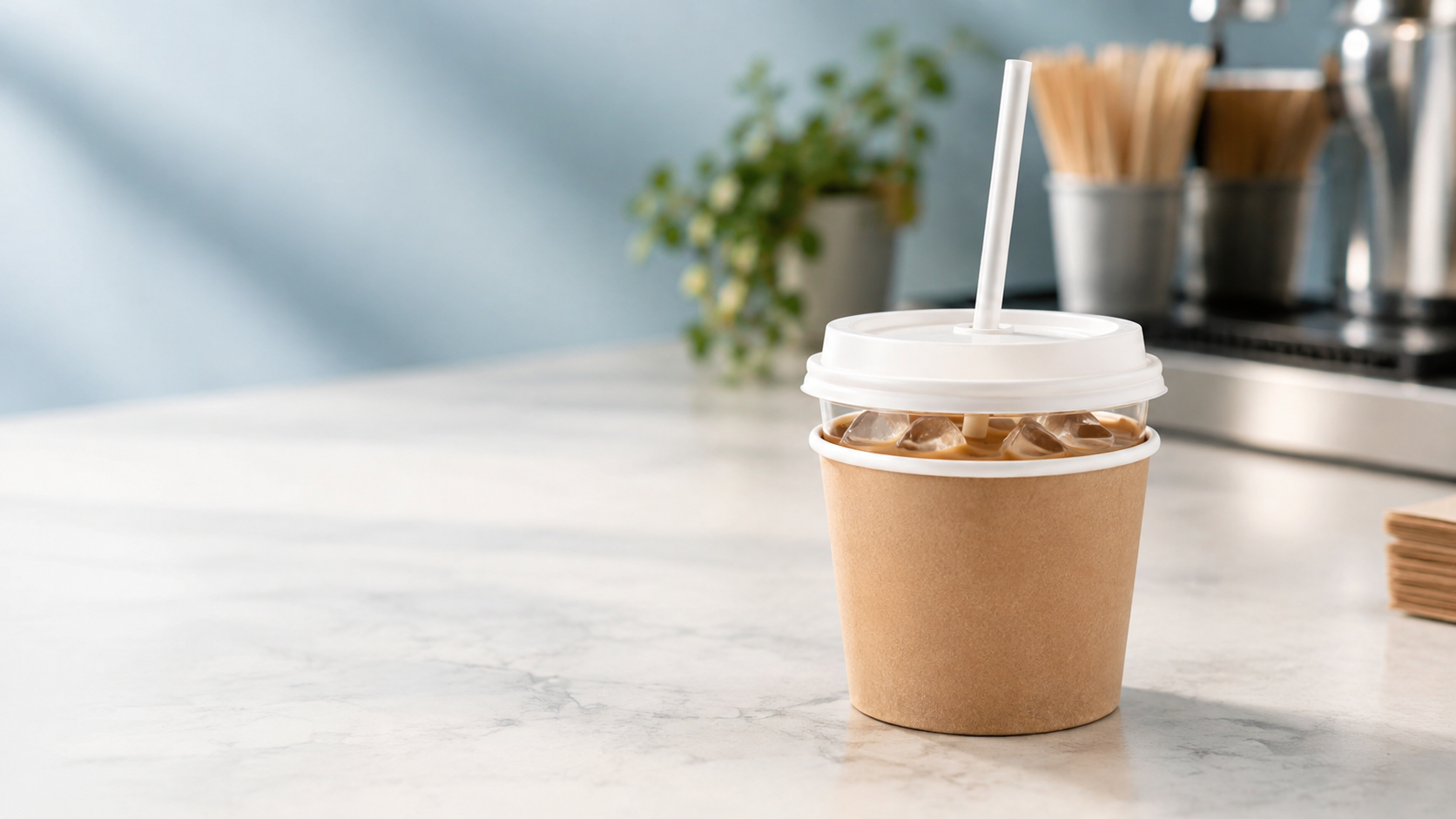
Ask for the specific cup and matching lid proposed for the intended serve. A usable sample review should identify the cup, lid, and straw type; show the intended fill level; and note whether the lid is flat or has extra headroom.
For the test, fill the drink as it will be served, fit the lid using the normal staff method, insert the intended straw where applicable, and place the drink in the usual carrier. Check the assembly after the planned 20–30 minute transport window, including normal lifting, turning, and removal from the holder. Record what happened rather than treating a category description as proof.
Check the straw opening in the real service setup
A straw opening changes the assembly. It should be assessed with the actual straw diameter and the drink customers will receive. A narrow straw may be unsuitable for a thicker drink; a different straw may change how the opening behaves during transport. If the drink has toppings or a high fill line, test the lid and opening with that precise serve rather than a simplified version.
The goal is not to claim that every opening prevents spills. It is to verify whether the proposed sample, straw, fill level, and route work together for the specific menu item.
Use a short evaluation record before ordering
Keep the result easy to compare across samples. For each configuration, record:
- cup identifier and visible dimensions supplied for review;
- lid identifier and how it was fitted;
- straw type or diameter, if used;
- drink recipe, ice level, and fill level;
- transport duration, carrier, stacking, and handling steps; and
- observations after the trial, plus any question that remains unresolved.
If a sample changes, repeat the relevant check. A result for one cup-and-lid combination should not automatically be carried over to another size, lid, straw, or menu drink.
Keep the buying decision conditional until the sample matches the use case
A cold-drink package should move forward only when the reviewed sample matches the intended menu item and transport conditions. This approach helps independent cafés, regional chains, and caterers reduce avoidable uncertainty while keeping their ordering choices traceable.
For a packaging enquiry, takeawaypack.com can be used to organise the product category, material, size or capacity, expected quantity, print requirements, and destination. Include the drink type, lid preference, straw requirement, and planned delivery conditions so the conversation can focus on the exact configuration to review.