How to Choose Takeout Containers for Hot Food Delivery
Selecting takeout containers for hot food delivery is a menu-and-route decision, not a material label decision. Define what is packed, its temperature, moisture and oil level, holding time, stacking pattern, and transport conditions. Then evaluate the container and lid together on a real order before approving a SKU or sending a bulk RFQ.
2026-08-21 - 7 min read
Summary
Selecting takeout containers for hot food delivery is a menu-and-route decision, not a material label decision. Define what is packed, its temperature, moisture and oil level, holding time, stacking pattern, and transport conditions. Then evaluate the container and lid together on a real order before approving a SKU or sending a bulk RFQ.
Start With the Menu and the Delivery Window
A hot, dry grain bowl behaves differently from broth, curry, braised meat, fried chicken, or a sauce-heavy pasta. Begin the selection process by listing the dishes that will use the format rather than by asking for a broadly “leak-proof” container.
For each dish, record the normal portion, packing temperature, amount of free liquid or oil, garnish placement, and available headspace. Also record how long the order may wait before collection and how long it normally travels. These details identify the conditions the package must be evaluated under.
Heat, Steam, and Food Quality
Hot food continues to release steam after packing. That moisture can collect beneath a lid, soften crisp foods, alter presentation, and add pressure to a closure. A package that appears satisfactory immediately after filling may look very different at the end of a delivery route.
For fried or crisp menu items, the priority may be managing moisture so texture is not lost. For soups, broths, dips, and saucy dishes, containing the food during movement may be the more important question. One format should not automatically be assigned to both jobs.
Holding and Transport Are Part of the Use Case
The route matters as much as the kitchen counter. A single order carried upright over a short distance is different from multiple orders stacked in a rider bag, placed in a car, or held for a longer catering run.
Write down the usual carry orientation, stack height, vehicle movement, and whether the package may be compressed by other items. A buying decision should reflect the real operating pattern, including peak-period handling—not an ideal flat-surface scenario.
Evaluate the Container and Lid as One System
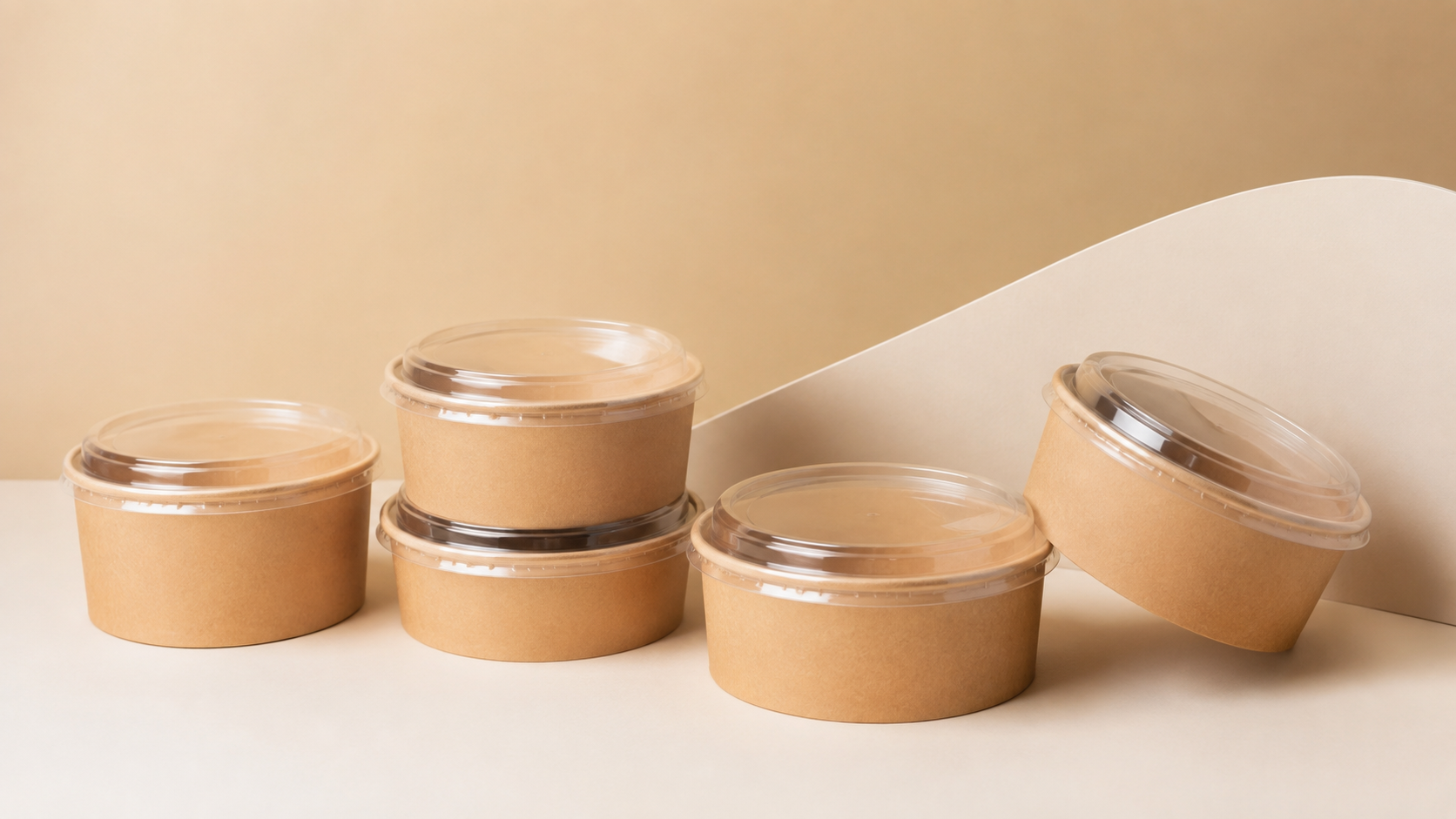
A base and a lid only work as the combination that will actually be packed. Check that the selected lid is intended for the exact container format, and inspect how the rim, closure points, lid geometry, and filling level interact.
A photo, a generic material description, or a closure that feels secure at room temperature does not establish how a particular combination will behave with a hot menu item in transit. Keep SKU-specific questions separate from general product language.
Choose the Closure Approach for the Dish
For liquid-rich dishes, inspect the complete rim engagement and the space between food and lid. Overfilling can put food directly into the closure area and make normal movement more difficult to manage.
For dishes where crispness matters, consider whether the planned lid system and packing method allow excess moisture to be managed without creating an unsuitable opening for the food. The answer should come from the actual container-and-lid setup, not from an assumption that every vented or closed format suits every dish.
Do Not Turn Labels Into Proof
Terms such as water-resistant, grease-resistant, heat-resistant, hot-fill, microwave-safe, food-contact, compliant, and leak-proof address different questions. None should be treated as proof for a specific SKU, lid combination, food temperature, or destination market without relevant product-specific information.
Ask suppliers which exact item the information covers and under what conditions. Review any required documentation for the intended product and market before approval. A statement for another product, a general material name, or a visual reference should not be converted into a performance, safety, compliance, or test claim.
Select Capacity and Shape Around Portion Control
Capacity is not just a number in a catalogue. It influences headspace, food presentation, the load on the lid, and how consistently staff can pack a portion.
Round, Square, Deep, and Shallow Formats
Round bowls can suit foods that are ladled or arranged as a single portion. Square or rectangular formats can make better use of a delivery bag for some meal layouts. Deep formats may provide more vertical space, while shallow formats can support certain plated presentations.
The appropriate shape depends on the actual dish and its movement during transport. Check corners, rim areas, and lid contact points when comparing formats, especially where sauce or liquid may reach the closure.
Build a Small, Purposeful Format Set
Many operators can simplify packing by defining a limited set of tested formats: for example, one format for liquid-rich dishes, one for bowls or meals, and a separate approach for crisp items or sauces. The goal is not to force every menu item into one container; it is to make the packing choice clear enough for repeatable service.
Where sauces or dips travel separately, test the full order together. A container may perform differently once it shares space with side cups, cutlery, and other packages in a bag.
Run a Real-Route Trial Before Approval
A practical trial should use the same food, portion, packing temperature, staff workflow, and order assembly used in live service. Include the normal lid, bag, stacking arrangement, and expected delay before handoff.
A Simple Delivery Test Sheet
For every proposed SKU combination, note:
- dish name, portion size, packing temperature, and fill level;
- exact container and lid identifiers;
- packing time, holding duration, route duration, and transport orientation;
- stack configuration and any weight placed above the package;
- closure condition, exterior marks, spills, condensation, and food presentation at arrival; and
- whether the format remains suitable for the intended menu use.
For liquid-heavy food, a controlled fill-and-tilt observation can reveal obvious weak points before a field trial. For crisp food, inspect texture at arrival as well as the package exterior. Repeat the evaluation with representative orders rather than relying on one unusually smooth trip.
Document what happened, including failures. Consistent notes make it possible to compare candidate SKUs against the same conditions and to train staff on the chosen format.
Write an RFQ That Suppliers Can Evaluate
A specific RFQ reduces back-and-forth and prevents a broad request from being mistaken for a finished product specification. Describe the operating need first, then ask for the exact information needed to evaluate a proposed item.
Include These RFQ Details
State the food type, portion or target capacity, normal packing temperature, expected holding and transport time, likely stacking conditions, preferred format, and destination market. Identify whether you need matching lids, separate sauce containers, artwork, or other order requirements.
Ask the supplier to identify the exact SKU and compatible closure proposed, along with the product-specific information and documents needed for your review. Keep quantity, commercial terms, availability, production timing, and any minimum order requirement as questions to be confirmed for the particular order—not assumptions copied from another product or project.
Make the Final Choice From Evidence
The right takeout container for hot food delivery is the format that fits the dish, packing workflow, and route after a documented trial. A strong selection process considers menu behavior, steam, holding time, closure design, capacity, delivery handling, and the information required for the intended market.
If you are preparing a packaging brief and want a starting point for a product conversation, visit TakeawayPack with the menu, format, and destination details already defined. Use the discussion to identify candidate SKUs, then confirm their suitability for your specific use before placing a bulk order.